
Vandaag of morgen in huis

Kwaliteit gegarandeerd

Welkomstaanbiedingen ontgrendelen: GRATIS bezorging | Tot 80% korting | Gratis 30 dagen JoyPlus-proefperiode
Download de app
An OBD2 scanner for car diagnostics can do much more than simply read an engine warning light. With the right car diagnostic tool, you can read and clear fault codes, view live data, check systems and carry out maintenance functions on certain vehicles. Yet many motorists buy a scanner based on a long list of features without checking whether those features are available for their own car.
As a Joybuy Product Recommendation Officer, I focus on verifiable specifications and practical limitations. That way, you can avoid paying for features your vehicle does not support.
A scanner may claim to support thousands of models or more than a hundred makes. That does not automatically mean you can access every system in your car. Available functions often depend on:
A basic OBD2 fault code reader usually reads the engine ECU only. To access ABS, SRS, transmission, EPB or TPMS, you need a scanner with full-system diagnostics. So, before buying, check compatibility using the 17-digit VIN if you need a specific reset or active test.
Functions such as service reset, ABS reset, EPB reset, BMS reset, DPF regeneration and injector coding are often given plenty of prominence. However, manufacturers generally state that support varies by vehicle. Treat the list of functions as a guide, not a guarantee.
DPF regeneration, injector coding and ECU adjustments also require knowledge of the relevant procedure. A scanner carries out a command; it does not independently determine whether a component has a mechanical fault.
Some devices offer one year of online updates, while others advertise free lifetime updates. Check exactly what is included: vehicle software, new features, technical support or app updates only. FCA vehicles with a secure gateway may also require separate registration or a fee for FCA AutoAuth. This is separate from the price of the scanner.
Access to multiple systems is important for a garage or mobile mechanic. Look for support for at least:
Live data displays sensor readings while the engine is running or during a road test. Graphs and freeze-frame data help you put a fault warning into context. A reporting function can also be useful for customer records or when checking a used car before purchase.
A bidirectional scanner can send commands to an ECU on supported vehicles. These might include activating a cooling fan, fuel pump, injector, lights, window, door lock or air conditioning clutch. This is also known as an active test.
This feature is useful for checking a component and its control system separately. However, test options vary considerably by make and model. Only carry out active tests if you understand their potential effects.
Newer vehicles use communication protocols such as CAN FD and DoIP. CAN FD can handle larger data frames than conventional CAN. DoIP uses Ethernet for vehicle diagnostics and is found in some modern vehicles.
These protocols increase potential vehicle coverage, but they do not automatically make a scanner suitable for every model. A secure FCA system may require an AutoAuth account. Also check whether ECU coding, module configuration or programming functions are actually available for your vehicle.
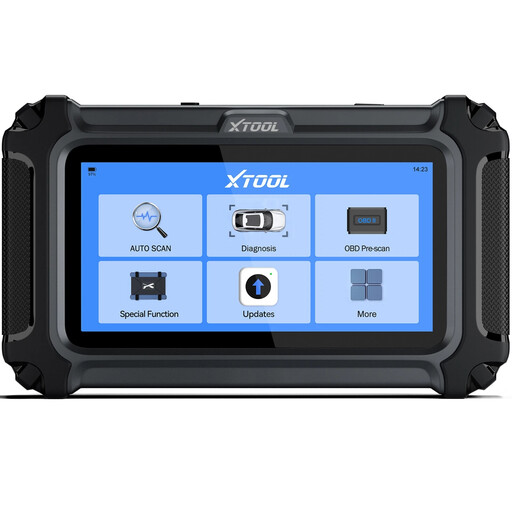
Why it suits this user: The D5 is designed for everyday diagnostics, used car inspections and experienced DIY enthusiasts. Its controls and AutoVIN function are practical if you are using a scanner for the first time.
The description clearly states that service functions vary by vehicle and that compatibility can be checked using the VIN. Updates are listed as free for life.
Diagnostics for the engine, transmission, ABS and SRS; support for CAN FD and FCA AutoAuth on compatible vehicles.
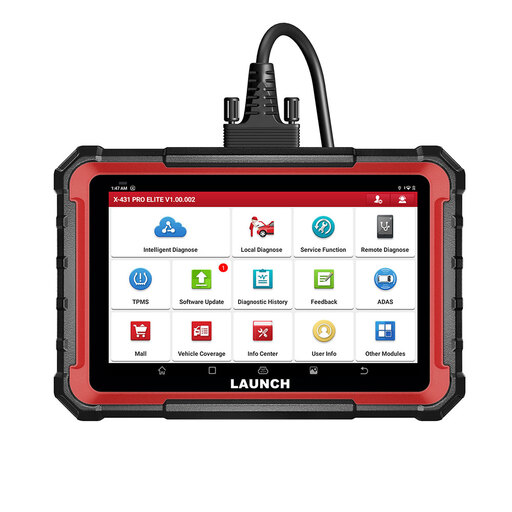
Why it suits this user: This tablet-style model is designed for garages, independent mechanics and users who want to combine full-system diagnostics, active tests and ECU functions in one device.
The product information clearly states that ECU coding and active tests vary by vehicle. So, check VIN compatibility before use.
8-inch touchscreen, CAN FD and DoIP, bidirectional diagnostics, ECU coding and a wide range of service functions.
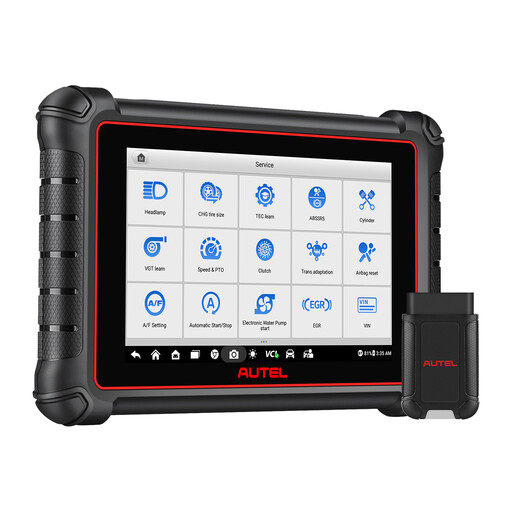
Why it suits this user: The combination of diagnostics and TPMS functions is a good fit for tyre services, workshops and mechanics who regularly service a range of vehicles.
The description distinguishes between TPMS diagnostics, sensor programming and vehicle-specific functions. Check which components and services are included.
Full-system diagnostics, active tests, ECU coding, CAN FD, DoIP and extensive TPMS functions.
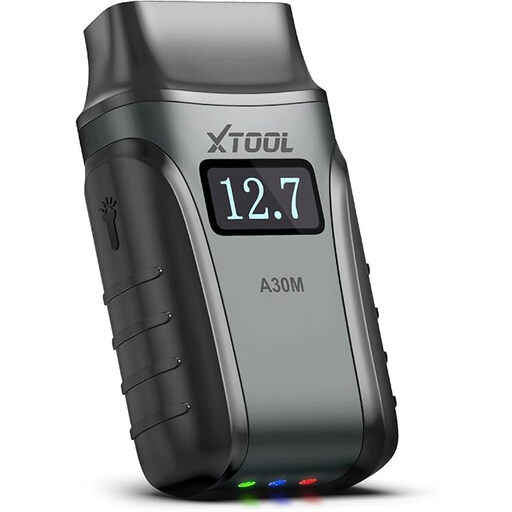
Why it suits this user: The Bluetooth adapter works with Android and iOS devices, making it easy to carry in a service bag or vehicle.
The product information states that the 26 maintenance functions vary by make, model and year of manufacture. This makes a compatibility check essential.
Wireless connection, active tests, up to eight live data streams displayed as graphs, and advertised free updates with no subscription.
We’ve put together a complete, up-to-date list of products that meet these strict selection criteria and the applicable European safety regulations.
No. A basic OBD2 reader often focuses on the engine and emissions systems. For ABS, SRS, transmission and other modules, you need a model with full-system diagnostics. Always check vehicle coverage and support for the specific ECU function.
It depends on the model. Many scanners use Wi-Fi for software updates, reports or online functions. On some devices, diagnostics are carried out through a cable or Bluetooth connection to the OBD port. An active internet connection may be required for ECU coding or FCA AutoAuth.
Its physical lifespan depends on the battery, cable, connector, screen and conditions of use. Software coverage may remain useful for longer if updates are available. Keep the device dry, avoid high temperatures and check the stated update period and warranty before buying.
