What should you look for?
Start by choosing a pack that suits your lunch break and how often you’ll use it. Then check the preparation method, storage options and ingredients for the specific variety.
| What to consider |
What to check before buying |
Who is this important for? |
| Stock and portions |
Compare pack weight and number of portions with how much you usually eat; make sure you can seal an opened pack properly. |
If I often have lunch at home, I want enough in stock without leaving a large pack open for too long. Around 31% of consumers put stock and portions first. |
| Preparation time |
Check the time and method for the way you prepare oats at home, and see whether they’re already divided into portions. |
During a short break, I don’t want to spend ages measuring or cooking. For around 31% of consumers, quick preparation is the main priority. |
| Ingredients and allergens |
Read the latest ingredients and allergen information. If you have coeliac disease, check that the official Crossed Grain symbol is on the pack. |
If I need to avoid gluten or soya, the specific variety must suit my dietary requirements. Checking the label is a priority for around 23% of consumers. |
| Hot or cold preparation |
Check whether the pack gives instructions for both hot oats and overnight oats, including the required chilling time. |
I sometimes want to eat the same oats hot and sometimes prepare them the night before to eat cold. Around 15% of consumers give this flexibility top priority. |
Plain oats, express portions and varieties with added ingredients don’t all meet quite the same needs. For example, for the AH Biologisch flakes reviewed, Albert Heijn also provides instructions for overnight oats, while Quaker gives a two-minute preparation time for the Express portions reviewed. Always follow the instructions on the pack you buy.
Brands to consider
These brands show a range of pack types and ingredients for a work-from-home lunch. Check the information for the specific variety you choose.
Quaker
The products reviewed include plain wholegrain oats, Express portions and an Express Protein variety.
- According to the product information, the 600 g pack of plain oats reviewed contains 100% wholegrain oats and provides 15 portions. The 324 g Express pack contains 12 portion sachets and takes two minutes to prepare.
- The Protein variety reviewed contains added soya protein. Check the ingredients and allergens separately for this and other varieties.
Brinta
An option if you prefer fine oat flakes without individual instant sachets.
- Albert Heijn describes the 450 g Brinta Havermout reviewed as 100% oat flakes that are extra fine and quick to prepare.
- The product information lists oats and possible traces of wheat and rye. If you have dietary restrictions, don’t rely on the fine texture alone.
AH Biologisch
Fine and coarse organic wholegrain oat flakes for anyone who wants to prepare the same stock in different ways.
- The packs reviewed each contain 500 g. Albert Heijn provides instructions for preparing hot oats and overnight oats, among other options.
- The allergen information lists oats and possible traces of other allergens and grains. Check the label for the variety you choose.
Jumbo
A supermarket own brand with a large pack of plain wholegrain oats among the products reviewed, as well as separate special varieties.
- For the value pack reviewed, Jumbo lists 1 kg of wholegrain oats and 25 portions.
- A gluten-free variety and a protein variety are different products from plain oats. Check their labels and current availability separately.
Golden Bridge (ALDI)
Fine or coarse wholegrain oats as a straightforward choice of pack.
- For the fine wholegrain oats reviewed, ALDI lists a 500 g pack and also offers coarse flakes under the Golden Bridge brand.
- If you have specific dietary restrictions, check the ingredients, allergens and preparation information on the pack you buy.
Joybuy products for a quick lunch
These products are suited to a quick work-from-home lunch: one pack of Express portions and one Express variety with added soya protein. If you’re mainly looking for a large pack of plain oats, it’s still worth comparing pack size, number of portions and storage options separately.
 Image unavailable
Quaker Express Oatmeal 324 g
An option if you don’t want to measure out your own portion during a short lunch break. The pack contains 12 portion sachets and gives a preparation time of two minutes. Check the latest ingredients and allergen information on the pack.
View at Joybuy
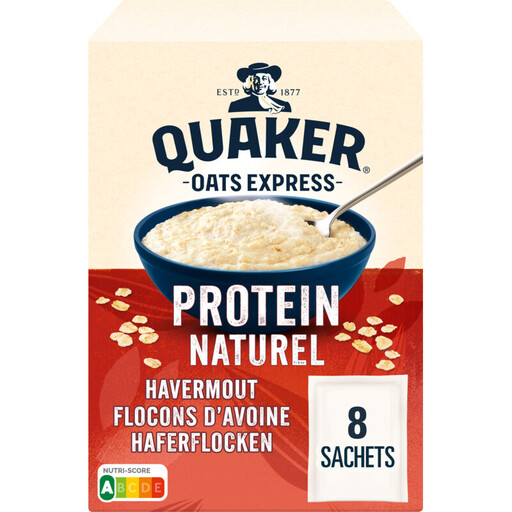 Image unavailable
Quaker Oats Express Protein 302 g
An Express variety to compare if you’re specifically considering the protein content of your lunch. The product information reviewed lists 22 g of protein per 100 g, added soya protein and a preparation time of two minutes. The product contains soya; check the latest packaging for other allergen information too.
View at Joybuy
Frequently asked questions
Can I have oats for lunch while working from home?
Yes. Oats aren’t just for breakfast. The Netherlands Nutrition Centre also lists them as a lunch option; what you add will affect the nutritional value of the meal you prepare.
How should I store an opened pack of oats?
Store opened oats in a cool, dry, dark place and keep them properly sealed. The Netherlands Nutrition Centre recommends keeping opened oats in a kitchen cupboard for up to one year; also check the label and the condition of the contents.
Can I keep oats in a storage tin?
Yes. Use a clean, dry tin that seals properly, and store it somewhere cool, dry and dark. Keep the original packaging or label information to hand for the best-before date, ingredients, allergens and preparation method.
Are regular oats suitable for people with coeliac disease?
Don’t assume that they are. The Netherlands Nutrition Centre highlights the risk of oats being contaminated with gluten and says that, for people with coeliac disease, oat products must carry the official Crossed Grain symbol. So check the specific product.
What should I check on the label of instant oats or protein oats?
Check the ingredients, highlighted allergens, pack size, best-before date, nutrition information and preparation instructions for the variety you choose. The Netherlands Food and Consumer Product Safety Authority lists these as types of information found on prepacked food labels. If you’re choosing a protein variety, pay particular attention to added ingredients such as soya.


