Loose wholegrain oats are a good choice if you want to measure out a portion at home. Instant sachets are more convenient when you want a pre-measured portion and quick preparation. For children aged 1 to 3, the Netherlands Nutrition Centre recommends wholegrain breakfast cereals with no added sugar or salt as an alternative to bread. If your child has coeliac disease, a known allergy or specific childcare requirements, you’ll also need to check that the particular product is suitable.
Who is this choice relevant to?
Parents looking for a plain breakfast for their toddler
You’re looking for wholegrain oats with no added sugar or salt as an alternative to bread. The Netherlands Nutrition Centre suggests this option for children aged 1 to 3; oats don’t need to replace bread every day.
Households with a regular breakfast routine
You often make porridge at home and want to measure out the amount yourself each time. Loose fine flakes in a larger pack suit this way of preparing breakfast, as long as you’ll use the whole pack.
Parents short on time in the morning
You’d rather not measure out flakes every time. An instant sachet can be handy, but one sachet doesn’t automatically contain the right amount for your child.
What should you look for when choosing?
Start by checking the ingredients and any allergen restrictions. Then decide whether measuring out a portion yourself or having a quick, pre-measured serving better suits your morning routine.
| What to consider |
What to check |
Who it matters to |
| Ingredients |
Check that the product is made with wholegrain oats and read the ingredients list for added sugar and salt. Treat oats as an alternative to bread. |
When I choose oats for my toddler, I want an unsweetened wholegrain option without removing bread from their daily menu. This is the top priority for around 39% of consumers. |
| Packaging and routine |
Check whether loose flakes and the pack size suit how often you make porridge at home. |
I often make breakfast at home and want to decide how many flakes to use each time. A regular preparation routine is a priority for around 31% of consumers. |
| Preparation and portions |
Check the preparation instructions and the amount in each sachet; a sachet doesn’t automatically contain the right amount for a toddler. |
On busy mornings, I want to spend less time measuring, without assuming that a whole sachet is intended for my child. This convenience matters most to around 15% of consumers. |
| Allergens and childcare |
Read the latest label. If your child has coeliac disease, check for an explicit gluten-free claim and ask about the childcare provider’s policy if needed. |
If my child has a known allergy or coeliac disease, or there are childcare requirements to follow, I first need to know whether this particular product is suitable. This is the main concern for around 15% of consumers. |
Common mistakes
-
Assuming one sachet is the right portion for every toddler
A pre-measured serving doesn’t mean the full contents will suit every child’s appetite.
Check how much is in a sachet and decide how much to prepare or serve yourself.
-
Assuming every portion pack is unsweetened
Portion packs vary in their ingredients: Jumbo Havermout Porties Original lists sugar as an ingredient, while the product information for Quaker Oats Express Naturel says it contains no added sugars.
Read the ingredients list as well as the nutritional information, and check whether the variety is wholegrain.
-
Assuming all ordinary oats are gluten-free
According to the Netherlands Nutrition Centre, oats are naturally gluten-free, but ordinary oats can contain gluten through cross-contamination. So the word ‘oats’ alone isn’t enough to establish whether a product is suitable for someone with coeliac disease.
If your child has coeliac disease, check the latest label for an explicit gluten-free claim and follow individual medical advice. Make sure any food brought in is also in line with the childcare provider’s policy.
-
Unknowingly giving oats every morning instead of bread
The Netherlands Nutrition Centre suggests oats for children aged 1 to 3 as an alternative to bread, not as an automatic daily replacement for every serving of bread.
If you serve oats for breakfast, consider the whole day’s menu and leave room for bread at other times too.
Relevant brands and supermarket own-label options
Loose flakes and portion packs can differ significantly, even within the same brand. Check the packaging and ingredients of the specific variety you’re choosing.
Albert Heijn
The supermarket’s own-label range includes fine wholegrain oat flakes for making porridge from scratch.
- AH Volkoren havermout fijne vlokken is sold in a 500 g pack.
- If your child has allergen restrictions, check the label: this variety lists oats and warns that other cereals may also be present.
Jumbo
Jumbo sells both loose fine wholegrain oat flakes and individual oat portions.
- With loose fine flakes, you can measure out the amount of porridge yourself.
- Jumbo Havermout Porties Original lists sugar as an ingredient, so don’t rely on the name ‘Original’ to judge what’s in it.
Quaker
Quaker Oats Express Naturel is an instant variety sold in individual sachets.
- The pack described contains 12 sachets of 27 g and states that it contains no added sugars.
- The label lists oats and warns that soya, barley and wheat may also be present; don’t assume this variety is suitable for someone with coeliac disease.
Golden Bridge
Golden Bridge is the own-label brand named by ALDI for loose wholegrain oats.
- The fine wholegrain oats are sold in a 500 g pack.
- When you buy them, check the ingredients and allergens on the pack, especially if these are important for your child.
Lidl
Lidl lists coarse oat flakes in a 500 g pack.
- The coarse flakes offer a different texture from fine oat flakes.
- This pack is only available in store; check the ingredients and allergens on the label there too.
Joybuy products to consider
These two Quaker Express varieties are worth considering if you’re looking at instant oats. The Protein variety has a different composition from plain oats, so don’t treat them as interchangeable products.
 Image unavailable
Quaker Express Oatmeal 324 g
If you want to prepare oats quickly, Joybuy lists Quaker Express Oatmeal 324 g as taking 2 minutes to prepare.
Check the amount in each sachet before deciding on a portion for your toddler. If your child has coeliac disease or an allergy, check the latest label too.
View on Joybuy
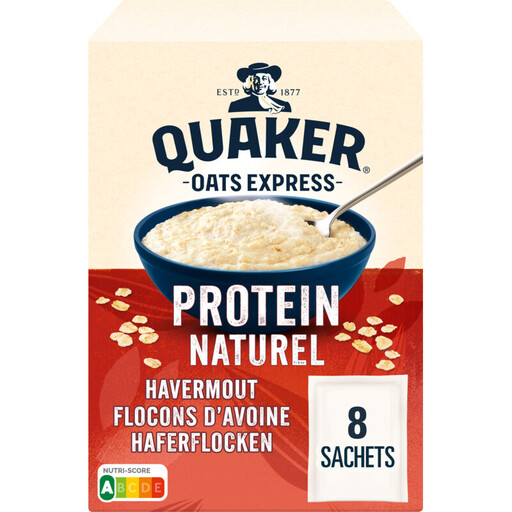 Image unavailable
Quaker Oats Express Protein 302 g
Choose this Express variety only if you’re looking for a product containing soya protein, rather than plain oats.
The pack contains 302 g. Check the serving information and latest label before giving it to your toddler, especially if they have a soya allergy or need to avoid gluten.
View on Joybuy
Frequently asked questions
Can oats replace bread every morning for a toddler?
Don’t treat oats as a regular replacement for every serving of bread. The Netherlands Nutrition Centre suggests oats for children aged 1 to 3 as an alternative to bread, and recommends offering bread at another time of day too.
What should I look for in instant oats for my toddler?
Start with the ingredients: the Netherlands Nutrition Centre suggests wholegrain breakfast cereals with no added sugar or salt as an alternative to bread. Also check the amount in each sachet; a pre-packed portion won’t necessarily be the right size for your child.
Are ordinary oats suitable for a toddler with coeliac disease?
Don’t assume they are. According to the Netherlands Nutrition Centre, oats can contain gluten through cross-contamination. Check the pack for an explicit gluten-free claim and follow the advice of your child’s doctor or dietitian.
What should I check if my toddler takes oats to childcare?
Read the latest label and ask about the childcare provider’s rules on allergens and food brought in from home. If your child has a known allergy or needs to avoid gluten, don’t rely on the product name alone.


