Who is this choice for?

Families stocking up for lunch

For parents and carers making several lunches at home during the school holidays. A pack of dry oats can be measured out for each lunch and prepared with different toppings; once opened, it needs to be stored somewhere dry in a tightly sealed container.

Households looking for a quick hot lunch

For anyone who would rather use a pre-measured portion on busy holiday days than weigh out oats each time. Check the preparation instructions and compare the portion size and price per kilo with plain oats.

Families with a strict gluten-free dietary requirement

For households where it’s important to consider not only the oats themselves, but also possible contamination with other grains. The Netherlands Nutrition Centre and the Dutch Coeliac Association highlight the importance of choosing oats that have been checked and certified as gluten-free, so check the certification and label on the pack you choose.

What should you look for when buying?

Start by deciding what matters most for your holiday lunches: stocking up, cost per portion, convenience or choosing a strictly gluten-free product. Then check the packaging and preparation instructions for the product that suits your needs.

What to consider What to check before buying Who is this most important for?
Storage after opening Check the best-before date and choose a pack you can seal securely or decant into a dry container. If you’re stocking up for several holiday lunches, you’ll want to stop an opened pack from losing quality. Around 36% of consumers would choose storage as their main consideration.
Cost per portion Compare the price per kilo and net weight; for sachets, check the weight of each sachet too. If I make lunch from the same stock often, I want to know how much oats I’m getting for my money. Around 29% of consumers would put this comparison first.
A quick hot lunch Read the preparation instructions and check whether you need to measure out a portion yourself and what liquid is required. On a busy holiday day, I want to be able to make lunch without much preparation. Convenience would be the top priority for around 21% of consumers.
Eating strictly gluten-free Check the gluten-free certification and the ingredients and allergen information for the specific product. If someone in the family needs to eat strictly gluten-free, I don’t want to rely on the word ‘oats’ alone. For around 14% of consumers, this check would determine what they buy.

Common mistakes

  • Comparing only the price of the pack

    A smaller pack or box of sachets doesn’t necessarily contain as much oats as a standard pack. That means the pack price alone doesn’t tell you much if you’re making lunches regularly.

    Compare products with similar ingredients by price per kilo, net weight and portion size. Choose sachets mainly if having a pre-measured portion makes a difference to you.

  • Assuming ordinary oats are gluten-free

    Ordinary oat products can come into contact with grains that contain gluten. The Brinta, Quaker and Jumbo products reviewed list the possible presence of traces of other grains.

    If you need to eat strictly gluten-free, check for an official gluten-free certification mark or a certified gluten-free product range, and read the current label. When preparing food, avoid contact with things such as breadcrumbs or shared storage jars.

  • Putting an opened pack away somewhere damp

    Moisture and an open pack can affect the quality of dry oats. The Netherlands Nutrition Centre recommends storing oats in a cool, dry, dark place in a tightly sealed container.

    Seal the pack carefully after use or use a clean, dry storage jar. Check the smell and appearance before using oats from a pack that has been open for a while.

  • Using oats as a complete bread replacement every time

    Variety matters when it comes to children’s lunches. The Netherlands Nutrition Centre points out that iodine is added to bread, but not to oats.

    Serve an oat-based lunch for variety and consider the overall diet, rather than routinely replacing bread like for like.

Brands and own-label options to consider

Brinta

The Brinta Oatmeal 450 g product reviewed is an option if you’re looking for extra-fine oats.

  • Albert Heijn’s product page describes extra-fine oats and a preparation time of around two minutes in the microwave.
  • The pack lists possible traces of wheat and rye; don’t treat this standard product as a certified gluten-free option.

Quaker

The products reviewed include plain oats in a 600 g pack and Express sachets.

  • Albert Heijn’s listing for Quaker Oats Express Original specifies twelve 27 g sachets, for anyone who would rather not measure out portions themselves.
  • Compare plain oats and Express by pack size and price per kilo. For both products, also check the warnings about other gluten-containing grains.

Albert Heijn / AH Biologisch

AH Biologisch offers fine and coarse wholegrain oats, among other options; the coarse variety was reviewed as a base for different recipes.

  • Albert Heijn also suggests making overnight oats with its 500 g pack of coarse oats.
  • Organic doesn’t automatically mean gluten-free. Read the allergen information on the pack you choose.

Jumbo

The own-label range reviewed includes fine and coarse oats, with packs of 500 g and 1 kg among the options.

  • A larger pack can be practical if you often measure out your own portions during the holidays; choose a size you can store properly once opened.
  • The product page for Jumbo Fine Wholegrain Oats 500 g lists the possible presence of barley, rye and wheat.

Lidl

The Lidl product reviewed is a 500 g pack of coarse oats.

  • The product page suggests serving them with milk, yoghurt or quark.
  • Lidl says this product is sold in store. Check the current pack label and availability in store.

ALDI / Golden Bridge

According to ALDI, Golden Bridge offers fine and coarse wholegrain oats in 500 g packs.

  • The choice between fine and coarse oats gives you the flexibility to decide on the texture you’d like for your lunch.
  • Check the ingredients and allergens on the specific pack, especially if you need to eat strictly gluten-free.

Oat products at Joybuy

These products are suited to lunches made with plain oats or an Express product. Compare pack sizes and always check the packaging for preparation instructions and allergen information for the product you choose.

Quaker Express Oatmeal, 324 g pack

Quaker Express Oatmeal 324 g

For anyone looking to use an Express product for a holiday lunch. The pack contains 324 g; check the number of portions, preparation instructions and allergen information on the pack.

View at Joybuy
Brinta Oatmeal, 450 g pack

Brinta Oatmeal 450 g

For anyone who wants to measure out portions at home from one pack. Albert Heijn describes this 450 g product as extra-fine oats; the allergen information lists possible traces of wheat and rye.

View at Joybuy
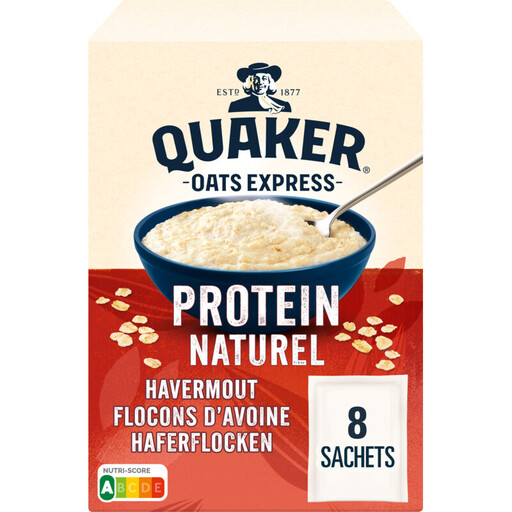
Quaker Oats Express Protein, 302 g pack

Quaker Oats Express Protein 302 g

For anyone considering an Express oat product for a hot lunch. This product is called Protein and contains 302 g; before comparing it with other Express products, check the exact ingredients, allergens, portion count and preparation instructions on the pack.

View at Joybuy

Frequently asked questions

How long can you keep opened oats in the cupboard?

The Netherlands Nutrition Centre says opened oats can be kept in a kitchen cupboard for one year if stored in a cool, dry, dark place in a tightly sealed container. Check the smell and appearance before use too. For an unopened pack, follow the date and storage advice on the packaging.

Can you use oats after the best-before date?

A best-before date indicates minimum durability; it doesn’t automatically mean that dry oats can no longer be used after that date. The Netherlands Food and Consumer Product Safety Authority distinguishes this from a use-by date. Follow the storage advice and, after the best-before date, check that the packaging, smell and appearance are still in good condition.

Can oats replace bread in children’s lunches every time?

It’s better to serve oats for variety than as a regular like-for-like replacement for bread. The Netherlands Nutrition Centre points out that iodine is added to bread, but not to oats, so consider variety across the overall diet.

What should you look for in oats for someone eating strictly gluten-free?

Check for an official gluten-free certification mark, such as the Crossed Grain symbol, or choose a certified gluten-free product range. According to the Netherlands Nutrition Centre and the Dutch Coeliac Association, ordinary oat products can be contaminated with gluten. Read the current label and avoid contact with products containing gluten during preparation.

What else do you need for a hot lunch made with oats?

To make hot oats, you’ll need liquid and a preparation method suited to the product you’ve chosen; follow the proportions on the pack. If you’re using milk or a plant-based alternative, store it separately from your dry oats.
