If your pepernoten recipe calls for oat flour or finely ground oats, fine oat flakes that you can grind if needed are a sensible choice. Instant portions are most useful if you also want to prepare oats quickly for breakfast. To compare fibre content, check the nutritional information per 100 g, and if you need to avoid gluten or soya, check the current ingredients and allergen information.
Who is this choice relevant to?
Home bakers comparing fibre content
You want to add oats to your dough, so you check the nutritional information per 100 g. The Voedingscentrum gives an average of 4.4 g of fibre for a 40 g serving of porridge oats, although the amount can vary between products. The other ingredients in the recipe also affect the nutritional value of the baked pepernoten.
Bakers who also eat the same oats for breakfast
You’re looking for oats for your dough and a quick breakfast. A measured instant portion can be handy for breakfast, but you don’t need individually portioned packs for a recipe that calls for finely ground oats.
Bakers who need to check allergens
You need to take gluten, soya or possible traces of other cereals into account. Don’t rely on the product category alone: check the ingredients, allergen information and any gluten-free labelling on the pack you buy.
What should you look for when choosing?
Start with the type of oats your recipe calls for. Then compare fibre content on the same nutritional basis and check that the ingredients suit your needs.
| What to consider |
What to check before buying |
Who should pay particular attention? |
| Fibre in the oat base |
Compare fibre per 100 g in the nutrition table, and check which type of oats the product contains. |
If I’m adding oats to the dough, I want to know how much fibre they contain before adding the other ingredients. This is a top priority for around 42% of consumers. |
| Type of oats for the dough |
Check whether your recipe calls for oat flour or finely ground oats, and whether you’ll need to grind the flakes you choose. |
I want to follow the recipe without discovering halfway through that I still need to grind my oats. Dough texture is the main concern for around 33% of consumers. |
| Quick breakfasts |
Check the preparation time and portion size if you also want to use the oats outside of baking. |
As well as baking, I want to be able to prepare the oats quickly for breakfast and use measured portions. This matters most to around 17% of consumers. |
| Gluten and allergens |
Read the ingredients and allergen information. If you need a gluten-free product, look for an explicit gluten-free statement on the current packaging. |
If I need to avoid gluten or another allergen, I first need to know whether this particular product meets my requirements. This is the main concern when buying for around 8% of consumers. |
Common mistakes
-
Thinking you need instant portions for the dough
Instant oats are convenient for porridge, but Medisports’ recipe for oat pepernoten uses oat flour or finely ground oats.
Choose portions if you also want them for a quick breakfast. For baking, first check what type of oats the recipe calls for.
-
Assuming all oats are gluten-free
The standard products reviewed list cereals containing gluten and sometimes possible traces of other cereals. A protein version may also contain soya.
If you need to avoid gluten or another allergen, check the current packaging of the specific product, including the ingredients, allergen information and any gluten-free statement.
-
Assuming the oats and pepernoten have the same fibre content
The nutritional value of the finished product depends on the whole recipe and portion size, not just the oats used.
Compare oat products per 100 g, and include all the ingredients when working out the nutritional value of your own recipe.
-
Buying jumbo oats without planning to grind them
If a recipe calls for oat flour or finely ground oats, jumbo oats may need extra preparation.
Read the recipe before you buy and choose a suitable type, or allow time to grind the oats.
Brands to consider
The oat types and labelling vary across the products reviewed from these brands. Compare the specific product that suits your recipe and any allergen requirements.
Quaker
Offers both loose wholegrain oats and Oats Express portions for quick preparation.
- Jumbo lists 9 g of fibre per 100 g for Quaker Havermout; Albert Heijn gives a two-minute preparation time for Oats Express Naturel.
- Check the ingredients and allergens for the version you choose. Labels for standard products may list cereals containing gluten and possible traces.
Brinta
The Havermout product reviewed contains extra-fine flakes, which may suit you if you want a finer starting point for your dough.
- The Jumbo product listing states that it contains 100% oat flakes and 9.7 g of fibre per 100 g.
- The listing identifies oats as a cereal containing gluten and mentions possible traces of wheat and rye. Don’t assume the product is suitable for a gluten-free diet.
AH
The range reviewed includes fine wholegrain flakes, a separate oat product labelled gluten-free and a protein version.
- AH lists 10 g of fibre per 100 g for its fine wholegrain oats. The separate gluten-free version states that it is produced in a completely gluten-free environment.
- The protein version reviewed contains soya protein. Check the ingredients and allergens for each version separately.
Jumbo
The own-brand range includes fine wholegrain oat flakes, available in different pack sizes.
- Jumbo’s category page lists fine wholegrain oats in 500 g and 1 kg packs.
- Check the nutritional information, ingredients and allergens on the pack of the version you choose.
Golden Bridge
The ALDI brand includes fine wholegrain oats for anyone looking for a finer type of oat.
- ALDI lists a 500 g pack of Golden Bridge Fijne Volkoren Havermout.
- To compare fibre content or allergens, check the nutritional information and ingredients on the current packaging.
Joybuy products for this choice
These two Quaker Express products are most relevant if you’re considering oats for pepernoten dough and also want to use them for a quick breakfast. Before baking, check that the type of oats suits your recipe.
 Image unavailable
Quaker Express Oatmeal 324 g
An option if you’re looking for oats for your dough and also want a quick breakfast. Before using them in your recipe, compare the fibre per 100 g on the pack and check the allergen information if you need to avoid gluten or soya.
View on Joybuy
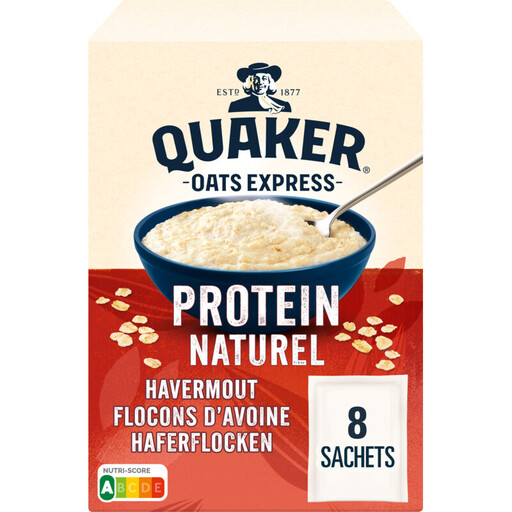 Image unavailable
Quaker Oats Express Protein 302 g
An option if you also want to use the oats for a quick breakfast. Before baking, check that the type of oats suits your recipe. If you need to avoid soya or gluten, check the current ingredients and allergen information.
View on Joybuy
Frequently asked questions
Do I need instant oats for pepernoten made with oats?
No, instant preparation isn’t necessary for a recipe that uses oat flour or finely ground oats. A Medisports recipe specifically calls for this finely ground form, so choose flakes you can grind if your recipe requires it.
Are pepernoten made with oats automatically high in fibre?
No, the fibre content of pepernoten depends on the full recipe and the portion size. The Voedingscentrum gives an average of 4.4 g of fibre for a 40 g serving of porridge oats, but this figure doesn’t describe the baked end product.
Can I choose regular oats if I need to eat gluten-free?
Don’t assume oats are gluten-free based on the product name alone. The standard products reviewed list cereals containing gluten or possible traces. Check that the current packaging of the specific product explicitly says ‘gluten-free’ and that it meets your requirements.
How should I store oats for another baking session?
Store your oats according to the instructions on the packaging and seal the pack well after opening. The product instructions reviewed for AH and Quaker say to store them in a dry place.


