
Parents who want to make lunch quickly
If you don’t want to weigh anything out on a busy day during the holidays, portion sachets with a clear preparation time are worth considering. Do check what liquid and equipment you’ll need.


Choose portion sachets if you want to make lunch quickly during the school holidays without measuring anything out. With fine, loose oats, you can decide how much to use yourself; a variety with added protein is only relevant if its ingredients suit your needs. Whichever you choose, check the preparation instructions, ingredients, allergens and best-before date on the packaging.
If you don’t want to weigh anything out on a busy day during the holidays, portion sachets with a clear preparation time are worth considering. Do check what liquid and equipment you’ll need.
With loose oats, you can choose how much to use for each lunch and add anything you like. Choose a pack size you can use up, and check the best-before date and storage advice.
Added soya protein and warnings about other grains may affect your choice. Check the current label. For coeliac disease, the official Crossed Grain symbol is also important, according to the Netherlands Nutrition Centre.
When: if a fixed portion and short preparation time are your priorities. Albert Heijn lists Quaker Oats Express Naturel as 12 sachets of 27 g, with a preparation time of 2 minutes.
Trade-off: the amount in each sachet is fixed, so check whether it’s right for the lunch you want to make.
When: if you want to measure out portions yourself from one pack for several lunches. Jumbo lists Brinta Havermout in a 450 g pack, containing 100% oats.
Trade-off: you’ll need to measure the oats yourself; don’t assume they’ll have the same preparation time as portion sachets.
When: if you’re specifically looking for a different protein profile. According to Albert Heijn’s product information, Quaker Oats Express Protein contains 85% wholegrain oats and 15% soya protein.
Trade-off: this variety contains soya; the word Protein on the pack is no substitute for checking the ingredients and allergen information.
| What to consider | What to check when buying | Who it matters to |
|---|---|---|
| Preparation and portions | Check the preparation time, method and amount per portion. | If lunch needs to be ready quickly, I don’t want to have to measure out the oats first. Around 36% of consumers give this combination of speed and fixed portions top priority. |
| Storage | Check the best-before date on the pack and the storage advice after opening. | For several days during the holidays, I want to be able to store a pack until I need it. For around 29% of consumers, suitability for storing in the cupboard is the top priority. |
| Pack size | Compare the pack size with the number of lunches you want to make from it. | If everyone eats a different amount, I want to be able to portion it out myself without having portions left over. That’s the most important consideration for around 21% of consumers. |
| Ingredients | Read the ingredients and allergen information; if you have coeliac disease, look for the official Crossed Grain symbol. | If soya, other grains or gluten status affect my choice, I need to be able to check the label. For around 14% of consumers, this check takes priority. |
According to Albert Heijn, the Quaker Oats Express Protein product reviewed contains added soya protein. So the product name doesn’t tell you enough if soya is a concern for anyone in your family.
Read the full ingredients and allergen information on the current pack. If you want to compare the nutritional content of different varieties, check the nutrition information per 100 g.
According to the Netherlands Nutrition Centre, ordinary oat products may be contaminated with gluten. The name oatmeal alone isn’t enough to determine whether it’s suitable for someone with coeliac disease.
If you have coeliac disease, check whether the official Crossed Grain symbol is on the packaging and read the allergen information.
The Netherlands Nutrition Centre explains that the best-before date applies to unopened packaging. Different storage advice may apply after opening.
Check the best-before date when you buy the product. Once opened, follow the instructions on the pack, including advice to keep it dry and sealed.
The Oats Express products reviewed are worth considering if you’re looking for individual portions with a stated preparation time.
The 450 g pack of Havermout reviewed contains loose, extra-fine oats that you can portion out yourself.
The own-brand range reviewed includes both loose, fine wholegrain oats and oatmeal portions.
The 500 g pack of fine wholegrain oats described by ALDI Netherlands is a loose option for measuring out your own portions.
These products suit three ways of planning a school holiday lunch with oatmeal: portion sachets with no added protein, portion sachets with soya protein, and loose oats to measure out yourself.
 Image unavailable
For a lunch where you don’t want to measure out the oats yourself, this oatmeal comes in individual portions. Joybuy Netherlands lists a preparation time of 2 minutes in the microwave or in a pan for the 324 g pack.
Check the best-before date on the packaging. If you have allergies, check the label too: the product information states that this product may contain soya, wheat and barley.
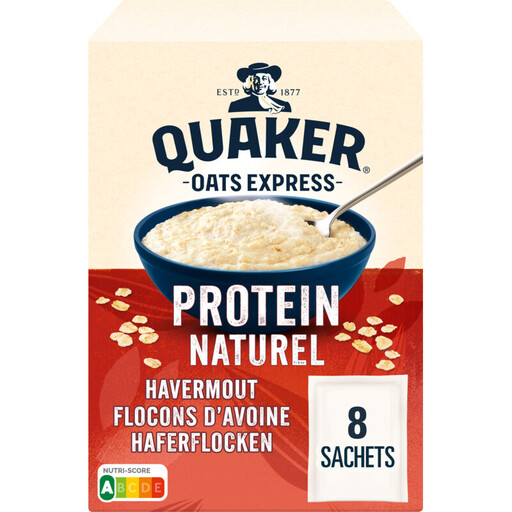 Image unavailable
For anyone looking for a portion pack with added protein and who wants to take soya in the ingredients into account. The product information gives a preparation time of 2 minutes; according to Albert Heijn, this variety consists of 85% wholegrain oats and 15% soya protein.
Check the best-before date and allergens on the pack. The product information lists soya and states that the product may contain wheat and barley.
 Image unavailable
For making several lunches when you want to decide how much oats to use yourself. Joybuy Netherlands lists 100% oats as the ingredients for this 450 g pack; the oats aren’t in individual portion sachets.
Check the preparation instructions and best-before date on the pack. If you have allergies, check the warning that the product may contain rye and wheat.
Ordinary oatmeal isn’t automatically suitable: according to the Netherlands Nutrition Centre, oat products may be contaminated with gluten. Check whether the official Crossed Grain symbol is on the packaging.
Check the best-before date on the pack you’re buying and read the storage instructions. The Netherlands Nutrition Centre says that the best-before date applies to unopened packaging; once opened, follow the storage advice on the pack.
Check the label on the packaging itself. The Netherlands Food and Consumer Product Safety Authority states that prepacked products must display allergen information on the label; also read the ingredients for the variety you’ve chosen.