What should you look for?
First decide whether you simply want to avoid added sugar or whether a ‘sugar-free’ claim is essential. Then compare the nutritional information and preparation method with what suits the older person.
| What to consider |
What to check when buying |
Who it matters to |
| Sugar claim |
Read the ingredients and compare the ‘of which sugars’ figure per 100 g. Under EU rules, ‘sugar-free’ can only be used for products containing no more than 0.5 g of sugars per 100 g. |
I don’t want to add sugar to the porridge, but I also don’t want to wrongly assume that plain oats are sugar-free. This distinction is a priority for around 34% of consumers. |
| Nutritional value |
Compare protein and fibre per 100 g, and consider the actual portion and what you add to it. |
When I make breakfast for an older person, I want to know what the whole meal provides, not just look at the oat product. Around 33% of consumers prioritise this. |
| Preparation and texture |
Check the preparation instructions and the texture of the flakes. Discuss chewing or swallowing difficulties with a healthcare professional rather than relying on a ‘fine flakes’ label. |
If cooking is difficult, I want a preparation method that’s manageable at home. If there are swallowing difficulties, I also want to know what texture is suitable. This is the main concern for an estimated 20% of consumers. |
| Packaging for everyday use |
Check the pack size and whether individual portions or a larger pack suit the way it is usually prepared. |
I make porridge regularly and want packaging that’s easy to store and use without having to measure it out each time. This matters most to around 13% of consumers. |
Oatmeal on Joybuy
These products include plain oatmeal, a quick-cook option and an option with added soya protein. Compare them based on how you want to prepare them and their nutritional information per 100 g; their product names alone don’t mean they are ‘sugar-free’.
 No image available
Brinta Oatmeal 450 g
Worth considering if you want fine flakes and a quick hot breakfast. Albert Heijn lists 100% oat flakes as the ingredient in Brinta Oatmeal. A fine texture doesn’t automatically mean the prepared porridge is suitable for someone with swallowing difficulties.
View on Joybuy
 No image available
Quaker Express Oatmeal 324 g
If a quick preparation time is important, Albert Heijn lists a two-minute preparation time for Quaker Oats Express Natural. Before buying, compare the ingredients and sugars per 100 g on the pack; quick to prepare doesn’t mean sugar-free.
View on Joybuy
 No image available
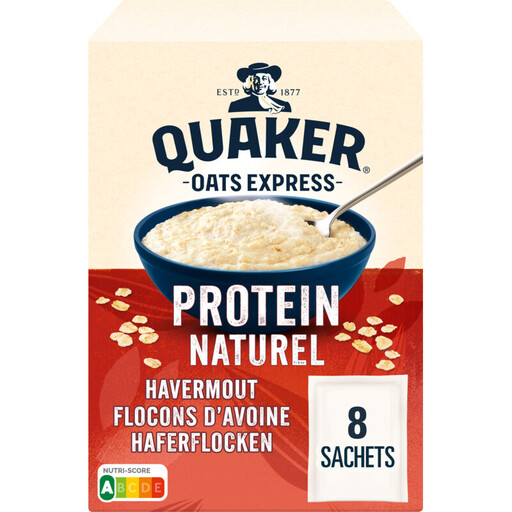
Quaker Oats Express Protein Oatmeal 302 g
An option to compare if protein is a consideration at breakfast. Albert Heijn lists 22 g of protein per 100 g for Quaker Oats Express Protein; this option contains soya. Consider the actual portion and the whole breakfast, and check the current pack for allergen information.
View on Joybuy
 No image available
Zonnatura Organic Wholegrain Oatmeal 500 g
For anyone looking for wholegrain oatmeal and wanting to prepare their porridge their own way. Compare the ingredients, sugars per 100 g and allergen information on the pack. Check the preparation instructions too if speed or texture matters.
View on Joybuy
Frequently asked questions
Is oatmeal with no added sugar also sugar-free?
No, these terms don’t mean the same thing. Under EU rules, a product can only be labelled ‘sugar-free’ if it contains no more than 0.5 g of sugars per 100 g. Albert Heijn lists 1.1 g of sugars per 100 g for plain Quaker Oatmeal, while Jumbo lists 0.7 g per 100 g for its coarse oat flakes.
Should older people mainly choose oatmeal with as little sugar as possible?
No, sugar content is just one factor to consider. The Netherlands Nutrition Centre highlights the importance of getting enough nutrients and fluids as you get older. Personalised advice may be needed if someone has a reduced appetite, is unwell or is losing weight unintentionally.
What changes when I make oatmeal with milk or yoghurt?
The nutritional value of the prepared bowl changes depending on what you add. First compare the dry oatmeal per 100 g, then consider the portion and how it is prepared. The sugar content of porridge made with milk is not the same as that of the dry flakes alone.
Is plain oatmeal an obvious choice for someone with type 2 diabetes?
No, don’t just consider whether sugar has been added to the oatmeal. The Netherlands Nutrition Centre recommends its Wheel of Five as a foundation for people with type 2 diabetes too, but portion size, total carbohydrates and preparation still matter. Discuss personal dietary questions with a dietitian.
Does fine oatmeal make swallowing easier?
Fine flakes alone don’t guarantee that the prepared porridge will have a suitable texture. Preparation changes the texture, and if someone has swallowing difficulties, assessment by a healthcare professional is more important than the wording on the pack.


