What should you look for when choosing?
Food processor
Choose this option: if you want to mix light dough briefly and also use the appliance for chopping or grating.
The trade-off: according to the Dutch Consumers’ Association, a stand mixer generally mixes and kneads better.
Stand mixer
Choose this option: if biscuit dough and other baking are your main uses, and you have little need for slicing or chopping.
The trade-off: check the capacity of the specific model and whether it comes with a suitable mixing attachment or beater.
First compare the dough capacity per batch and the mixing method. Then check whether the extra features and storage requirements suit your kitchen.
| What to consider |
What should you check? |
Who is this important for? |
| Dough capacity per batch |
Weigh all the ingredients together and compare the total with the dough limit for the specific model. |
If I’m making several batches for a gathering, I want to know how much dough will fit at a time. Around 36% of consumers say dough capacity is their main concern when buying. |
| Suitability for dough |
Check the manual to see which mixing or dough attachment is included and how long you can use the appliance for. |
When biscuit dough is my main task, the mixing method matters more than extra slicing functions. Around 29% of consumers prioritise suitability for biscuit dough. |
| Other kitchen tasks |
Compare the attachments supplied with the chopping, grating or slicing jobs you also want the appliance to handle. |
If I want to use the appliance for other food preparation after baking, I check which attachments I really need. Around 21% of consumers say versatility is their main concern when buying. |
| Storage and cleaning |
Measure the space available and check the cleaning instructions for each part. |
With limited cupboard space, I want to know in advance where I can store the appliance and its separate parts. Around 14% of consumers say space and maintenance are their main concerns when buying. |
Joybuy product picks
These product picks include food processors, stand mixers and dough makers to compare for oat biscuit dough, from mixing batches to appliances aimed mainly at baking.
 Image unavailable
Bosch MCM3200W MultiTalent 3 food processor
Combines dough preparation with chopping, slicing or grating.
Bowl: 2.3 litres; 800 W; two speeds and a pulse function.
View at Joybuy
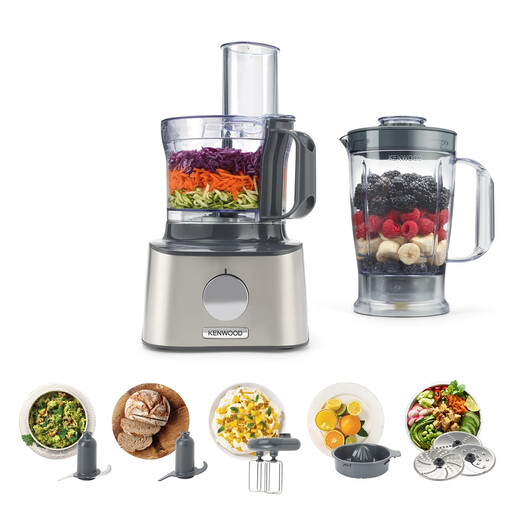 Image unavailable
Kenwood MultiPro Compact FDM301 food processor, silver
Combines mixing and kneading with other kitchen tasks.
Bowl: 2.1 litres; two speeds and a pulse function. The product description also mentions chopping, grating, slicing and juicing.
View at Joybuy
 Image unavailable
Stand mixer with 5-litre stainless steel bowl
An alternative to consider if you mainly want to mix and knead biscuit dough.
10 speeds; 600 W; includes a dough hook, mixing beater, whisk and splash guard. The description states a maximum running time of 30 minutes.
View at Joybuy
 Image unavailable
Bosch MUM 54251 stand mixer
Compare a stand mixer for dough with a food processor for a range of kitchen tasks.
Bowl: 3.9 litres; the product description states a maximum of 2.7 kg of dough and includes a dough tool. It also mentions grating and slicing discs and a dicing attachment.
View at Joybuy
 Image unavailable
Bear Intelligent Dough Maker, 5 litres
Compare this if you’re looking for a dough maker with automatic kneading.
Maximum 2.5 kg of dough; the description mentions a resting function and a removable stainless steel bowl. The bowl and whisk must be washed by hand.
View at Joybuy
Frequently asked questions
Can I use the bowl capacity to work out how much biscuit dough to make in one batch?
No. Compare the total weight of the dough with the dough limit for the specific model. For example, Bosch lists a 2.3-litre bowl for the MCM3501M and separately states a maximum of 0.8 kg of dough.
How should I plan several batches with a Kenwood MultiPro XL Weigh+?
According to Kenwood, the dough must weigh no more than 1 kg, the food processor must run for no longer than 60 seconds and it must cool down for 15 minutes between dough batches. Follow the instructions for another model if you’re using a different appliance.
Is a food processor or stand mixer better for biscuit dough?
If you mainly bake, a stand mixer is generally better suited to mixing and kneading. The Dutch Consumers’ Association describes a food processor as a versatile appliance primarily for chopping and slicing. Check the capacity of your chosen model and whether it comes with the mixing or dough attachment you need.
What should I bear in mind for guests with allergies and when handling raw dough?
Check the ingredients and for possible cross-contamination, and give guests accurate information about allergens. The Netherlands Nutrition Centre lists cereals containing gluten, including oats, among potential allergens. It also advises against eating raw biscuit dough, as raw eggs can contain salmonella and flour can contain E. coli.
Do any rules apply if I offer or sell unpackaged biscuits?
According to the Netherlands Food and Consumer Product Safety Authority (NVWA), food safety rules apply to both businesses and individuals selling food at markets or events. The NVWA also sets out information requirements for allergens in unpackaged food. Whether a specific, free private gathering falls into this category depends on how it is organised.


