
Baking several batches
You’re making biscuits for a group and want to know how many batches of dough you’ll need, and whether the motor will need a break. Bosch and Kenwood each specify a maximum dough quantity for the models mentioned.


A food processor is a good choice for small, measured batches of dough if you also want to use it for chopping or grating. A stand mixer makes more sense if baking and kneading are its main jobs. The Dutch Consumers’ Association notes that a food processor can knead light dough for short periods, but a stand mixer is generally better for mixing and kneading. Weigh your recipe and check the limit and any cooling breaks for the exact model: bowl capacity isn’t the same as the permitted dough quantity.
You’re making biscuits for a group and want to know how many batches of dough you’ll need, and whether the motor will need a break. Bosch and Kenwood each specify a maximum dough quantity for the models mentioned.
You want to mix the dough without chopping the oats any finer than your recipe or preferred texture calls for. A pulse function gives you an extra way to control the mixing, but it can’t guarantee a particular baking result.
You’re thinking about cleaning the parts and keeping track of ingredients when offering biscuits to others. The Netherlands Food and Consumer Product Safety Authority (NVWA) provides information on allergens in non-prepacked food.
First work out how much dough you need per batch and how much control you want over mixing. Then consider cleaning, the functions you’ll use and how much storage space you have after the coffee morning.
| What to consider | What should you check? | Who should pay particular attention? |
|---|---|---|
| Dough capacity and speed | Weigh your recipe and compare it with the limit for the exact model. Also check the maximum running time and any specified cooling breaks. | If you’re baking for a group, you’ll want to know in advance how many batches you need and whether you’ll have to wait between them. Around 36% of consumers prioritise planning their batches. |
| Mixing control and texture | Check whether the model has a pulse function and which dough or mixing attachment comes with it. Follow your recipe and check the texture as you mix. | If you don’t want to chop the oats and other additions any finer than necessary, it’s important to keep an eye on the mixing. Around 29% of consumers give mixing control top priority. |
| Cleaning and ingredients | Check the cleaning instructions for each part. Keep a note of the ingredients in the recipe and any allergen information you need to provide. | In a shared kitchen, you’ll want to clean the parts carefully and be able to name the ingredients. Around 21% of consumers prioritise cleaning and ingredient handling. |
| Use and storage space | Compare the dimensions, attachments and how useful the appliance will be after the event. Don’t choose on wattage or bowl capacity alone. | If you’re making a small quantity and won’t use the appliance much outside this occasion, space and functions may matter more. Around 14% of consumers prioritise keeping their purchase and storage needs to a minimum. |
A bowl that holds several litres doesn’t tell you how much biscuit dough you can process at once. Bosch specifies a maximum of 0,8 kg of dough for the MCM3501M; Kenwood specifies a maximum of 1 kg for the FDM72.990SS, as well as a running-time limit and a cooling break.
Weigh your recipe, check the limit for the exact version and plan for several batches and breaks if needed.
A food processor can knead light dough for short periods, but according to the Dutch Consumers’ Association, a stand mixer is generally better for mixing and kneading. A food processor may be a better fit if you also need it for chopping or grating.
Choose based on the task you do most often. If baking is your main priority, compare a hand mixer or stand mixer.
Having extra bowls and attachments doesn’t replace cleaning, especially when parts are used with different ingredients or for different preparations.
Follow the cleaning instructions for each part and keep a note of the ingredients and allergens in each recipe.
The MultiTalent 3 MCM3501M is a compact food processor worth comparing for small batches of dough and extra chopping or grating tasks.
The MultiPro XL Weigh+ FDM72.990SS is worth considering if you want to weigh ingredients in the bowl and need a stated dough limit.
The CS 4200XL is a food processor to compare if you also want to use your appliance for other preparations.
The Food Processor 5KFP1319EER is worth considering if you want to slice or dice ingredients as well as prepare dough.
This selection is mainly made up of stand mixers and dough mixers for anyone whose main focus is baking. It also includes models described as food processors or kitchen machines for a range of preparations. Always check the dough limit for the specific model against your recipe.
 No image available
A stand mixer to consider if preparing dough is your main task.
The product name specifies a 5,5 l bowl and 11 speeds.
 No image available
The dough hook makes this model worth comparing if you mainly want to mix dough.
The product name specifies 10 speeds, 600 W and a 5 l stainless steel bowl. It comes with a dough hook, mixing attachment, whisk and splash guard. The description states a maximum running time of 30 minutes.
 No image available
The product name combines a dough mixer with a food processor, making this one worth comparing if you want to tackle several types of kitchen task.
The title specifies a 4,5 l stainless steel bowl, six speeds and a pulse setting. The description lists a whisk, beater and dough hooks.
 No image available
A stated maximum dough quantity can help you plan batches; compare the limit with your own recipe.
The product name specifies automatic kneading, a 5 l capacity and a maximum of 2,5 kg of dough.
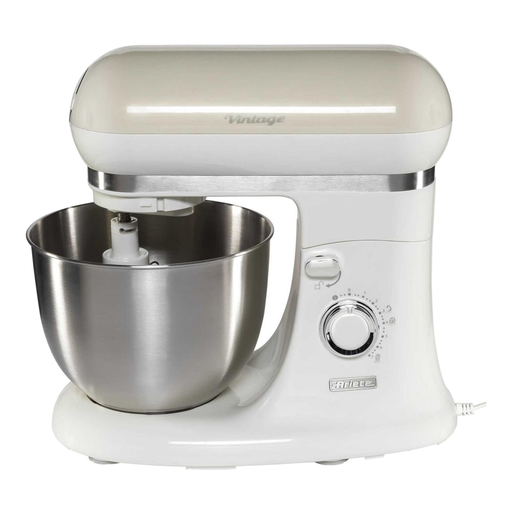 No image available
A kitchen machine to compare if you need to mix dough as well as prepare other dishes.
The product name specifies 1000 W, a 5 l stainless steel mixing bowl and planetary mixing action. The product description mentions a dough tool.
No. Use the weight of your own recipe and the dough limit for the exact model. Bosch specifies a maximum of 0,8 kg of dough for the MCM3501M; Kenwood specifies a maximum of 1 kg for the FDM72.990SS, along with a maximum running time of 60 seconds and a 15-minute cooling break between dough batches.
Check the manual and the parts supplied with your version before preparing dough. The Bosch, Magimix and KitchenAid models mentioned come with a dough tool or dough blade. Always follow the model-specific cleaning instructions for the bowl, lid and blades. Bosch says the MCM3501M accessories are generally dishwasher-safe, but that doesn’t mean every part is.
The Netherlands Nutrition Centre advises against tasting raw dough, as flour and raw egg may contain harmful bacteria. This is particularly relevant if young children, pregnant people, older people or anyone with a weakened immune system is present.
If biscuits are offered to consumers without packaging, the NVWA explains that you must provide information about any allergens present; it lists 14 allergens. The exact organisational requirements depend on how and by whom the event is arranged, and whether food is sold.
For sales at markets and events, the NVWA sets out rules for safe, hygienic preparation and storage. According to the NVWA, anyone who prepares and sells food several times a year must have a HACCP food safety plan. This doesn’t automatically mean that every one-off coffee morning falls into that category.