To assess your fat intake at a student dinner, compare the nutritional values for the same quantity and decide on your portion in advance. Unsalted doesn’t automatically mean low in fat. The Netherlands Nutrition Centre lists less total fat but more saturated fat in 25 g of unsalted cashews than in the same quantity of unsalted nuts in general. Choose a pack that suits how much you’ll actually use.
Who is this guide for?
Snackers keeping an eye on portions
You want to know how much total fat and saturated fat your portion contains. The Netherlands Nutrition Centre lists 14.9 g of fat, including 1.6 g of saturated fat, in 25 g of unsalted nuts. Check the label of the variety you buy, too.
Students who cook with nuts
You’re looking for nuts to use in a student dinner and want to choose a pack that suits how often you cook with them. Compare pack sizes and consider how you’ll store and use them up.
Shoppers choosing unsalted varieties
You’re choosing unsalted nuts or want to try different varieties. The Netherlands Nutrition Centre recommends unsalted nuts and variety; these labels don’t, in themselves, tell you how much fat a product contains.
What should you look for when buying?
| What to consider |
What should you look for? |
Who is this important for? |
| Fat per portion |
Compare total fat and saturated fat for the same quantity, and bear portion size in mind. |
If I want to measure out my portion, I need to know how much total fat and saturated fat it contains. Around 34% of consumers give the fat content per portion the highest priority. |
| Quantity and budget |
Compare pack sizes and choose a quantity that suits how much you use. |
If I’m keeping an eye on my grocery budget, I don’t want to buy more than I’ll use. Around 33% of consumers put this balance between quantity and use first. |
| Choosing unsalted |
Look for the unsalted label and check fat values as a separate factor. |
When I choose unsalted nuts and want to try different varieties, I want to consider that preference separately from fat content. Around 20% of consumers put choosing unsalted first. |
| Using up the pack |
Choose a pack size that suits how much you use, and follow the storage instructions on the packaging. |
If I don’t use nuts often, I want to choose a pack I can finish in time. Around 13% of consumers give the most weight to how they’ll use and store the product. |
Avoid common buying mistakes
-
Assuming unsalted means low in fat
‘Unsalted’ refers to salt, not fat content. The Netherlands Nutrition Centre lists 14.9 g of fat per 25 g portion for the unsalted nuts category.
Compare total fat and saturated fat for the same quantity, and consider salt as a separate factor.
-
Looking only at total fat
According to the Netherlands Nutrition Centre, 25 g of unsalted cashews contains 12.2 g of fat and 2.1 g of saturated fat. For 25 g of unsalted nuts in general, the figures are 14.9 g and 1.6 g respectively. These are category figures, not a comparison of specific products sold in shops.
Decide whether you want to compare total fat, saturated fat or portion size, then check the nutritional information on the pack you’ve chosen.
-
Buying a large pack without a plan for using it up
A pack you can’t use in time may go unused or lose quality. For mixed unsalted nuts, the Netherlands Nutrition Centre recommends storing them for six months in a kitchen cupboard or one year in the freezer; their quality may decline after that.
Choose a quantity that suits how much you use and how you’ll store it. Check the packaging and look out for rancidity, a chewy texture or mould.
Relevant brands to compare
Duyvis
Duyvis describes its unsalted peanuts as suitable for snacking and cooking.
- These suggested uses may be helpful if you’re looking for peanuts to enjoy as a snack and use in cooking.
- Being unsalted doesn’t prove that a product is lower in fat.
Albert Heijn
Albert Heijn lists AH Unsalted Cashews.
- The product name makes it clear that these are unsalted cashews.
- Albert Heijn advises checking the packaging, as ingredients and nutritional values may change.
Jumbo
Jumbo lists unsalted cashews and a 500 g value pack.
- The pack size is useful to consider when deciding how much to buy.
- The ‘value pack’ label doesn’t prove that this product is the cheapest choice everywhere or nutritionally equivalent to a nut mix.
Lidl
Lidl lists a 200 g mix of unroasted, unsalted nuts.
- The product description tells you how the nuts have been processed and whether they’re salted.
- Unroasted and unsalted doesn’t automatically mean a product is low in fat.
Aldi
ALDI lists TRADER JOE'S Unsalted Nut Mix, with almonds, hazelnuts, walnuts and Brazil nuts.
- The nuts listed can help you decide whether the mix offers the variety you’re looking for.
- A mix has a different composition from cashews alone; the product name doesn’t prove that it’s lower in fat.
PLUS
PLUS lists 200 g packs of unsalted, unroasted cashews.
- The product name tells you the type of nut, how it’s been processed and whether it’s salted.
- Being unroasted doesn’t, in itself, tell you how much fat a product contains; check the nutritional information on the specific pack.
Nuts and nut mixes at Joybuy
These products offer a range of nuts, a nut and fruit mix, and different pack formats to help you compare portions, ingredients and nutritional values. The product information alone doesn’t establish whether a variety meets the ‘low fat’ or ‘reduced fat’ claim.
 No image available
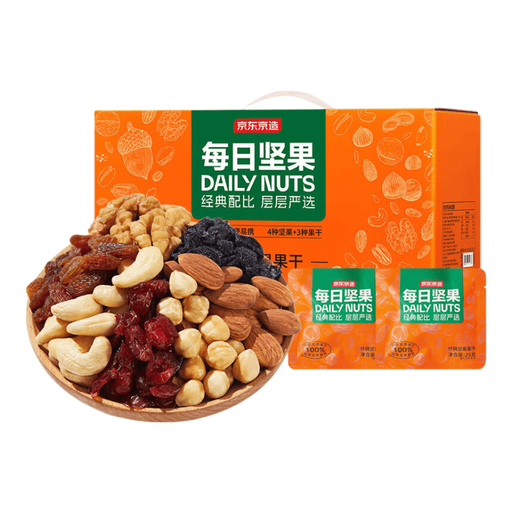
J.ZAO Classic Daily-Nut Mix, 750 g, 30 portions
The individual sachets are handy if you want to portion them out in advance.
The pack contains 30 portions of 25 g. The mix contains nuts and dried fruit and lists 40.7 g of fat per 100 g.
Contains tree nuts; this is not a nut-only mix.
View at Joybuy
 No image available
g'woon Cashew Nuts Roasted & Unsalted, 200 g
The title specifies roasted, unsalted cashews for anyone looking for this particular variety.
The pack contains 200 g; the product description lists 46.67 g of fat per 100 g.
View at Joybuy
 No image available
Jiazhouyuanye Original Flavour Large Cashew Nuts, 160 g
These cashews are a good choice if you’re looking for cashews to enjoy as a snack or use as an ingredient.
The pack contains 160 g. The product description lists cashew kernels as an ingredient and 47.7 g of fat per 100 g.
View at Joybuy
 No image available
g'woon Unsalted Peanuts, 250 g
The title specifies unsalted peanuts for anyone looking for this variety.
The product description lists 99% peanuts, sunflower oil and 50 g of fat per 100 g.
Contains peanuts and may contain cashews.
View at Joybuy
No image available
g'woon Peanuts in Shell, 500 g
These peanuts need to be shelled before eating and can be enjoyed as a snack or used in dishes.
The pack contains 500 g; the product description lists 49 g of fat per 100 g.
The product description mentions possible traces of other nuts.
View at Joybuy
Frequently asked questions
Does unsalted mean that nuts are low in fat?
No. The Netherlands Nutrition Centre lists 14.9 g of fat, including 1.6 g of saturated fat, in a 25 g handful of unsalted nuts. So consider salt and fat separately.
Are cashews automatically the best choice if I want to eat less fat?
Not necessarily. The Netherlands Nutrition Centre’s category figures show less total fat per 25 g of cashews than per 25 g of unsalted nuts in general, but more saturated fat. Compare the nutritional information on the specific pack and decide which value matters for your choice.
Can I use the same nuts for snacking and cooking?
Duyvis describes its unsalted peanuts as suitable for both. This tells you how the brand recommends using this product, but it doesn’t determine whether every nut product is suitable for every dish.
How long can I store an opened nut mix?
For mixed unsalted nuts, the Netherlands Nutrition Centre recommends storing them for six months in a kitchen cupboard or one year in the freezer; their quality may decline after that. Check the packaging too, and look out for rancidity, a chewy texture or mould.
Where can I find allergen information for nuts?
According to the NVWA, allergen information for prepacked foods appears on the label. Check the information on the specific pack; for unpackaged products, ask the seller how the information is provided.


