Who might want nuts with their lunch?

People who exercise and have a lunch break

If you’re looking for a convenient addition around strength training or endurance sports, consider your whole lunch and overall diet. The Netherlands Nutrition Centre notes that a varied, everyday diet can provide enough protein for many people who exercise.

Students who portion their own snacks

A larger pack can be handy if you’re measuring out portions for several lunches. Compare the amount you take with the nutritional information, and follow the storage instructions on the packaging, as Albert Heijn also advises for the peanuts reviewed.

Lunch shoppers looking for variety

If you’re choosing between peanuts, almonds or a mix, check the specific product: general nutritional values for a type of nut don’t automatically apply to every product. The Netherlands Nutrition Centre recommends varying the types of unsalted nuts you eat.

What should you look for in nuts for lunch?

This table sets out key points for shoppers considering nuts as an addition to a university lunch.

What to consider What to look for Who is this most important for?
Protein per portion Compare protein per 100 g and per the amount you’ll take with you; include other sources of protein in your lunch too. Around strength training or endurance sports, I want to know how much protein my portion actually adds to lunch. About 42% of shoppers prioritise protein content.
Portion size and energy Compare the energy per portion with the amount you eat and the number of portions in the pack. If I’m splitting a pack across several lunches, I want to be able to estimate how much I’m having each time. About 25% of shoppers give portion size and energy the highest priority.
Taking it with you and storage Check that the pack reseals securely after use and follow the storage instructions on the label. When I take food to university, it matters that my portion is easy to carry and store. About 17% of shoppers prioritise convenience.
Allergen information Read the information on the label; if buying an unwrapped portion from a canteen, ask about allergen information before you buy. If allergens determine my choice, I want to know what a product contains and which traces are listed. About 16% of shoppers consider allergen information decisive.

Pitfalls to avoid when buying nuts as a lunch addition

  • Thinking of the whole pack as one lunch portion

    The AH pack of unsalted peanuts reviewed lists twelve 25 g portions. The amount you eat determines how much protein and energy you get from the peanuts.

    Decide in advance how much you want to take, then compare the nutritional information for that same portion size.

  • Applying the nutritional values of one almond product to all almonds

    For unsalted almonds as a general category, the Netherlands Nutrition Centre gives an average of 5.4 g of protein per 25 g. The AH almonds reviewed list 27 g per 100 g; that product value won’t necessarily apply to every variety.

    Use general category information as a guide only, and check the label of the product you’re buying.

  • Assuming a different nut is automatically a safe substitute for someone with an allergy

    The AH almonds reviewed contain almonds and may also contain peanuts and other nuts. So choosing a different type of nut won’t necessarily avoid potential allergens.

    Check the allergen information on the packaging. If buying an unwrapped portion from a canteen, ask what information is available before you buy; the Netherlands Food and Consumer Product Safety Authority (NVWA) explains what information must also be available for unpackaged foods.

  • Assuming a product called “protein” is unsalted

    ALDI describes the TRADER JOE’S Protein Nut Mix as salted or seasoned. So the name alone doesn’t tell you how much salt the product contains.

    As well as checking the protein claim, read the ingredients and nutritional information on the packaging.

Brands and product ranges compared

Duyvis

The 235 g pack of unsalted peanuts is a specific option that you can portion out as a lunch addition.

  • Duyvis lists 27 g of protein per 100 g. The manufacturer states 0 g of salt per 100 g; Jumbo lists less than 0.01 g per 100 g for the product. Check the packaging of the variety you buy.
  • These values apply to this specific unsalted peanut product and not automatically to other Duyvis products.

Albert Heijn

The 300 g pack of unsalted peanuts and 190 g pack of almonds reviewed offer two specific options you can portion out yourself.

  • Albert Heijn lists 25 g of protein per 100 g for these peanuts and 27 g per 100 g for these almonds.
  • Specific allergen and may-contain information varies by product. Check the current label before choosing.

Jumbo

The 350 g pack of unsalted Kingsize peanuts is an option if you want to make several lunch portions from one pack.

  • Jumbo lists 25 g of protein per 100 g and states that this pack contains fourteen 25 g portions.
  • “Kingsize” describes the peanuts and doesn’t, by itself, indicate a higher protein content.

Lidl

Lidl lists unsalted peanuts as one of the options in its range.

  • The product listing confirms unsalted peanuts as an option to compare.
  • Check the nutritional and allergen information for the specific pack; the product name isn’t a reason to assume the same values apply to all Lidl nuts.

ALDI

Under the TRADER JOE’S label, ALDI stocks both nut products and a 150 g Protein Nut Mix.

  • The official product listing describes the Protein Nut Mix as salted or seasoned.
  • The word “protein” in the name doesn’t mean this is an unsalted option. Compare the ingredients and nutritional information on the packaging.

PLUS

PLUS Extra Large Peanuts (unsalted), in a 275 g tub, are a specific unsalted peanut option.

  • PLUS lists 24.945 g of protein and 0 g of salt per 100 g for these peanuts.
  • The extra decimal places don’t make the stated protein value meaningfully more precise when comparing your lunch portion.

Nut products on Joybuy

This selection of Joybuy products includes a nut mix, as well as different types of peanuts and walnuts, for anyone considering nuts as an addition to lunch.
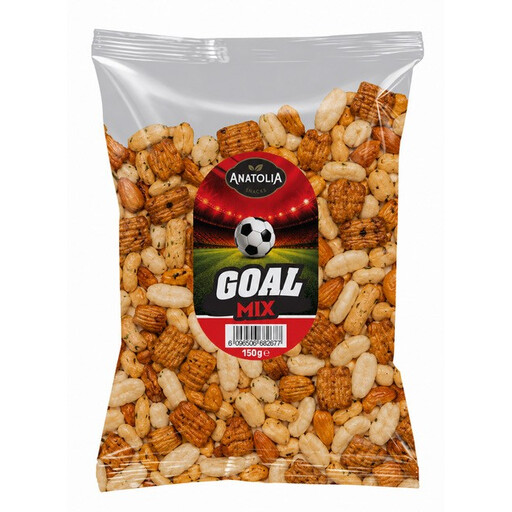
Anatolia Goal Nuts Mix, 150 g

Anatolia Goal Nuts Mix, 150 g

If you’d like to combine different types of nuts at lunchtime, the product description lists almonds, cashews and peanuts in this mix.

Joybuy

g'woon unsalted peanuts, 250 g

g'woon unsalted peanuts, 250 g

If unsalted peanuts suit your lunch, you can measure out the amount you want for each portion.

The nutritional information lists 27 g of protein per 100 g. The ingredients list 99% peanuts and sunflower oil; the product contains peanuts and may contain traces of cashews.

Joybuy
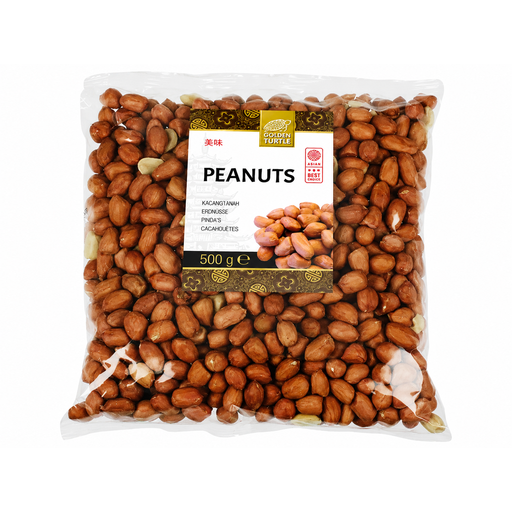
Golden Turtle Premium Raw Peanuts with Skin, 500 g

Golden Turtle Premium Raw Peanuts with Skin, 500 g

If you’d like to put together your own lunch addition, this product is described as raw, unroasted peanuts.

The nutritional information lists 26 g of protein per 100 g. Roasting is suggested as a way to prepare them as a snack.

Joybuy
Koh-Kae Coated Peanuts Coconut Cream, 110 g

Koh-Kae Coated Peanuts Coconut Cream, 110 g

If you’re looking for a ready-to-eat peanut snack with coconut flavour, this is a coated variety.

The ingredients list peanuts, wheat and salt.

Joybuy
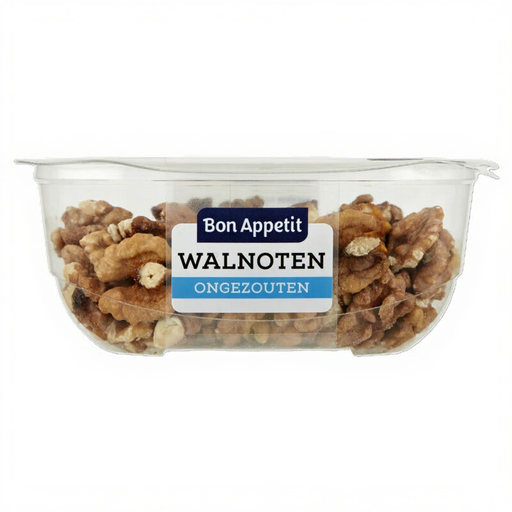
Bon Appétit unsalted walnuts, 110 g

Bon Appétit unsalted walnuts, 110 g

If you’d like unsalted walnuts with lunch, bear in mind that these walnuts are in their shells.

The nutritional information lists 15.9 g of protein per 100 g.

Joybuy

Frequently asked questions

Are peanuts actually nuts?

Botanically, peanuts are legumes. The Netherlands Nutrition Centre includes them in the nut group for dietary advice because of their nutritional composition, which is why they feature in this buying guide.

Is a handful of nuts enough for a sports lunch?

Consider your whole lunch, not just the nuts. For unsalted peanuts, the Netherlands Nutrition Centre gives an average of 6.3 g of protein per 25 g portion and notes that a varied, everyday diet can provide enough protein for many people who exercise.

How should you store nuts if you take a portion with you every day?

Store nuts in a tightly sealed container in a cool, dry place, and follow the instructions on the label. For the peanuts reviewed, Albert Heijn advises sealing the pack securely after use and storing it somewhere cool, dark and dry.

Does a university canteen have to list allergens for unwrapped nuts?

For unpackaged food, allergen information must be available before purchase. According to the NVWA, this information can be displayed on a menu or shelf label, for example; staff can also provide it verbally if customers are clearly told they can ask.
