
Heading out without any preparation
You want to have a sealed packet ready to grab, and you’re checking the quantity and whether the ingredients suit your breakfast.


If you can portion them out in advance, unsalted nuts in a well-sealed container are a practical choice for a breakfast portion you put together yourself. If you’d rather grab a sealed packet in the morning, check its weight and ingredients: a pre-portioned pack doesn’t automatically contain the amount you want to eat.
You want to have a sealed packet ready to grab, and you’re checking the quantity and whether the ingredients suit your breakfast.
You want to portion out unsalted nuts yourself, perhaps combining them with yoghurt, fruit or porridge, rather than treating the whole shop-bought pack as one portion.
You’re looking for a larger pack so you can make up your own portions, and checking the weight, ingredients and how to store it after opening.
A good fit if: you want to take a sealed packet with you without having to transfer the contents.
Bear in mind: the contents of each packet and the ingredients; the Duyvis version described is salted and contains 60 grams per packet.
A good fit if: you want to decide in advance how much to have for breakfast.
Bear in mind: you’ll need to portion out the nuts and keep the opened pack well sealed.
A good fit if: you want to portion out nuts for several mornings.
Bear in mind: the whole pack isn’t an individual breakfast portion; choose an amount that reflects how much you’ll actually use.
| What to consider | What should you check? | Who should pay particular attention? |
|---|---|---|
| Having a portion ready to grab | Check the weight per packet and the number of packets; decide for yourself whether that amount suits you. | If you don’t want to transfer the contents in the morning, a sealed packet is handy. Around 36% of consumers give convenience of packaging top priority. |
| Ingredients that suit your breakfast | Read the ingredients and check for salt, oil and any sugar or chocolate coatings. | If you want to combine unsalted nuts with, for example, yoghurt, fruit or porridge, the ingredients matter. Around 29% of consumers put this choice first. |
| Buying and storing a supply | Compare pack weights and follow the storage advice after opening; nuts should be kept dry and well sealed. | If you want to prepare portions for several mornings, it’s useful to choose an amount you intend to use. Around 21% of consumers give planning their supply top priority. |
| Allergens | Read the ingredients and warnings on the current packaging, including any ‘may contain’ statement. | If you have a relevant food allergy, check the product information on each pack. Around 14% of consumers put checking for allergens first. |
The Duyvis Portiepack described contains 60-gram packets. That’s the pack size, not a personal nutritional recommendation.
Check the weight per packet and decide for yourself how much you want to eat; assess that amount separately from the packaging.
Duyvis lists sunflower oil in its unsalted peanuts. According to the product information, PLUS’s unsalted nut mix also contains peanuts and sunflower oil.
Read the ingredients if you’re looking for a particular type of nut or want to avoid oil.
A larger pack means portioning out the nuts yourself and storing them after opening. Weight and ingredients vary by product.
Choose an amount you intend to use, and store opened nuts in a dry, well-sealed container.
There are both unsalted peanuts in a larger pack and salted peanuts in individual packets.
The range includes unsalted nut mix and student mix, among other options.
Jumbo Noten Mix Ongezouten 200 g is a larger pack for portioning out yourself.
Alesto is the range of nuts, dried fruit and snacks you may find at Lidl.
TRADER JOE'S Notenmelange ongezouten 500 g is a larger pack for portioning out yourself.
PLUS Notenmix ongezouten comes in a 200-gram stand-up pouch for portioning out yourself.
These are larger packs of unsalted nuts for portioning out yourself for breakfast on the go.
 Image unavailable
A larger pack for portioning out a breakfast serving yourself.
The product information lists 99% peanuts, sunflower oil and 0.02 g of salt per 100 g. Contains peanuts and may contain cashew nuts.
 Image unavailable
A pack of unsalted almonds for portioning out yourself.
The product name specifies raw, unsalted almonds in a 200 g pack.
 Image unavailable
A larger pack of unsalted cashew nuts for portioning out yourself.
The product name specifies roasted cashew nuts in a 200 g pack. Contains cashew nuts.
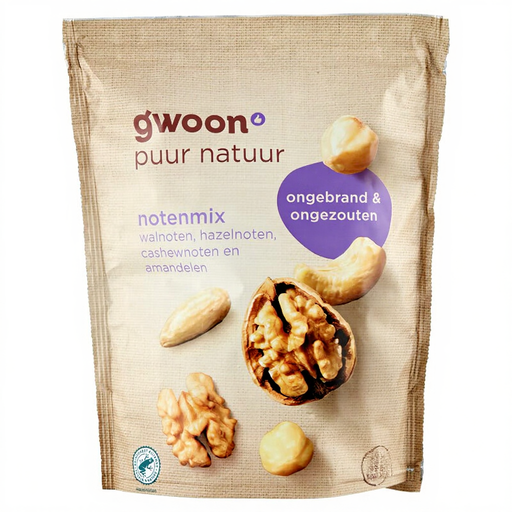 Image unavailable
A larger pack for portioning out unsalted nuts for several mornings.
The product information lists hazelnuts, walnuts, almonds and cashew nuts, and 0 g of salt per 100 g. May contain traces of peanuts and other nuts.
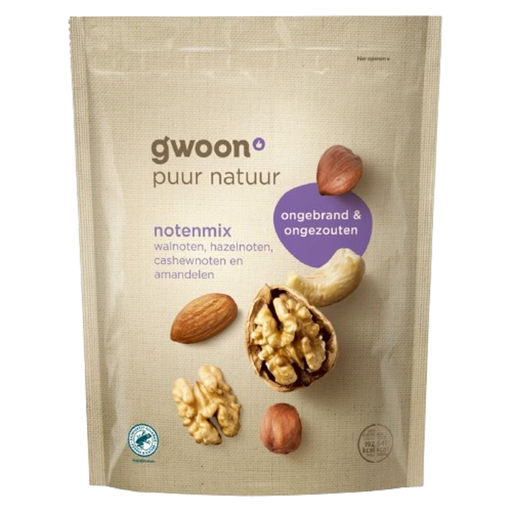 Image unavailable
A mixed pack for portioning out an unsalted serving yourself.
The product information lists hazelnuts, walnuts, almonds and cashew nuts, and 0.01 g of salt per 100 g. Contains nuts and may contain traces of peanuts.
No, the contents of a pack don’t automatically determine how much you want to eat. The packs described range from 60-gram packets to a 500-gram larger pack. The Dutch Nutrition Centre recommends eating a handful of unsalted nuts each day.
The Dutch Nutrition Centre suggests yoghurt or quark with fruit, nuts and granola as a quick breakfast combination. Enjoy the nuts as part of your breakfast; a pack that’s handy to take with you doesn’t, by itself, tell you anything about the ingredients in your whole breakfast.
Keep nuts dry and well sealed. The Dutch Nutrition Centre recommends storing them in a cool place at 10 to 15 °C; also follow the storage instructions on the specific product’s label.
Yes, if these qualities matter to your choice. Duyvis lists sunflower oil in its unsalted peanuts. The specific PLUS unsalted mix lists 0.02 grams of salt per 100 grams, as well as sunflower oil; this information doesn’t automatically apply to other products.
Check the ingredients and allergen information on the current packaging, including any warning that the product may contain allergens. According to the Netherlands Food and Consumer Product Safety Authority, allergen information must appear on the label of prepacked products; peanuts and nuts are listed separately.