
Parents with a specific dietary requirement
You’re looking for an after-school snack that suits, for example, a gluten-free diet or lactose intolerance. Check which characteristic is stated for the exact product and what other allergens are listed.


Only give your child nuts after school if the exact product meets their dietary needs and complies with the rules at their school or after-school club. If your child has a nut allergy, nuts are not a suitable general free-from alternative. Unsalted nuts may be an option for children without a relevant allergy restriction, but gluten-free or lactose-free only refers to that specific characteristic. Check the allergen information on the exact pack, and bear in mind the risk of choking with whole nuts.
You’re looking for an after-school snack that suits, for example, a gluten-free diet or lactose intolerance. Check which characteristic is stated for the exact product and what other allergens are listed.
You want something that suits your child and complies with the rules at their class or childcare setting. Where your child eats and any local allergy rules may determine whether nuts are an option.
You want a practical after-school snack and your child has no relevant allergy restrictions. In that case, whether the nuts are unsalted, how they’re prepared and how your child eats them may all be factors.
First, check whether nuts are suitable for your child’s dietary needs and allowed where they’ll be eating. Then compare the variety and how you’ll serve the snack.
The percentages show the first decision-making criterion for consumers choosing an after-school snack in each row.
| What to consider | What should you check? | Who is this important for? |
|---|---|---|
| Dietary suitability | Be clear about what you want to avoid, then check the ingredients, allergen information and warnings together on the exact pack. | If I’m choosing a snack to suit a particular diet, I want to know whether this specific product is suitable and what other allergens are listed. Around 36% of consumers put dietary suitability first. |
| School and after-school club rules | Ask which products or allergens are excluded under the current rules where your child will be eating. | Before packing a snack for school or an after-school club, I want to know whether that setting allows nuts or peanuts. School rules are the first thing around 29% of consumers consider. |
| Everyday snack | Choose between unsalted and salted or seasoned varieties, and assess dietary characteristics separately. | If you’re looking for a regular snack and your child has no relevant dietary restrictions, unsalted may be an important characteristic. The Voedingscentrum lists unsalted nuts as a possible snack for children aged 4 to 12; around 21% of consumers put their everyday snack choice first. |
| Preparation and storage | Choose a form that suits the way your child eats, and follow the storage instructions on the pack. | If I want to pack a snack for my child, I make sure they can eat it safely and that the packaging is practical to store. Preparation and convenience come first for around 14% of consumers. |
A product can be gluten-free and lactose-free yet still contain almonds or list other nuts and peanuts as possible allergens. For example, Albert Heijn describes AH Unsalted Almonds this way; Jeroen Bosch Hospital advises avoiding foods containing nuts or traces of nuts if your child has a nut allergy.
Read the full allergen information for the exact product, and don’t assume that a claim applies to other products from the same brand.
Your child’s school or after-school club may have its own rules about nuts, even if your child can eat the snack at home. OBS De Venen outlines specific rules for its younger classes; this local policy doesn’t automatically apply elsewhere.
Check the current rules with the school or childcare setting before packing the snack.
If nuts aren’t allowed where your child eats, you may need to provide a different snack.
Duyvis Almonds Original is a different variety from Duyvis Unsalted Almonds. The manufacturer says that Original contains salt in the seasoning mix and may contain wheat, peanuts and various nuts.
Assess the preparation method, salt content and allergen information as separate product characteristics.
The amount shown on a pack doesn’t automatically tell you what form or quantity is right for your child. The Voedingscentrum warns of the risk of choking on whole nuts and peanuts.
Choose a form that suits your child and encourage them to eat slowly. Take extra care to supervise them when they’re eating whole nuts.
The Unsalted Almonds and Almonds Original varieties reviewed are different almond products. Compare the ingredients of the variety you’re considering.
AH Unsalted Almonds 190 g may be worth considering if you’re looking for an unsalted variety that’s specifically labelled gluten-free and lactose-free.
Jumbo Unsalted Almonds 140 g is a specific unsalted almond variety.
The variety reviewed is called Unsalted Almonds, product number 172897.
The Trader Joe’s Nut Mix reviewed is an ALDI product containing several types of nuts.
PLUS Unsalted Almonds 150 g is a specific unsalted almond variety.
The products below are almond, hazelnut and chestnut snacks. Check the allergen information for each specific variety.
 Image unavailable
An option if you’re specifically looking for an almond snack. The product name specifies almond kernels, and the pack contains 160 g.
Contains almonds; not suitable if almonds need to be avoided.
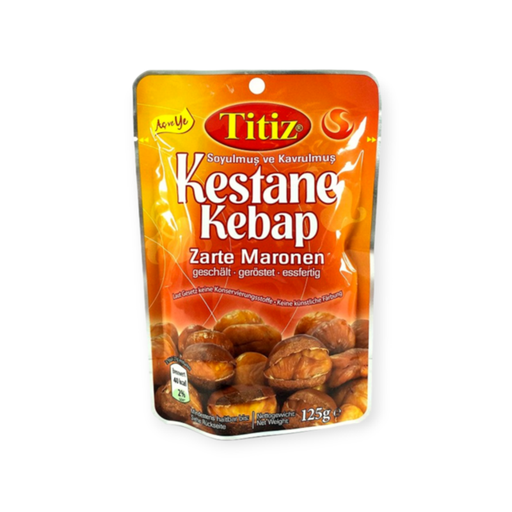 Image unavailable
A choice if you’re looking for chestnuts rather than almonds or hazelnuts. The product name specifies roasted chestnuts, and the pack contains 125 g.
 Image unavailable
An option if you’re specifically looking for raw, unsalted almonds. The product name specifies this variety and a pack size of 200 g.
Contains almonds; not suitable if almonds need to be avoided.
 Image unavailable
An almond variety for anyone looking for almonds as a snack. The product name specifies 500 g.
Contains almonds; not suitable if almonds need to be avoided.
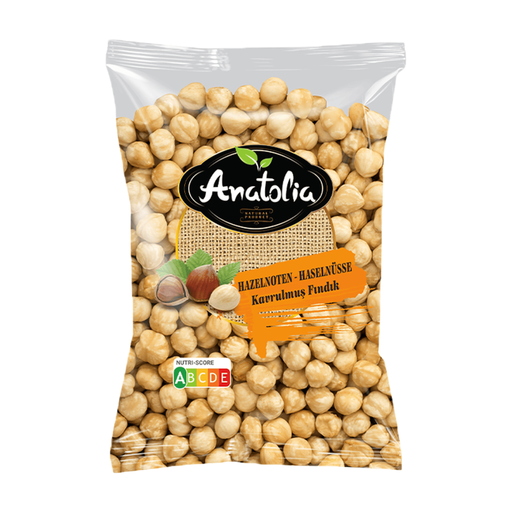 Image unavailable
An option if you’re looking for hazelnuts rather than almonds. The product name specifies roasted hazelnuts, and the pack contains 500 g.
Contains hazelnuts; not suitable if hazelnuts need to be avoided.
No. Gluten-free doesn’t mean a product is free from nuts: AH Unsalted Almonds contains almonds. Jeroen Bosch Hospital advises avoiding foods containing nuts or traces of nuts if your child has a nut allergy. Follow the advice given for your child’s specific treatment.
No. Lactose intolerance affects the digestion of milk sugar, whereas a cow’s milk protein allergy is a reaction to milk proteins. If you have a milk allergy, check the allergen information rather than relying only on a lactose-free label.
Not without checking the rules at the specific setting first. Schools and childcare settings may have their own rules; for example, OBS De Venen outlines rules for its younger classes. This local policy doesn’t automatically apply to other schools or after-school clubs.
Take your child’s age, the form of the nuts and the way they eat into account. The Voedingscentrum warns of the risk of choking on whole nuts and peanuts. Choose a form that suits your child and encourage them to eat slowly.
According to the Netherlands Food and Consumer Product Safety Authority, allergen information must appear on the label of prepacked products. Since 1 January 2026, new rules have also applied to how and when businesses warn about allergens that may accidentally get into food. Read the information on the pack of the product you’re planning to give your child.