Who is each option relevant to?

If you’re looking for less fat

You want a savoury nut snack while studying and want to know exactly what a lower-fat claim refers to. Check whether the comparison is with the same type of snack, and look at the absolute fat content per 100 g too. The Duyvis labels reviewed compare the products with ordinary peanuts in a crispy coating; Albert Heijn lists 21 g of fat per 100 g for both varieties.

If you’re mainly looking for unsalted nuts

You’d rather focus on added salt and the ingredients than on total fat alone. The Netherlands Nutrition Centre includes unsalted nuts in its Wheel of Five; also check which nuts are included and whether the ingredients list contains any oil.

If you want to choose your own portion

You want to measure out how much you eat at your desk. Compare the nutritional values per 100 g and, if needed, calculate them for the same portion weight. Check whether the pack can be resealed after opening too; the Netherlands Nutrition Centre advises storing nuts in a dry place in a tightly sealed container.

What should you look out for when choosing?

Coated nuts with a lower-fat claim

A good fit if: you’re looking for a savoury snack with a crispy coating and want to assess the claim within that product category.

Keep in mind: the claim compares the product with ordinary peanuts in a crispy coating, not with all nuts; according to Albert Heijn, the varieties reviewed are no longer available.

Dry-roasted nuts

A good fit if: you want roasted nuts prepared without added oil or fat.

Keep in mind: the Duyvis almonds and mix reviewed list 50 g and 47 g of fat per 100 g respectively; ‘no added fat’ does not mean low fat.

Unsalted nuts with a measured portion

A good fit if: you mainly want unsalted nuts and would like to decide for yourself how much to eat while studying.

Keep in mind: unsalted nuts can still be high in fat; a smaller portion does not change their composition per 100 g.

What to consider What should you check? Who is this important to?
Understanding the lower-fat claim Read the full basis for comparison, the fat content per 100 g and the ingredients. For solid foods, the European Commission sets a maximum of 3 g of fat per 100 g for a ‘low fat’ claim; Albert Heijn lists 21 g per 100 g for the Duyvis coated nuts reviewed. If I’m looking for less fat, I want to know whether the comparison relates to the type of snack I eat and what the product contains in absolute terms. Around 33% of consumers prioritise reducing fat and having a clear claim.
Energy per portion eaten Compare products per 100 g first, then calculate the values for the same portion weight. A calculation based on 25 g is just an example for comparison, not a general daily recommendation. If I mainly want to know how much energy my snack break provides, I focus on the portion I’ve weighed out myself rather than just a claim on the front of the pack. Around 27% of consumers prioritise energy per snack break and a portion they measure out themselves.
Unsalted ingredients Check the salt per 100 g, the proportion of nuts and whether oil has been added. Jumbo lists less than 0.01 g of salt per 100 g for the unsalted mix reviewed; the Duyvis coated nuts list 2 g. If I mainly want unsalted nuts, I also check the ingredients and don’t automatically treat a lower fat content as the deciding factor. Around 27% of consumers prioritise unsalted products and their ingredients.
Portioning and storage Check the pack size, whether it can be resealed and the storage instructions. The Netherlands Nutrition Centre advises storing nuts in a dry place in a tightly sealed container. If I’m splitting a bag across several study sessions, I want to choose my own portion and store the pack properly. Around 13% of consumers prioritise portioning and storage.

Common buying mistakes

  • Assuming ‘oven roasted’ means ‘low fat’

    Roasting without added oil or fat does not automatically change the natural fat content. The Duyvis oven mix reviewed lists 47 g of fat per 100 g, while the almonds list 50 g.

    Check the absolute fat content per 100 g, and treat the preparation method separately from a low-fat claim.

  • Looking only at fat

    According to the product information, the lower-fat coated nuts reviewed also contain a wheat-based coating and 2 g of salt per 100 g. Comparing fat alone overlooks these ingredients and the salt.

    Check the salt content, the proportion of nuts and the allergen information too. If you have a relevant allergy, a nutrition claim alone is not a suitable basis for your choice.

  • Comparing the portions on the labels directly

    The AH cashews and Jumbo mix reviewed use a labelled portion of 25 g, while the Duyvis oven products list 30 g. Different portion sizes mean the per-portion values cannot be compared directly.

    Compare products per 100 g first, then calculate the values for the same portion weight.

Relevant brands and product types

Duyvis

The product types reviewed range from coated nuts with a lower-fat claim to oven-roasted products prepared without added oil or fat.

  • For the Herbs&Onion and Sweet Paprika coated nuts reviewed, Albert Heijn states that they contain 30% less fat than ordinary peanuts in a crispy coating, on average.
  • The same varieties list 21 g of fat per 100 g and are marked ‘No longer available’ at Albert Heijn. According to their product labels, the oven mix and almonds reviewed contain 47 g and 50 g of fat per 100 g respectively.

Albert Heijn

The AH unsalted cashews reviewed are a specific option if you’re mainly focused on salt and ingredients.

  • The product information lists 0 g of salt per 100 g and 96% cashews.
  • The same product information lists sunflower oil, 50 g of fat and 622 kcal per 100 g, so unsalted does not mean low fat in this case.

Jumbo

The Jumbo Unsalted Nut Mix reviewed contains peanuts, almonds, cashews, Brazil nuts and hazelnuts.

  • The label lists less than 0.01 g of salt per 100 g and a portion size of 25 g.
  • The product information lists sunflower oil and 54.7 g of fat per 100 g; these figures do not support a low-fat claim.

Lidl

Lidl describes a 200 g unroasted, unsalted nut mix; Alesto is the supermarket’s nut brand.

  • The product description calls the mix unroasted and unsalted.
  • The product page states ‘In store only’. Being unroasted and unsalted does not in itself tell you how much fat or energy the mix contains.

ALDI

The Trader Joe’s Unsalted Nut Mix reviewed is a supermarket product containing almonds, hazelnuts, walnuts and Brazil nuts.

  • The official product description confirms that the mix is unsalted and lists the nut varieties included.
  • An unsalted product description does not make this nut mix a lower-fat option.

PLUS

The PLUS unroasted, unsalted nut mix reviewed contains walnuts, hazelnuts, almonds and cashews in a 500 g bag.

  • The ingredients list specifies 30% walnuts, 30% hazelnuts, 20% almonds and 20% cashews.
  • The label lists 0.01 g of salt and 55.7 g of fat per 100 g. With a large pack, you can choose your own portion size.

Nut snacks at Joybuy

These Joybuy products are suitable as snacks while studying, with options including chestnuts, dry-roasted cashews and unsalted nuts.
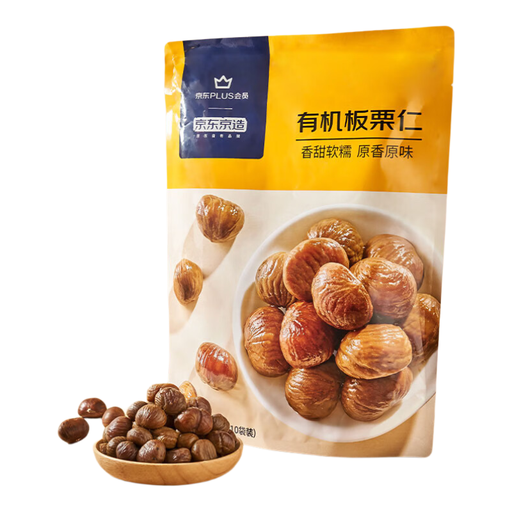
J.ZAO S++ Grade Whole Chestnuts, 1 kg, 10 sachets

J.ZAO S++ Grade Whole Chestnuts, 1 kg, 10 sachets

A good choice if you’re looking for a ready-to-eat snack already divided into individual sachets.

The product information lists 1.7 g of fat, 191 kcal and 0 g of salt per 100 g. The pack contains 10 sachets of 100 g; the chestnuts are peeled and ready to eat.

Joybuy

Duyvis Dry Roasted Cashews, 125 g

Duyvis Dry Roasted Cashews, 125 g

A good choice if you want roasted cashews that, according to the product description, are prepared without added oil or fat.

The product information lists 43 g of fat and 0.92 g of salt per 100 g. According to the description, the pack contains 4–5 portions; no added fat does not mean low fat.

Joybuy

g'woon Unsalted Peanuts, 250 g

g'woon Unsalted Peanuts, 250 g

A good choice if you’re mainly looking for unsalted peanuts and want a snack you can store after opening.

The product information lists 99% peanuts, sunflower oil and 0.02 g of salt per 100 g. The fat content is 50 g per 100 g; unsalted does not mean low fat.

Joybuy

g'woon Almonds Raw & Unsalted, 200 g

g'woon Almonds Raw & Unsalted, 200 g

A good choice if you’re looking for raw almonds with no added salt or oil.

The product information lists 50 g of fat and 591 kcal per 100 g. Raw, unsalted almonds are therefore not low in fat.

Joybuy
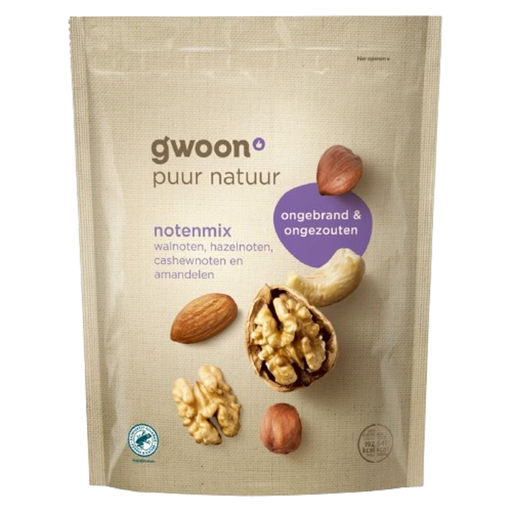
g'woon Nut Mix Raw & Unsalted, 200 g

g'woon Nut Mix Raw & Unsalted, 200 g

A good choice if you want an unsalted mix of different nuts.

The product information lists hazelnuts, walnuts, almonds and cashews, with 0.01 g of salt and 55.7 g of fat per 100 g. According to the description, the pack can be resealed after opening.

Joybuy

Frequently asked questions

Does ‘lower fat’ mean the same as ‘low fat’?

No. For solid foods, the European Commission sets a maximum of 3 g of fat per 100 g for a ‘low fat’ claim. The Duyvis claim reviewed compares the product with ordinary peanuts in a crispy coating; the products list 21 g of fat per 100 g.

Is 25 g a daily recommendation for everyone?

No. In this comparison, 25 g is a standard weight used for calculations and is also the labelled portion for the AH cashews and Jumbo mix reviewed. Don’t treat it as a general daily recommendation; on the page consulted, the Netherlands Nutrition Centre advises eating a handful of unsalted nuts each day and varying the types.

How should you store an opened pack of nuts?

Store nuts in a dry place in a tightly sealed container. For the cashews reviewed, Albert Heijn also advises storing them in a cool, dark place; always follow the storage instructions on the pack you buy.

Which allergens should you check in coated nuts?

Check the label for peanuts, nuts, cereals containing gluten and warnings about possible traces. The lower-fat coated nuts reviewed contain peanuts and a wheat-based coating; according to the Netherlands Food and Consumer Product Safety Authority, allergen information must appear on the label of prepacked products.

Does a nutrition claim prove you’ll do better in your exams?

No. A claim about a snack’s composition does not show that it affects exam results. European rules require nutrition and health claims to be substantiated and not misleading, so don’t use a promise of exam success as a reason to buy.
