
Snackers who track calories
If you want to keep eating nuts while managing your energy intake, compare equal weights and weigh your portion. The Netherlands Nutrition Centre does not always use the same portion size for different types of nuts.


Compare nuts using the same weighed portion, and check the exact variety, ingredients and a portion size you can measure. A lower energy value on the label does not, on its own, prove that a product helps you lose weight. The varieties checked list 594–633 kcal per 100 g—well above the European Commission’s threshold of 40 kcal (170 kJ) per 100 g for a ‘low-calorie’ claim.
If you want to keep eating nuts while managing your energy intake, compare equal weights and weigh your portion. The Netherlands Nutrition Centre does not always use the same portion size for different types of nuts.
If unsalted nuts and simple ingredients matter to you, check for oil, salt and other ingredients too. The Netherlands Nutrition Centre includes unsalted nuts in the Dutch Wheel of Five.
If you eat nuts often, packaging that’s easy to portion and store may suit your needs better. The Netherlands Nutrition Centre recommends storing nuts in a cool, dark and dry place.
First compare the energy per 100 g, then check the ingredients and how the nuts are prepared. Finally, choose a portion size and pack that suit the way you’ll use them.
| What to consider | What to look for | Who is this important for? |
|---|---|---|
| Energy per portion | Compare kcal per 100 g and weigh the same amount; then calculate the energy for your own portion. | If I want to measure my snack portion carefully, I start by comparing equal weights. Around 36% of consumers put managing calories first. |
| Nutritional composition | Check the protein, fibre and salt per 100 g on the label, and consider these figures alongside the portion size. | The ingredients and nutritional values matter to me, even if another variety contains slightly less energy. Around 29% of consumers put nutritional composition first. |
| Taste and preparation | Check the ingredients list to see whether the nuts are unroasted, roasted, prepared with oil or coated in batter. | If I’m looking for a particular taste or texture, I consider the whole snack, not just the type of nut. Around 21% of consumers prioritise taste and preparation. |
| Packaging and storage | Check the net weight, how easy it is to measure a portion and how to store the rest, as instructed on the packaging. | I want a pack that suits how often I eat nuts and that I can reseal properly after use. Around 14% of consumers prioritise practical packaging and ease of use. |
In the general nutrition information consulted, the Netherlands Nutrition Centre uses 20 g for pistachios and 25 g for cashews and almonds. Comparing these portions can therefore make the differences between types seem greater than they are.
Compare kcal per 100 g or weigh out the same amount for each variety. Convert the value for a portion if it is based on a different quantity.
‘Unsalted’ tells you about the salt, not the energy value or other ingredients. Duyvis lists sunflower oil in Pinda’s Ongezouten, as does Albert Heijn for AH Cashewnoten ongezouten. The European Commission sets a maximum of 40 kcal (170 kJ) per 100 g for a ‘low-calorie’ claim.
Check the salt, ingredients and energy as separate product details on the packaging of the variety you’re buying.
A nutrition table describes a product’s composition, not its effect on weight loss. Comparing labels therefore does not prove that one variety will help you lose weight.
Use the energy value to plan a weighed portion, and consider it as part of your overall diet.
A pack often contains several snack portions. Storing the rest requires a suitable place and packaging that seals securely.
Weigh out an individual portion, seal the rest securely and follow the storage instructions. The Netherlands Nutrition Centre recommends storing nuts in a cool, dark and dry place.
If the original packaging doesn’t seal properly, you may need to transfer the remaining nuts to an airtight container.
The range includes unsalted peanuts and almonds, as well as separate seasoned or coated snacks.
The own-brand range includes AH Cashewnoten ongezouten in a 170 g pack.
The range includes roasted, unsalted pistachios in a 200 g pack.
The Alesto range includes natural cashews and almonds, as well as peanuts in a seasoned batter coating.
The range includes TRADER JOE’S roasted, unsalted cashews in a 250 g pack.
PLUS offers Cashewnoten ongezouten ongebrand in a 200 g pack.
This selection includes peanuts, almonds and cashews in a range of varieties. Compare the exact product, ingredients and energy per 100 g, and weigh the portion you eat.
 Image unavailable
This pack is a good fit if you’re looking for unsalted peanuts and want to weigh your own portion.
Pack weight: 250 g. Contains peanuts; not suitable for people with a peanut allergy.
 Image unavailable
This variety is worth considering if you’re looking for raw, unsalted almonds and want to compare portions by weight.
The product information lists 591 kcal and 13 g of fibre per 100 g. Pack weight: 200 g. Contains almonds; not suitable for people with an almond allergy.
 Image unavailable
This almond variety is an option if you’re looking for a product whose ingredients list contains only almonds.
The product information lists 100% almonds and 578 kcal per 100 g. Pack weight: 500 g. Contains almonds; not suitable for people with an almond allergy.
 Image unavailable
This variety suits anyone who prefers roasted, unsalted cashews and wants to weigh their portion.
The product information lists 596 kcal per 100 g. Pack weight: 200 g. Contains cashews; not suitable for people with a cashew allergy.
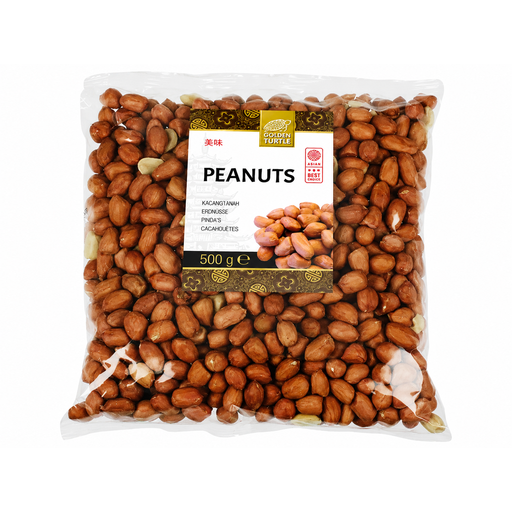 Image unavailable
These raw peanuts are an option if you’re looking for something to snack on or use in dishes, and prefer to measure your own portions.
The product information lists peanuts as the ingredient and 567 kcal per 100 g. Pack weight: 500 g. Contains peanuts; not suitable for people with a peanut allergy.
No—not the varieties checked, which contain 594 to 633 kcal per 100 g. According to the European Commission, the ‘low-calorie’ claim can only be used for solid foods containing no more than 40 kcal (170 kJ) per 100 g. A smaller portion does not change the threshold for the claim.
No. A lower value on the label doesn’t automatically qualify as an ‘energy-reduced’ claim. The European Commission requires at least 30% less energy than a comparable product for this claim, and the characteristics that make the reduction possible must be stated.
Multiply the kcal per 100 g on the label by the number of grams you eat, then divide by 100. For AH Cashewnoten ongezouten, which Albert Heijn lists at 622 kcal per 100 g, 25 g works out to 155.5 kcal.
For each specific variety, check the ingredients and the allergen and cross-contamination information on the packaging. The Netherlands Food and Consumer Product Safety Authority (NVWA) lists peanuts and nuts as allergens that must be declared separately. ‘Unsalted’ or ‘unroasted’ says nothing about whether a product is suitable for someone with an allergy.
Store nuts in a cool, dark and dry place in a well-sealed container, and follow the instructions on the label. The Netherlands Nutrition Centre recommends these storage conditions. Don’t eat nuts if they are mouldy, rancid or noticeably different from usual.