If you want to eat less fat or consume less energy during a snack night, compare the nutritional values per 100 g and adjust your portion to what you actually serve. Being oven-baked or labelled as having no added oil does not, by itself, prove that a product contains less fat. According to the European Commission, solid foods must contain no more than 3 g of fat per 100 g to make a low-fat claim. Unsalted nuts can form part of general dietary advice, but unsalted does not mean low in fat.
Who is this relevant to?
Shoppers looking for less fat
You want to eat demonstrably less fat during a snack night. So check what a reduced-fat claim is based on, and also look at the absolute fat content per 100 g. A historic Duyvis product shows that a relative claim is not the same as low-fat; Albert Heijn states that this product is no longer in its range.
Portion-conscious snackers
You want to keep eating nuts but decide how much to have at each snack occasion. Compare the nutritional values per 100 g and work them out for the portion you serve. For a typical 25 g handful of unsalted nuts, the Netherlands Nutrition Centre gives a figure of 14.9 g of fat. This is not a product-specific value for every type of nut or brand.
Shoppers choosing unsalted nuts
You’re mainly looking for unsalted nuts and want to vary the types you eat. The Netherlands Nutrition Centre recommends a handful of unsalted nuts each day and variety. Unsalted is a different product characteristic from low-fat.
What should you look for when choosing?
Coated party nuts with a reduced-fat claim
A good fit if: you’re looking for a seasoned, crunchy coating and want to assess an explicit comparison.
Bear in mind: a relative reduction can still go hand in hand with a high absolute fat content. The Duyvis product mentioned is a historical example, not a current buying option.
Unsalted nuts
A good fit if: you want to choose unsalted nuts and try different types.
Bear in mind: unsalted does not mean that a product is low in fat or prepared without added oil.
Nuts with no added fat
A good fit if: you’re looking for a product whose manufacturer states that no oil or fat is added during preparation.
Bear in mind: this preparation method does not prove that the product has a lower total fat content than a comparable one.
A pre-measured portion
A good fit if: you want to serve the nuts you’ve chosen in a set amount.
Bear in mind: you’re changing how much you eat, not the composition of the nuts.
Start by identifying the product characteristic that matters to you. Then compare nutritional values on the same basis and work them out for your portion.
| What to consider |
What should you check? |
Who is this important to? |
| Fat claim |
Check the fat content per 100 g and read which product the claim is compared with. For solid foods, the European Commission sets a maximum of 3 g of fat per 100 g for a low-fat claim. |
If I want to eat less fat, I want to know what the reduction is based on. Around 29% of consumers put a demonstrable reduction in fat at the top of their buying priorities. |
| Portion and energy |
Compare kcal per 100 g and work out the value for the amount you serve. |
If I want to limit how much I have at each snack occasion, I want to know what my portion adds up to. Around 23% of consumers prioritise energy and portion size. |
| Salt and ingredients |
Check the salt per 100 g and read the ingredients; unsalted does not automatically mean no added oil. |
If I’m mainly looking for an unsalted option, I don’t want to confuse that characteristic with low-fat. Around 18% of consumers put salt and nutritional choices first. |
| Flavour, texture and allergens |
Distinguish between a crunchy coating and roasted nuts, and check the allergen information on the packaging. |
When I choose snacks for a get-together, I look for flavours and textures that suit the occasion. Around 18% of consumers prioritise flavour and snack texture. |
| Packaging and storage |
Choose a pack size that suits how you’ll use the product and follow the storage instructions for that specific product. |
If I buy nuts for several occasions, I want a bag size that suits my needs. Around 12% of consumers put convenient packaging and managing leftovers first. |
Common mistakes
-
Confusing reduced-fat with low-fat
Albert Heijn’s listing for the historic Duyvis Oven Roasted Borrelnoten Sweet Paprika product included a claim of 30% less fat compared with the average for regular peanuts in a crunchy coating. The same product page listed 21 g of fat per 100 g. That is above the threshold for a low-fat claim on solid foods.
Check both the basis of comparison and the absolute fat content. Treat reduced-fat and low-fat as different claims.
-
Assuming unsalted or oven-roasted means low-fat
Unsalted describes the salt content, not the total fat. Jumbo Cashewnoten Ongezouten lists sunflower oil and 48.6 g of fat per 100 g. Duyvis states that no oil or fat is added to Oven Baked Peanuts Original; on its own, that tells you nothing about a reduction in total fat compared with another product.
Assess salt, added fat and total fat separately by checking the ingredients and nutrition table.
-
Comparing fat alone
Fat and energy are separate nutritional values. How much of each you consume also depends on the amount you serve.
Compare products per 100 g and work out the values for portions of the same weight.
-
Buying a large bag without a plan for leftovers
Pack sizes can vary. For unsalted cashews, the Netherlands Nutrition Centre lists rancidity, a chewy texture and mould as signs of spoilage.
Choose a bag size that suits how you’ll use it and follow the storage instructions on the packaging.
An oversized pack can leave you with leftovers that you don’t use in time.
Brands and product options for reference
Duyvis
Relevant for coated party nuts and a separate option featuring oven-baked peanuts.
- Duyvis states that no oil or fat is added to Oven Baked Peanuts Original.
- The historic Sweet Paprika variant with a 30% less fat claim is no longer in Albert Heijn’s range; neither that claim nor its availability applies to the whole brand.
Albert Heijn
Relevant for its own-brand unsalted cashew option and as a source of historical product information about Duyvis Sweet Paprika.
- The product name AH Ongezouten cashewnoten makes the unsalted variety easy to identify.
- Unsalted is not a low-fat claim; the historic Duyvis product page does not confirm current availability.
Jumbo
The product information for Jumbo Cashewnoten Ongezouten 200 g is an example of how to assess salt, ingredients and total fat separately.
- The product page lists 0.02 g of salt and 48.6 g of fat per 100 g.
- The ingredients list includes sunflower oil, so these unsalted cashews are not evidence of fat reduction.
Lidl
The nut mix mentioned is an own-brand option made with unroasted, unsalted nuts.
- The product page lists a 200 g bag.
- Being unroasted and unsalted does not support a claim of lower fat content.
ALDI
According to the product information, the unsalted nut mix mentioned contains almonds, hazelnuts, walnuts and Brazil nuts.
- The 500 g pack offers a different bag size to consider for your needs.
- The ingredients and pack size do not prove a low-fat or reduced-fat claim.
PLUS
The own-brand option mentioned is PLUS Cashewnoten ongezouten ongebrand, in a 200 g bag.
- The product name makes the unsalted, unroasted variety easy to identify.
- These characteristics do not, on their own, tell you anything about fat reduction. PLUS advises checking the current packaging, as product information can change.
Joybuy products for portion-controlled snacking
These Joybuy products are suited to taking nuts with you or measuring them out in advance for separate snack occasions. The walnuts and nut products listed are not low-fat options: their stated fat content is above 3 g per 100 g.
 No image available
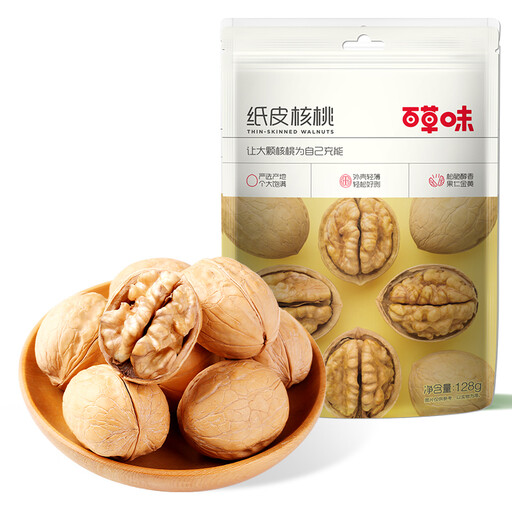
Be&Cheery Paper-Shell Walnuts 128 g
The description mentions individual packs, which may suit you if you want to take nuts with you for separate snack occasions.
Stated per 100 g: 74.9 g of fat and 738 kcal. This product is not low-fat.
View at Joybuy
 No image available
ChaCha Daily Nuts 115 g (23 g × 5)
The pack contains five 23 g portions, making it easy to measure out an amount in advance.
Stated per 100 g: 38.0 g of fat and 540 kcal. This product is not low-fat.
View at Joybuy
 No image available
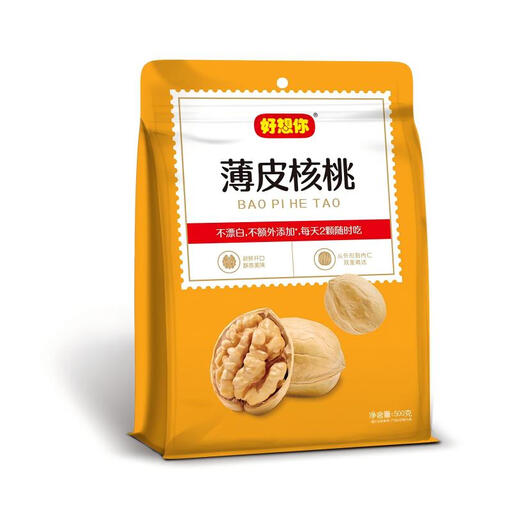
Haoxiangni Thin-Shelled Walnuts 500 g (Contains 8 Packs)
The product name mentions eight packs, which may be useful if you want to divide walnuts into individual portions.
Stated per 100 g: 66.2 g of fat and 694 kcal. This product is not low-fat.
View at Joybuy
 No image available
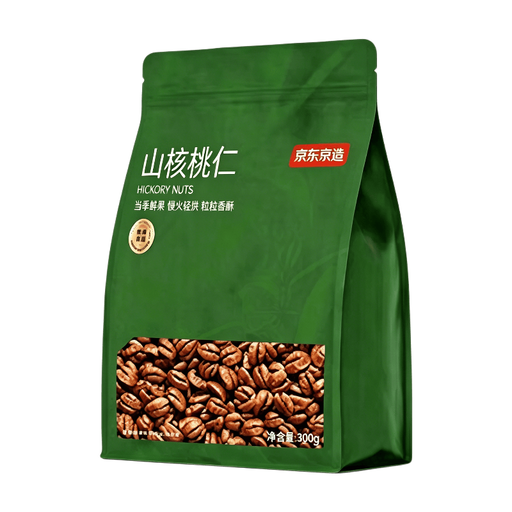
J.ZAO Hickory Nuts 300 g, Lin’an Small Hickory Kernels, Non-Fried
The product description mentions individual portion packs, making them handy if you want to take nuts with you for each snack occasion.
Stated per 100 g: 46.4 g of fat and 614 kcal. This product is not low-fat.
View at Joybuy
Frequently asked questions
When can a product be called low-fat in the Netherlands?
According to the European Commission, solid foods must contain no more than 3 g of fat per 100 g to make a low-fat claim. So a product with relatively less fat may still be above that threshold.
What should I compare if the portions on two packs are different?
First compare the nutritional values per 100 g, then work them out for portions of the same weight: the value per 100 g × the portion weight ÷ 100. The European Union requires nutrition information to be given per 100 g or per 100 ml; information per portion can also be provided.
What should I check if a guest has a food allergy?
Check the allergen information on the current packaging. The Netherlands Food and Consumer Product Safety Authority lists peanuts and nuts separately; ingredients in a crunchy coating or seasoning mix may also be relevant for party nuts. The historic Albert Heijn page for Duyvis Sweet Paprika listed peanuts and wheat, and stated that other nuts may also be present.
How should I store unsalted cashews after opening?
For unsalted cashews, the Netherlands Nutrition Centre gives a storage time after opening of 6 months in a kitchen cupboard or 1 year in the freezer. Rancidity, a chewy texture or mould are listed as signs of spoilage; also follow the storage instructions on the specific pack.


