Who are nuts for school and sport suitable for?

School pupils who play sport

You’re looking for a practical source of protein around school and training. Compare the nutritional value of a serving with what you actually eat; more protein does not automatically mean better recovery. The product values are from Flink, Albert Heijn and PLUS.

Parents planning school snacks

You want to pack something that takes account of allergies, safe eating and school policies. Older children can choke on whole nuts too; Amsterdam UMC advises eating calmly at the table and staying with them. Not every school automatically has a nut-free classroom.

People planning supplies and portions

You match pack sizes and portions to the number of school days and follow the storage instructions. AH lists 25 g servings for its unsalted peanuts and advises sealing the pack tightly after opening.

What should you look for when buying?

What to consider What to look for Who is this important for?
Protein per serving Compare protein values for the same weight. A 25 g serving is an example for calculation purposes, not dietary advice. When I choose a snack for school and sport, I want to know how much protein my serving actually provides. Around 36% of consumers say protein content is their top priority.
Allergens and safe eating Check the ingredients and warnings on the packaging, and ask the school about any policies. When I need to take an allergy, safe eating or a school policy into account, that comes before nutritional value. Around 29% of consumers put school safety first.
Composition Check the salt, energy and ingredients for the exact variety, not just the front of the pack. If I’m using a product regularly, I want to assess its composition alongside its protein content. Around 21% of consumers say everyday composition is their top priority.
Portions and supplies Compare pack weights and serving sizes, and follow the storage instructions. A larger pack does not, by itself, prove that it costs less. When I’m shopping for several school days, I want to match portions and supplies to what we use. Around 14% of consumers put planning and cost first.

Common buying mistakes

  • Confusing protein per 100 g with the protein in your snack

    A nutritional value per 100 g is not the amount of protein in a smaller serving. For the unsalted peanuts reviewed, a 25 g serving provides 6.25 to 6.75 g of protein.

    Compare products using the same serving weight, and don’t automatically treat the example serving as dietary advice for every child.

  • Taking ‘protein’ on the pack as proof of a recovery benefit

    A nutritional value, a nutrition claim and a health claim are different things. The product name does not prove that it helps you recover faster.

    Compare the nutritional information and consider your overall diet; don’t infer a recovery benefit from the name on the pack.

  • Choosing another nut brand as a solution to allergens

    The AH and PLUS peanuts reviewed contain peanuts and may contain tree nuts. Switching between these products does not remove the peanut allergen.

    Check the allergen information on the current packaging and, if you have a known food allergy, follow your individual medical advice.

  • Buying a large bag without a portion and storage plan

    Pack sizes vary. If the quantity doesn’t suit how you’ll use it, some of the product may go unused.

    Work out how much you need in advance and follow the product’s specific storage instructions.

Brands to compare

Duyvis

Duyvis presents its unsalted peanuts as a snack and cooking ingredient. The 235 g Dutch variety reviewed is a specific option to compare nutritional values.

  • Flink lists 27 g of protein per 100 g for this variety.
  • This nutritional value is not a test of sports recovery and does not, on its own, show whether the variety meets the requirements for a ‘high-protein’ claim.

Albert Heijn

AH Unsalted Peanuts, 300 g, includes information about servings, ingredients and storage.

  • Albert Heijn lists 25 g of protein per 100 g and a serving size of 25 g.
  • The information lists peanuts and the possible presence of tree nuts; check the packaging if you have allergies.

Jumbo

The range includes options such as unsalted nut mix and unsalted cashews in different pack sizes.

  • The options mentioned give you a choice between a mix and cashews, and between 200 g and 500 g packs.
  • A product name or nut mix doesn’t tell you how much protein is in a serving; check the nutritional information for the exact variety.

Lidl

Lidl describes Alesto as a range of nuts and dried fruit. One 200 g nut mix is described as unroasted and unsalted.

  • The product description gives you a specific mix and pack size to assess for its composition.
  • The product page says it is sold in store; this does not mean the variety is available for online delivery. ‘Unroasted and unsalted’ doesn’t tell you how much protein your serving provides.

ALDI

The Dutch range lists standard unsalted nut options and a product called TRADER JOE'S Protein nut mix, 150 g.

  • The options mentioned offer different product types to compare.
  • The name ‘Protein nut mix’ does not confirm an extra recovery benefit or nutritional quality. Compare the nutritional information for the exact variety.

PLUS

PLUS Unsalted Peanuts, 300 g per stand-up pouch, is a own-brand option with nutritional and allergen information.

  • PLUS lists 25 g of protein and 0 g of salt per 100 g.
  • The product contains peanuts and may contain tree nuts, so don’t treat it as an allergen-free alternative.

Nuts and peanuts at Joybuy

Joybuy product options featuring peanuts and nut mixes for school and sport.
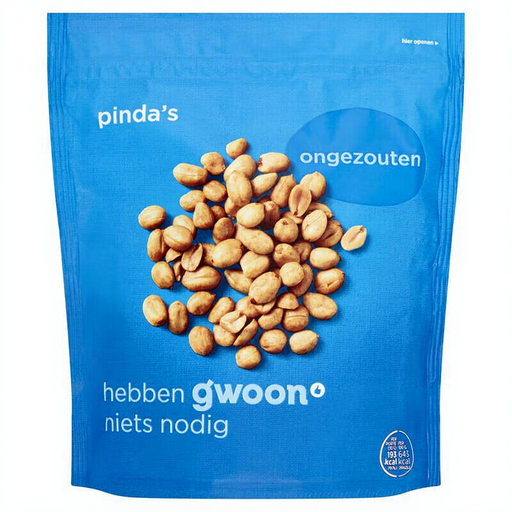
g'woon unsalted peanuts, 250 g

g'woon unsalted peanuts, 250 g

A peanut option for comparing the listed protein value per serving. Joybuy product information lists 27 g of protein and 0.02 g of salt per 100 g.

The ingredients are listed as 99% peanuts and sunflower oil. The product contains peanuts and may contain traces of cashews.

Whole nuts can pose a choking risk for older children too. Amsterdam UMC advises eating calmly at the table and staying with them.

Joybuy
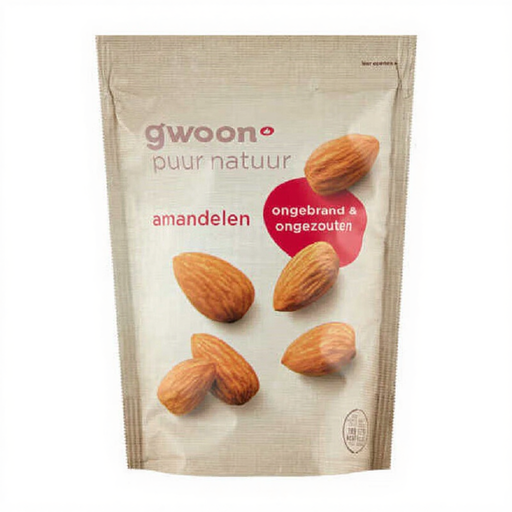
g'woon raw unsalted almonds, 200 g

g'woon raw unsalted almonds, 200 g

An almond option to compare with peanuts or a nut mix. Joybuy product information lists 24 g of protein, 13 g of fibre and 0.03 g of salt per 100 g.

The ingredients list almonds. Whole nuts can pose a choking risk for older children too; Amsterdam UMC advises eating calmly at the table and staying with them.

Joybuy
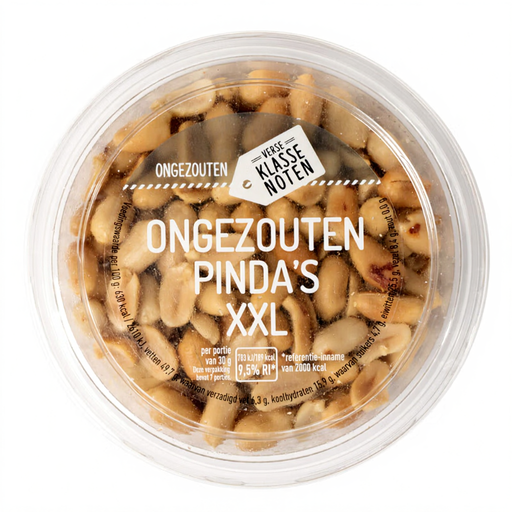
Verse Extra Large roasted peanuts, 210 g

Verse Extra Large roasted peanuts, 210 g

A roasted peanut option for comparing the nutritional value of a suitable serving. Joybuy product information lists 26 g of protein, 626 kcal and 0.02 g of salt per 100 g.

The ingredients are listed as 100% peanuts. Whole nuts can pose a choking risk for older children too; Amsterdam UMC advises eating calmly at the table and staying with them.

Joybuy
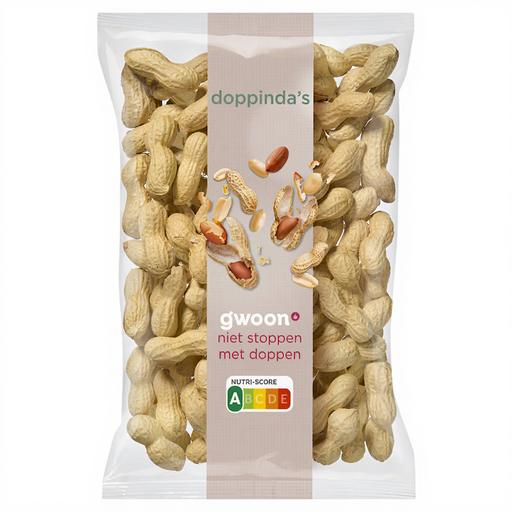
g'woon peanuts in shells, 500 g

g'woon peanuts in shells, 500 g

This larger pack may suit you if you want to portion out the peanuts in their shells yourself. Joybuy product information lists 29 g of protein, 11 g of fibre and 0.12 g of salt per 100 g.

The shells need to be cracked open first. Whole nuts can pose a choking risk for older children too; Amsterdam UMC advises eating calmly at the table and staying with them.

Joybuy
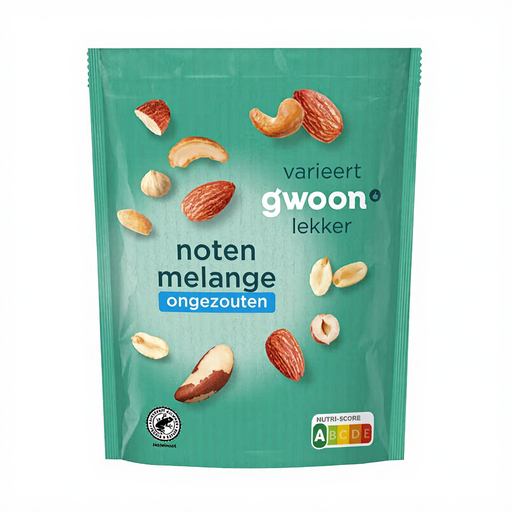
g'woon unsalted nut mix, 200 g

g'woon unsalted nut mix, 200 g

A mix to assess based on its ingredients and serving size. Joybuy product information lists 20.1 g of protein, 7.1 g of fibre and 0 g of salt per 100 g.

The ingredients include peanuts, almonds, cashews, Brazil nuts and hazelnuts; the product may contain traces of peanuts and other nuts. Whole nuts can pose a choking risk for older children too; Amsterdam UMC advises eating calmly at the table and staying with them.

Joybuy

Frequently asked questions

Does a school pupil who plays sport automatically need special protein snacks?

No. According to the Voedingscentrum, most people who play sport don’t need special protein shakes or bars if they eat a varied diet. Sport can increase protein requirements, but this is not a personal protein target for a child.

Is a peanut product with no added salt suitable for someone with a nut allergy?

You can’t tell from the salt information. The AH and PLUS peanuts reviewed contain peanuts and may contain tree nuts; check the current packaging and, if you have a known allergy, follow your individual medical advice. The Voedingscentrum stresses that label information is important if you have a food allergy.

Are whole nuts suitable for young children?

For children under 4, Amsterdam UMC advises choosing nut butter with no added sugar or salt instead of whole nuts because of the risk of choking. Older children can choke too; the hospital advises eating calmly at the table and staying with them.

How should you store an opened bag of peanuts?

Follow the instructions for the exact variety. For AH Unsalted Peanuts, 300 g, Albert Heijn advises storing the product in a cool, dark, dry place and sealing the pack tightly after use.

What do Dutch allergen warnings on packaging mean?

The Netherlands Food and Consumer Product Safety Authority says that, since 1 January 2026, new rules have applied to warnings about allergens that unintentionally enter food through cross-contamination. Such a warning is not the same as an ingredient deliberately included in the product; read both statements on the packaging.
