
If you prepare several lunches
If you regularly make school lunches at home, you can compare the contents, portions and costs on a like-for-like basis. A large bag is only practical if it suits how much you use.


Choose a larger unsalted pack if you regularly prepare portions for several school lunches and will use it all; a smaller bag is better if your consumption varies or is limited. Compare the price per kilogram and per portion you’ll actually use, as ‘value pack’ on its own doesn’t guarantee a saving. Before choosing, check that the nuts or peanuts meet the allergy requirements and rules of the school concerned.
If you regularly make school lunches at home, you can compare the contents, portions and costs on a like-for-like basis. A large bag is only practical if it suits how much you use.
If your consumption varies, a smaller pack may better match the amount you expect to use. Check the packaging separately to see whether the bag is resealable.
Check which allergens are in the specific mix and what rules apply to the pupil and the relevant area of the school. The ingredients and school rules take priority over pack size or price.
First, check that the nuts or peanuts meet allergy requirements and school rules. Then compare the product type, quantity and cost for the portions you’ll actually use.
| What to consider | What to look for | Who should pay particular attention? |
|---|---|---|
| Cost per portion used | Compare the same type of product by price per kilogram, then work out the cost of your portion size. | If I’m planning several lunches in advance, I want to know what the portions I use will cost, rather than just looking at the price of the bag. Around 28% of consumers prioritise cost per portion used. |
| Allergens and school rules | Read the allergen information on the packaging and check the rules for the pupil and the relevant area of the school. | If allergies or school rules are a factor, I want to know first which nuts or peanuts are suitable. Around 22% of consumers prioritise allergens and school rules. |
| Ingredients and unsalted options | Check specifically whether the product is unsalted and which varieties are listed in the ingredients. | If I’m looking for unsalted nuts, I also check which varieties are in the mix and whether they’re suitable for the pupil. Around 22% of consumers choose ingredients as their main consideration. |
| Preparing portions | Match the amount in the bag to the number of lunches and choose a portion size that suits your needs. | When I portion out lunches at home in advance, I want the quantity to fit my plans. Around 17% of consumers prioritise portion planning. |
| Consumption and preference | Check which varieties are included and, if you’re unsure, consider a smaller pack. | If we don’t eat nuts often at home, I want to choose an amount we’ll actually finish. Around 11% of consumers give limited consumption or preference top priority. |
Peanuts are legumes, not tree nuts, but they are a separate allergen. That doesn’t automatically make them suitable for someone with a nut allergy or where there’s a rule about nut-free areas.
Check the specific allergen information and ask which rules apply to the pupil and the relevant area of the school. Don’t treat ‘unsalted’ as an indication that a product is safe for someone with an allergy.
A product title mentioning 500 g or a ‘value pack’ doesn’t prove that the price per kilogram is lower than for a smaller bag.
Compare the same type of product by price per kilogram, then work out the cost based on the portion you’ll actually use.
The 500 g ALDI nut mix and the 200 g mix list different types of nuts. The smaller mix is specifically described as resealable, but the larger mix isn’t.
Check the ingredients and packaging for each exact variety; don’t assume its features from the brand name alone.
Voedingscentrum uses 25 g as an example of a handful of unsalted nuts. As a calculation, that makes 500 g equivalent to twenty portions and 200 g to eight. This isn’t a set daily recommendation for every secondary school pupil.
Use this portion size only to compare pack sizes, and follow the information on the packaging when eating the product.
Duyvis Unsalted Peanuts are worth considering if you’re specifically looking for peanuts. Duyvis describes this variety as having no added salt; Jumbo lists a 235 g pack.
Albert Heijn lists AH Unsalted Nut Mix in a 500 g pack, which may be useful if you portion it out at home.
Jumbo lists an unroasted nut mix as a 500 g value pack.
Lidl Netherlands lists a 200 g Alesto nut mix described as unroasted and unsalted.
ALDI describes a 500 g TRADER JOE’S unsalted nut mix and a separate 200 g unroasted mix.
PLUS describes a 500 g unroasted, unsalted nut mix in a stand-up pouch.
Joybuy picks for school lunches, from individual nuts to nut mixes and portion packs.
 No image available
An option if you’re specifically looking for unsalted peanuts and they meet the allergy requirements and school rules. The product name states 250 g. Contains peanuts and may contain traces of cashew nuts.
 No image available
A smaller pack to consider if you’re looking for a specific type of nut or don’t pack nuts as often. The product name states 200 g of raw, unsalted almonds. Contains almonds; check that they meet the allergy requirements and school rules.
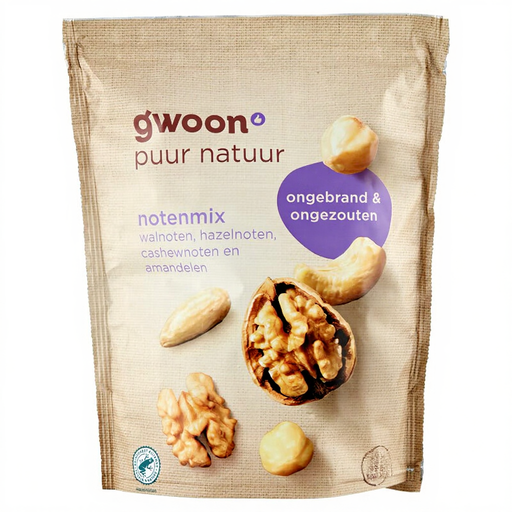 No image available
A larger bag to consider if you prepare portions at home and the ingredients are suitable for the pupil. The product name states 500 g of unroasted nut mix; check the label to see whether it is also unsalted. Contains hazelnuts, walnuts, almonds and cashew nuts, and may contain traces of peanuts and other nuts.
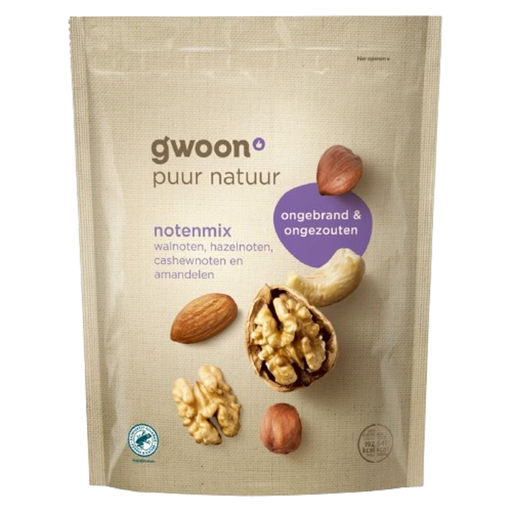 No image available
A smaller mix to consider if your consumption varies or you’d like to portion it out at home. The product name states 200 g of raw, unsalted nut mix. Contains nuts and may contain traces of peanuts; check the allergen information.
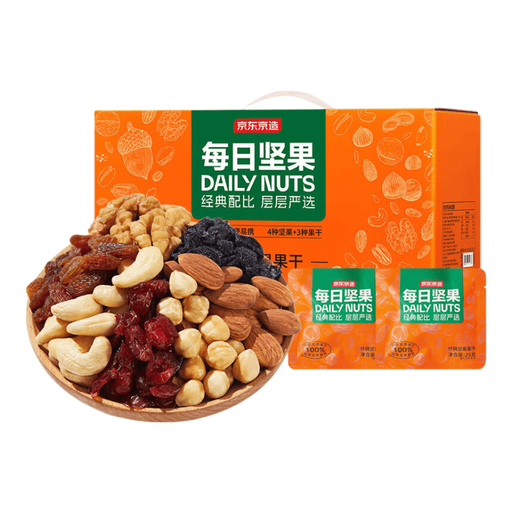 No image available
An option if you want to take portions in individual sachets. The product name states 750 g and 30 sachets. This is a mix of nuts and dried fruit, not a nut-only mix. Check that the nuts listed meet the allergy requirements and school rules.
No, you can’t tell from the size alone. Compare the same type of product by price per kilogram, then work out the cost for your portion size. Also consider whether you’ll actually use all of it.
Using a 25 g portion as a calculation, 500 g gives you twenty portions and 200 g gives you eight. Voedingscentrum uses 25 g as a handful on its nutrition information page; this isn’t a universal daily recommendation for all secondary school pupils.
No, treat ‘unroasted’ and ‘unsalted’ as separate product features. Check the information for the exact variety and read the label.
Peanuts are a separate option, but they aren’t automatically a safe substitute for someone with a nut allergy. Check the allergen information and follow the individual allergy advice and the rules of the school concerned.
No, treat this as a feature of the specific variety. ALDI describes the 200 g unroasted mix as having resealable packaging; that doesn’t confirm that the separate 500 g mix has the same closure. Check the packaging you buy.