
Parents comparing protein content
You want to know what a product actually adds to your child’s lunchbox. To do that, compare the nutritional information and ingredients, not just the wording on the front of the pack.


First, choose nuts that suit your child’s diet and the school’s rules. Then compare the nutritional information per 100 g and work out how much you’ll actually pack. The Netherlands Nutrition Centre says that recreational athletes don’t automatically need special protein products. And a stated protein value doesn’t, by itself, prove that a product can carry the commercial claim ‘high protein’.
You want to know what a product actually adds to your child’s lunchbox. To do that, compare the nutritional information and ingredients, not just the wording on the front of the pack.
For you, your child’s individual diet or the school’s policy determines first whether nuts and peanuts can be packed. Taste and protein content come next.
You’re looking for a lunch that suits an active day. The Netherlands Nutrition Centre notes that recreational athletes don’t automatically need special protein shakes or bars. This general information isn’t a personal protein target for a child.
| What to consider | What to look for | Who should pay particular attention? |
|---|---|---|
| Allergies and school rules | Check the ingredients and allergen information for the exact product variant, and follow the school’s rules. | If I need to take an allergy or school rule into account, I first check whether the product is allowed. Around 29% of consumers put safety and school rules first. |
| Protein per lunch portion | Compare values per 100 g, then work out how they relate to the amount you’ll actually pack. The portion size isn’t the nutritional value per 100 g. The Netherlands Nutrition Centre advises comparing products on the same basis. | If I want to estimate how much protein a lunch provides, I check both the label and the weighed portion. Around 29% of consumers prioritise protein content. |
| Salt and ingredients | Check whether your chosen variant is unsalted and read the ingredients list. Don’t compare products based on their brand name alone. | If I pack nuts regularly, I want to know which variant and ingredients I’m choosing. Around 24% of consumers mainly focus on choosing unsalted products. |
| Portioning and storage | Decide separately how much to pack, and follow the storage instructions on the packaging. | If I prepare lunchboxes in advance, I want to be able to portion out the amount easily and store the rest according to the label. This is the main consideration for around 18% of consumers. |
A protein value alone doesn’t tell you whether a product fits with the rest of the lunch or the school’s rules. A commercial nutrition claim is also not the same thing as a nutritional value.
Read the nutrition table and ingredients list. Compare products per 100 g, then work out how they relate to the amount you’ll pack.
A different form or type of nut doesn’t automatically make a product suitable for someone with a nut allergy. Jeroen Bosch Hospital advises people with a nut allergy to avoid foods containing nuts or traces of them.
Follow the individual allergy diet and the school’s rules. Check the allergen information for the exact product variant.
Flink lists Duyvis Unsalted Peanut Nuts 235 g as containing 27 g of protein and 614 kcal per 100 g. So a larger amount of this variant also means a higher energy intake.
Consider the amount as part of the whole lunch, and don’t increase it just because of the protein figure.
Duyvis lists separate ranges of unsalted peanuts and unsalted almonds.
Albert Heijn lists AH Unsalted Peanuts as a separate product.
Jumbo lists Unsalted Peanuts 250 g.
Alesto is Lidl’s range of nuts and dried fruit.
ALDI describes various types of nuts, including cashews, almonds, walnuts and Brazil nuts, in both salted and unsalted varieties.
PLUS has a separate category for unsalted nuts.
This selection of Joybuy products includes peanuts and other nuts for a packed lunch. Check that each variant’s preparation, ingredients and compliance with school rules are suitable.
 Image unavailable
May be suitable if peanuts are allowed as part of your child’s diet and the school’s rules.
The product name specifies unsalted peanuts and a pack size of 250 g. Check the allergen information on the packaging.
 Image unavailable
Consider this variant only if roasted peanuts are suitable for your child’s diet and the school’s rules.
The product name specifies roasted peanuts and a pack size of 210 g. Check the ingredients and allergen information on the packaging.
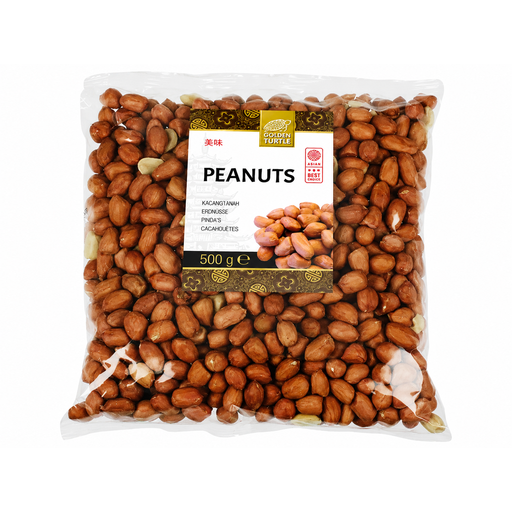 Image unavailable
May be suitable if peanuts are allowed and you’re looking for an unroasted variety.
The product name specifies raw peanuts with skins and a pack size of 500 g. Check the preparation instructions and allergen information before use.
 Image unavailable
Suitable only if cashews are allowed as part of your child’s diet and the school’s rules.
The product name specifies roasted, unsalted cashews and a pack size of 200 g. Check the allergen information on the packaging.
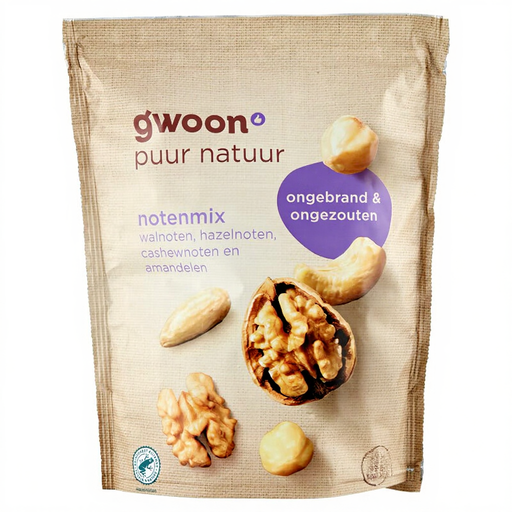 Image unavailable
May be suitable if every type of nut in the mix is allowed as part of your child’s diet and the school’s rules.
The product name specifies unroasted mixed nuts and a pack size of 500 g. Check the ingredients and allergen information, including for possible traces.
Follow the rules at your child’s school. The Netherlands Nutrition Centre describes nutrition policies as a way for schools to provide pupils and parents with clear guidance. This information doesn’t confirm nationwide permission or a general ban.
Not automatically. Jeroen Bosch Hospital advises people with a nut allergy to avoid foods containing nuts or traces of them. Follow the individual allergy diet: another type of nut or nut butter isn’t a universally safe substitute.
Read the information on the packaging for the exact variant and follow the individual diet. Since 1 January 2026, the NVWA has checked whether prepacked products carry the correct warnings about allergen cross-contamination. A warning, or the absence of one, doesn’t automatically make a product suitable for every diet or school policy.
Not automatically. The Netherlands Nutrition Centre says recreational athletes don’t need special protein shakes or bars if a normal, varied diet provides enough protein. This general information isn’t a personal protein target for a child and doesn’t prove that a particular nut offers recovery benefits.
No. Flink lists Duyvis Unsalted Peanut Nuts 235 g as containing 27 g of protein per 100 g. This is published nutritional information for that variant. The European Commission states that nutrition claims are permitted only if they meet the relevant European requirements, so don’t assume that this value alone means the claim is allowed.
First compare the nutritional values per 100 g, then work them out for the weighed amount. Multiply the value per 100 g by the portion weight and divide by 100. That’s a calculation, not a recommended portion size for children.
Always follow the storage instructions on the packaging first. For opened mixed unsalted nuts, the Netherlands Nutrition Centre’s storage guide recommends six months in a kitchen cupboard and one year in the freezer. This general advice isn’t a guarantee for every variant or storage condition.