For a neighbourhood get-together, the portion you serve often makes more difference than choosing between the unsalted nuts reviewed here: the labels for Duyvis, Jumbo, PLUS and Albert Heijn list 614 to 649 kcal per 100 g. That’s above the European Commission’s threshold of 40 kcal per 100 g for a ‘low calorie’ claim on solid foods, so unsalted or unroasted doesn’t mean low in calories. Choose based on taste and ingredients, weigh your portion, and check the ingredients and allergen information before serving.
Who is this guide for?
Mindful snackers
You want to keep eating nuts at your neighbourhood get-together, but would like to know in advance how much energy your chosen portion provides. The Netherlands Nutrition Centre recommends a 25 g portion of unsalted mixed nuts; for a specific product, check the label too and weigh the edible portion.
Fans of unsalted nuts
You’re looking for a savoury snack that suits your preference for unsalted nuts. The Netherlands Nutrition Centre includes unsalted nuts in its Wheel of Five, but being unsalted doesn’t in itself tell you how many calories they contain.
Hosts catering for different guests
You’re buying for a shared table and want to offer variety while taking allergies or young children into account, if they’ll be there. Read the allergen information and warnings on the packaging; the Netherlands Food and Consumer Product Safety Authority explains what information must be provided with prepacked products.
What should you look for when choosing?
Start by checking the energy per 100 g and the portion you actually plan to serve. Then assess salt, flavour and suitability for your guests separately.
| What to consider |
What to check when buying |
Who should pay particular attention? |
| Calories per portion |
Compare the value on the label per 100 g and calculate it for the weight of the edible portion. For a ‘low calorie’ claim on solid foods, the European Commission sets a limit of 40 kcal per 100 g. |
If I want to keep an eye on my portion during a get-together, I want to know how much energy I’m actually serving myself. Around 42% of consumers prioritise calories per portion eaten. |
| Unsalted ingredients |
Read the ingredients and nutrition information; don’t rely on the name on the packaging alone. Unsalted doesn’t automatically mean oil-free or low in calories. |
I prefer an unsalted snack and want to know what else is in it. For around 25% of consumers, unsalted ingredients are the top priority when choosing. |
| Flavour and variety |
Choose a single type of nut, a mix or a seasoned coating based on the flavour you want to serve. A flavour description doesn’t tell you how much energy the product contains. |
For my get-together, what matters most is choosing a flavour my guests will enjoy, or offering a selection of different nuts. Around 17% of consumers prioritise flavour and variety. |
| Serving what’s suitable |
Choose a pack size that suits the portions you want to offer. Check the allergens and warnings on the current packaging, and follow the storage advice. |
If I’m buying for a group, I want to be able to divide up the quantity and take account of any allergies and young children. For around 16% of consumers, serving food in a suitable and practical way is the top priority. |
Common buying mistakes
-
Assuming unsalted or unroasted means low in calories
The unsalted products reviewed from Duyvis, Jumbo, PLUS and Albert Heijn list 614 to 649 kcal per 100 g. For a ‘low calorie’ claim, the European Commission sets a limit of 40 kcal per 100 g for solid foods.
Check the energy content separately from the salt, preparation method and Nutri-Score. Describe a smaller portion as a portion choice, rather than calling the product itself low in calories.
-
Comparing portions as if they always weigh the same
The Netherlands Nutrition Centre gives a handful of 25 g as a portion of unsalted mixed nuts, and a handful of 20 g for pistachios. A portion of shelled pistachios is also measured differently from a portion of pistachios in their shells.
Compare the same weight in grams and weigh the edible portion. For pistachios, use the portion basis shown on the label.
-
Applying general nutrition information to a specific product
General information for a type of nut is no substitute for the nutrition declaration on a specific pack. For example, Albert Heijn lists 649 kcal per 100 g for AH Unsalted Pistachios, while the Netherlands Nutrition Centre gives a general value per portion of unsalted pistachios.
Use the label on the product you’re buying and note the portion your calculation is based on. Don’t draw a general conclusion about all pistachios, peanuts or cashews.
-
Buying a large pack without planning portions
Pack sizes vary: the Jumbo cashews reviewed come in a 200 g pack, while the PLUS mix comes in a 500 g pack. A large bag isn’t automatically a suitable serving portion.
Decide in advance how much you want to offer, and store any leftovers in a tightly sealed, dry place, following the product packaging.
Brands to consider
Duyvis
Worth considering if you’re comparing unsalted peanuts with peanuts in a seasoned coating.
- Duyvis lists 614 kcal per 100 g for its Unsalted Peanuts; the manufacturer describes Oriental as a crunchy snack with a curry flavour.
- The energy content of the unsalted peanuts is a product specification, not a feature of every Duyvis product.
Albert Heijn
AH Unsalted Pistachios are a specific pistachio option with information about ingredients and portions.
- The Albert Heijn product page lists roasted unsalted pistachios and 25 g portions of shelled nuts.
- The label lists 649 kcal per 100 g; use this product specification rather than a general value for pistachios.
Jumbo
Jumbo Unsalted Cashews 200 g suit anyone looking for a single type of nut with no added salt.
- The Jumbo product page lists 99% cashew nuts, sunflower oil and 622 kcal per 100 g.
- With this ingredient list, unsalted doesn’t mean oil-free or low in calories.
Lidl
The Dutch product page lists unsalted Californian pistachios as a product range.
- The product description makes this an option for anyone specifically looking for unsalted pistachios.
- The product range alone doesn’t provide a calorie comparison with the other nuts mentioned.
ALDI
TRADER JOE'S Unsalted Nut Mix is a mixed-nut option listed by ALDI.
- ALDI lists almonds, hazelnuts, walnuts and Brazil nuts in the 500 g pack.
- The ingredients make it a suitable choice if you want an unsalted mix, but don’t in themselves offer a calorie advantage over other products.
PLUS
PLUS Unroasted Unsalted Nut Mix 500 g is a mixed-nut option if you want to serve a variety of nuts.
- The PLUS product page lists walnuts, hazelnuts, almonds and cashews, with 641 kcal per 100 g.
- Unroasted and Nutri-Score A don’t mean the mix is low in calories.
Joybuy product picks
This selection includes shelled pistachio kernels and seasoned, crunchy-coated peanuts for a get-together. They’re included as flavour-focused snack options, not advertised as low-calorie products; compare the nutrition information and the portion you choose with what’s stated on the packaging.
 No image available
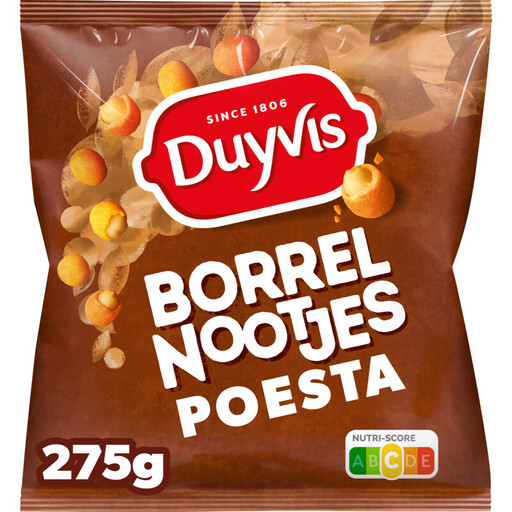
Duyvis Cocktail Nuts Poeta, 275 g
A good choice if you’re after a seasoned, crunchy snack for drinks; check the energy per 100 g and calculate it for the portion you’re serving.
Contains peanuts, milk, gluten (wheat) and celery; may contain traces of soya, mustard and other nuts.
Joybuy
 No image available
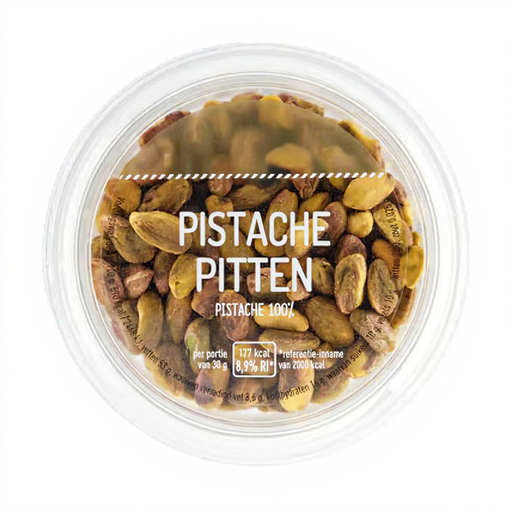
Kanjers Fresh Class Pistachio Kernels, 100 g
These shelled pistachio kernels are a good choice if you want to serve pistachios as a snack or use them in a dish.
Contains pistachio kernels; not suitable for guests who need to avoid pistachios.
Joybuy
 No image available
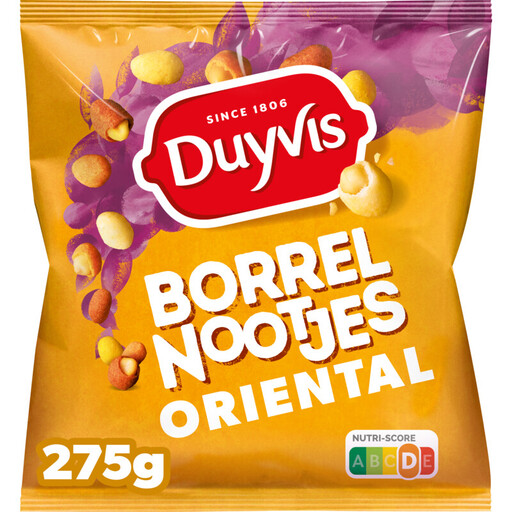
Duyvis Oriental Cocktail Nuts, 275 g
A good choice if you’re after a crunchy curry-flavoured coating to serve with drinks; compare the energy content on the packaging with your portion.
Contains peanuts, gluten (wheat and barley) and soya; may contain traces of milk, nuts and mustard.
Joybuy
 No image available
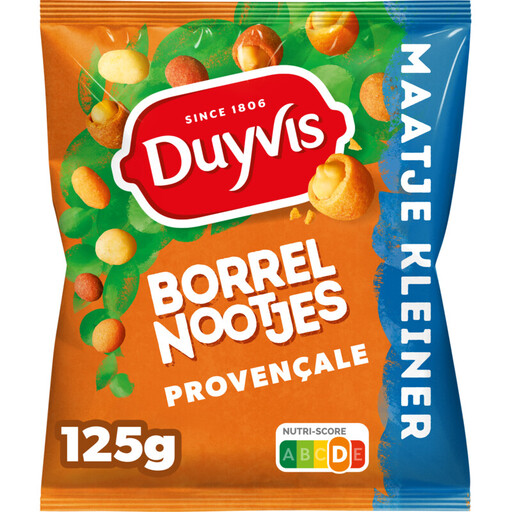
Duyvis Bran Nuts Provencale, 125 g
A good choice if you’re after a crunchy peanut with onion and garlic flavour; you can divide the quantity into portions before serving.
Contains peanuts and gluten (wheat); may contain traces of milk, nuts, soya and mustard.
Joybuy
 No image available
Duyvis Coated Peanuts Provençal, 275 g
A flavour-focused option with a crunchy coating and onion and garlic flavour; check the energy per 100 g before choosing your portion.
Contains peanuts and gluten (wheat); may contain traces of milk, nuts, soya and mustard.
Joybuy
Frequently asked questions
Can a small portion of regular nuts be called low in calories?
No. A smaller portion doesn’t make the product itself low in calories. For solid foods, the European Commission sets a limit of 40 kcal per 100 g for this nutrition claim. If you wish, you can state the energy content of a clearly weighed portion without calling the product low in calories.
How many nuts should I buy for a neighbourhood get-together?
First decide what portion you want to offer, then multiply it by the number of guests you’re serving nuts to. For example, 25 g per person for eight people comes to 200 g. This is a quantity calculation, not a prediction of how much your guests will eat.
What should I check if a guest has a peanut or nut allergy?
Check both the allergens present and any warnings about possible cross-contamination on the current packaging. Peanuts and nuts are separate allergens. The Netherlands Food and Consumer Product Safety Authority states that new rules for substantiated warnings about unintended allergens have applied in the Netherlands since 1 January 2026; don’t choose a product containing the relevant allergen for that guest.
Can I give nuts to young children without any concerns?
No. Take product-specific warnings seriously. Albert Heijn and Duyvis product information warns that young children can choke on nuts and peanuts. Bear this in mind if young children are present, even when the nuts are served in a shared bowl.
How should I store any nuts left over after the get-together?
Keep them in a tightly sealed, dry place, and follow the storage and best-before information on the packaging. The Netherlands Nutrition Centre gives 10 to 15 °C as an example; Duyvis product information recommends storing an opened bag in a light- and airtight container.


