
People keeping an eye on fat
You want less fat in the same quantity of snack, and want to distinguish a nutrition claim from a preparation method. The European Commission sets out the conditions for using the claim ‘low fat’.


If you want less fat for the same quantity of nuts, compare the fat content per 100 g and check that any claim applies to the product. Weighing out a smaller portion reduces the amount of fat you get from that product, but it doesn’t make it low-fat. Unsalted and oven-roasted varieties are not, in themselves, evidence of lower fat content either.
You want less fat in the same quantity of snack, and want to distinguish a nutrition claim from a preparation method. The European Commission sets out the conditions for using the claim ‘low fat’.
You want to weigh out how many nuts to take with your lunch and check the nutritional values for that amount. The Netherlands Nutrition Centre provides general nutritional references for unsalted nuts; for a branded product, use the information on the exact packaging.
You’re looking for an unsalted addition to your lunch and don’t want to confuse this with a lower fat content. The Netherlands Nutrition Centre includes unsalted nuts in its Wheel of Five guidelines.
First decide what you want to manage for lunch on the go: the fat content of the nuts, how much you take with you, the salt content, or how easy they are to pack and store.
A good fit if: you specifically want less fat in the same quantity of snack.
Bear in mind: a lower fat content says nothing by itself about energy, salt or the rest of the nutritional composition.
A good fit if: you mainly want to decide in advance how much you’ll eat with lunch.
Bear in mind: weighing out a portion doesn’t change the nutritional values per 100 g and takes a little preparation.
A good fit if: an unsalted product is your main priority.
Bear in mind: unsalted doesn’t automatically mean lower in fat; check both properties separately.
| What to consider | What to check when buying | Who is this important for? |
|---|---|---|
| Fat content | Compare the fat content in g per 100 g and check the exact claim and basis for comparison. For solid foods, the European Commission sets a maximum of 3 g fat per 100 g for the claim ‘low fat’. | If I want less fat in the same quantity of snack, I look at the product, not just the portion; around 36% of consumers say fat content is their top priority. |
| Portion size | Check the nutritional values per 100 g and weigh out the amount you’re taking with you. Calculate each value per portion using the portion weight. | If I want to decide in advance how much I’ll eat with lunch, weighing out a portion helps; around 29% of consumers put portion control first. |
| Unsalted composition | Read the ingredients and nutritional values on the exact packaging; assess salt and fat separately. If you have an allergy, check the allergen information and warnings too. | If I’m looking for unsalted nuts, I want to check that they’re unsalted without assuming the product contains less fat; around 21% of consumers prioritise an unsalted product. |
| Taking them with you and storage | Compare the net weight with the amount you use and check the storage information. One pack doesn’t automatically equal one lunch portion. | When I take nuts with me, I want to know in advance how to measure out a portion and store what’s left; around 14% of consumers focus mainly on taking food with them, storage and cost per amount used. |
A description of how a product is prepared is different from a nutrition claim. ‘Oven-roasted’ doesn’t, by itself, prove that a product contains less fat.
Compare the fat content per 100 g and check the exact claim before choosing a variety because you expect it to contain less fat.
A net weight of, for example, 200 g or 250 g is the amount in the pack, not a recommended portion size. How much you eat also determines how much fat and energy you get from the same product.
Weigh out the amount you want to take with you and calculate the nutritional values using the information per 100 g.
Salt and fat are separate nutritional values. An unsalted variety can still contain fat.
Choose unsalted if that’s what you need, and compare the fat content separately.
The product ranges mentioned include peanuts, borrel nuts and oven-roasted nut mixes. For example, Jumbo lists a 125 g Duyvis Oven Roasted Nut Mix.
AH Unsalted Cashews is an own-brand option for anyone looking for an unsalted product.
Jumbo Unsalted Cashews 200 g is an own-brand example for anyone who wants to weigh out their own portion.
Lidl’s Alesto range includes the nuts mentioned, and the retailer also lists Way To Go cashews.
ALDI lists TRADER JOE’S Roasted Unsalted Cashews in a 250 g pack.
PLUS lists Unsalted, Unroasted Cashews in a 200 g bag.
These Joybuy product choices are suited to planning a portion of nuts or a snack to take with you. A stated preparation method, unsalted variety or portion pack isn’t evidence of a lower fat content.
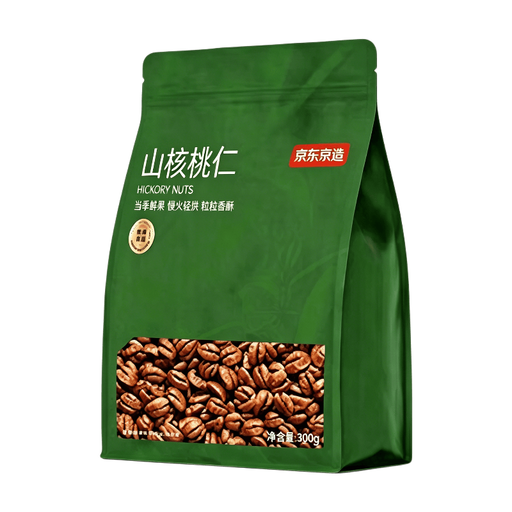 No image available
The product description mentions individual portion packs for taking on the go. It also lists nutritional information per 100 g; use the information on the packaging to calculate your own portion.
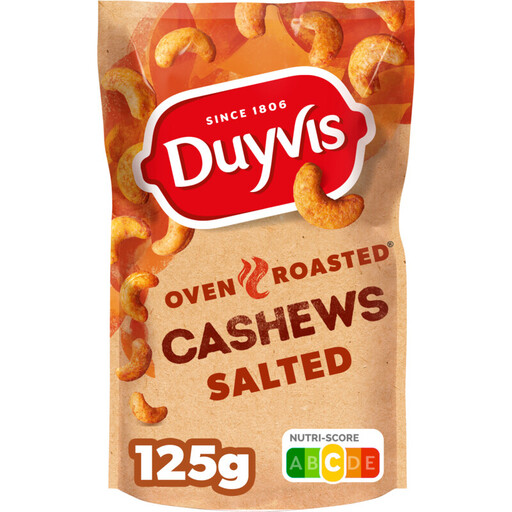 No image available
The product information states that there are 4–5 portions per pack, which can help you decide how much to have in advance. It lists 43 g of fat per 100 g; ‘no added fat or oil’ doesn’t mean the total fat content is low.
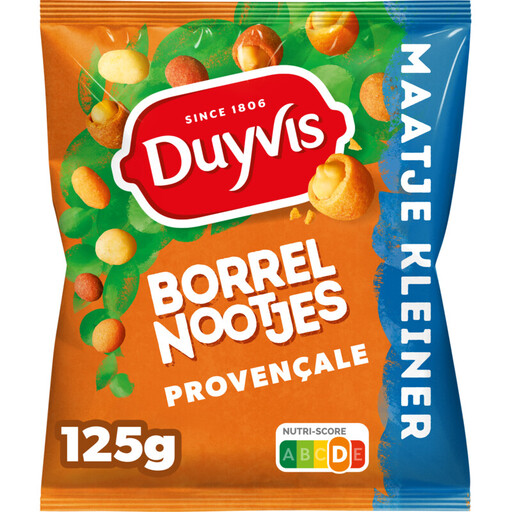 No image available
The product information lists 30 g portions and 4–5 portions per pack. It also states 33 g of fat per 100 g; don’t compare this figure directly with that of a different type of product.
 No image available
The product name says these are unsalted peanuts; the product information lists 50 g of fat per 100 g. Check the label on the exact pack for the ingredients and allergen information too.
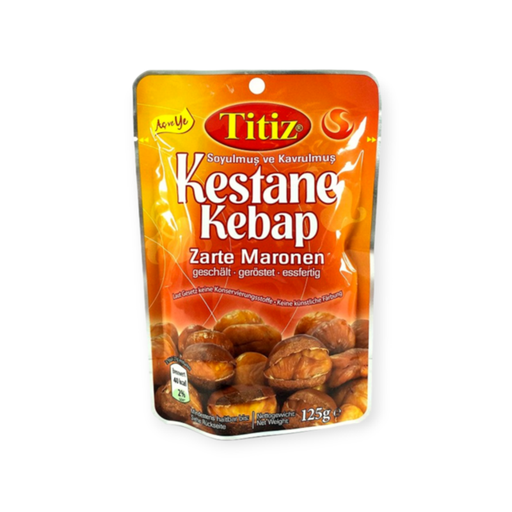 No image available
The title describes roasted chestnuts in a 125 g pack. The product information includes a nutritional table; check those details and the portion information on the packaging.
According to the European Commission, a solid food can carry the claim ‘low fat’ if it contains no more than 3 g of fat per 100 g. Don’t confuse this claim with ‘reduced fat’; compare the nutritional values and the claim on the label of the product you’re considering.
Multiply each value per 100 g by the weight of your portion divided by 100. Use the nutritional values on the exact packaging; a general reference for nuts isn’t a measurement for a specific brand or product.
Check the ingredients, allergen information and cross-contamination warnings on the packaging of the exact variety. Since 1 January 2026, the Netherlands Food and Consumer Product Safety Authority (NVWA) has also checked during inspections that warnings about cross-contamination with allergens are correctly stated on prepacked products.
The Netherlands Nutrition Centre lists rancid, tough or mouldy nuts as signs of spoilage. Follow the storage information on the packaging too.
On 21 May 2026, NOS reported a recall of ALDI TRADER JOE’S unsalted cashews, 170 g, with a best-before date of 23 September 2026, and AH own-brand salted peanuts in an extra-large pack with a best-before date of 4 November 2026. Don’t eat the affected products and follow the recall instructions; according to the report, customers could return the packs in question for a refund. The stated ALDI date has now passed, but that doesn’t make an affected pack safe.