
Lighter snack portions
You want less fat per snack, so you compare the values on the label with the portion you actually eat. That doesn’t mean regular nuts are automatically low in fat.


If you want less fat per snack, compare the nutritional values per 100 g with the amount you actually eat. Unsalted or roasted doesn’t automatically mean low in fat. The PLUS, Jumbo and AH cashew nuts and Duyvis Oven roasted nut mix reviewed here list between 46.5 and 50 g of fat per 100 g, according to product information from those brands and retailers. Under the European Commission’s rules, a solid food can only be labelled ‘low fat’ if it contains no more than 3 g of fat per 100 g.
You want less fat per snack, so you compare the values on the label with the portion you actually eat. That doesn’t mean regular nuts are automatically low in fat.
You buy nuts in advance and want to choose a pack that suits how quickly you’ll use them and can be stored in a dry, airtight place. The Netherlands Nutrition Centre advises storing nuts in a dry, airtight container.
You want to distinguish between unroasted, roasted and seasoned nuts, and check for added oil, salt and allergens. To do this, read the ingredients list and the information on the packaging.
First compare the nutritional values per 100 g, then consider what they mean for your portion. Next, choose based on the ingredients, allergens and packaging that best suit your snack stash.
| What to consider | What should you check? | Who is this important for? |
|---|---|---|
| Fat per snack portion | Compare the fat per 100 g and calculate the amount for the same portion size. | If I want less fat per snack, I compare the label with the amount I actually eat. Around 36% of consumers say fat per snack is their main buying priority. |
| Ingredients and preparation | Check whether oil, salt or seasoning has been added; ‘unsalted’ doesn’t automatically mean ‘oil-free’. | If you mainly choose based on ingredients and preparation, compare the ingredients list with the product name. Around 21% of consumers prioritise this. |
| Packaging and storage | Check the pack size, best-before information and storage instructions for after opening. | If I’m buying in advance, I want an amount I can store and use appropriately. For around 29% of consumers, stock and packaging come first. |
| Allergen information | Check the ingredients and warnings on the packaging of the exact product variant. | If allergen information is your main buying concern, check for warnings about possible traces too. Around 14% of consumers say this is their main buying priority, but that doesn’t make checking any less important for everyone else. |
The AH and Jumbo cashew nuts reviewed here are unsalted, but contain sunflower oil.
Check the ingredients list as well as the product name, even if the packaging says ‘unsalted’.
The Duyvis Oven roasted nut mix is described as having no added fat or oil, but its label lists 47 g of fat per 100 g. The preparation method doesn’t change the total fat content or make it eligible for a low-fat claim.
Use the nutrition table to check the total fat content.
Nuts are susceptible to mould. The Netherlands Nutrition Centre advises storing them in a dry, airtight place.
Choose an amount that suits how quickly you’ll use it, and follow the storage instructions on the packaging after opening.
Worth considering for peanuts, seasoned snacks and the oven-roasted nut mix reviewed here.
The AH Cashewnoten ongezouten reviewed here are an example of roasted cashew nuts with no added salt.
Jumbo Cashewnoten Ongezouten 200 g is an own-brand example with published label information.
Lidl sells Alesto as a range of nuts and dried fruit.
ALDI sells an unsalted nut mix under the product name TRADER JOE’S in a 500 g pack.
PLUS Cashewnoten ongezouten ongebrand 200 g is worth considering if you’re looking for a simple ingredients list with no added oil.
These product options cover different types of nut snacks and pack sizes for your snack stash. Check the nutritional values, ingredients, allergens and storage instructions for each variant. A product name or preparation method doesn’t automatically mean a product is low in fat.
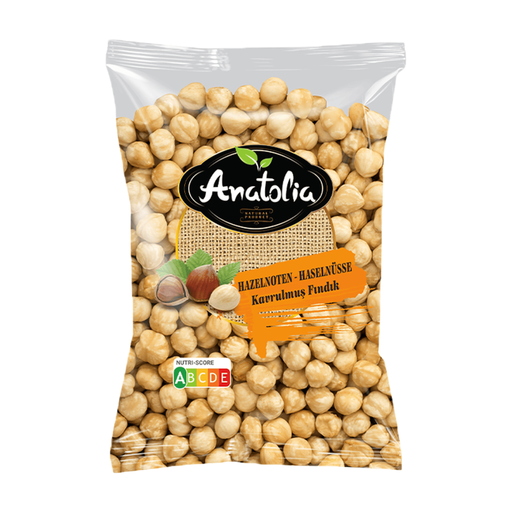 No image available
The 500 g pack is an option if you’re looking to stock up on roasted hazelnuts.
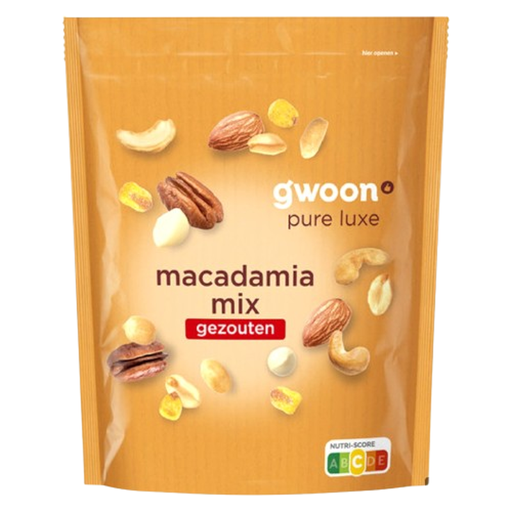 No image available
This mix may suit you if you’re looking for a snack pack containing a variety of nuts.
The ingredients information lists peanuts, almonds, cashew nuts, macadamia nuts and pecans, among other ingredients, as well as salt and sunflower oil.
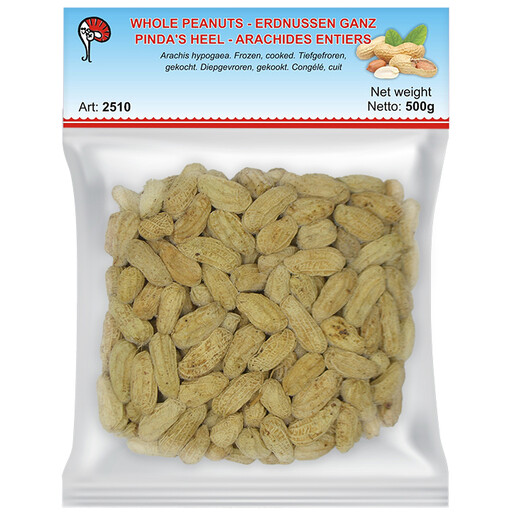 No image available
This pack of boiled peanuts is an option for your snack stash if you have space to store them frozen.
Once defrosted, keep refrigerated and do not refreeze.
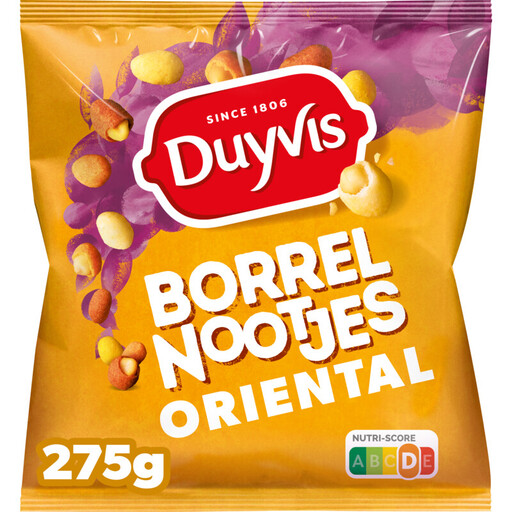 No image available
This savoury peanut snack may suit you if you’re specifically looking for borrelnootjes for your stash; it is not low in fat.
The product information lists 34 g of fat and 1.4 g of salt per 100 g. The product contains peanuts and cereals containing gluten; the description mentions possible traces of milk, nuts and mustard.
 No image available
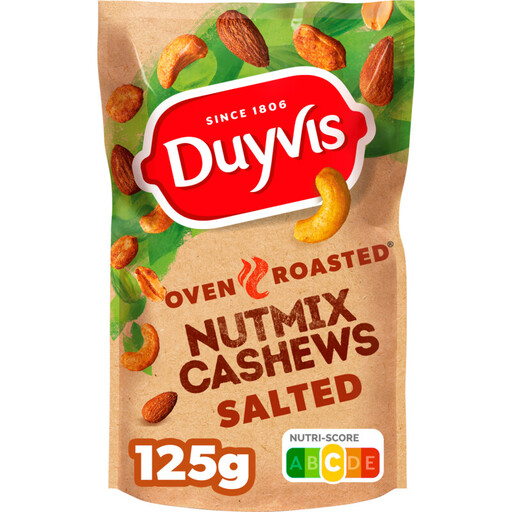
The 125 g pack is an option if you’re looking for a smaller roasted nut mix.
The product information says the nuts are dry-roasted without added fat or oil, but also lists 47 g of fat per 100 g. The mix contains peanuts, almonds and cashew nuts, so it is not low in fat.
According to the European Commission, a solid food can only carry the claim ‘low fat’ if it contains no more than 3 g of fat per 100 g. The PLUS, Jumbo and AH cashew nuts and Duyvis Oven roasted nut mix reviewed here all list values well above that limit.
Store nuts in a dry, airtight place. The Netherlands Nutrition Centre advises keeping them dry; also follow the specific storage and best-before instructions on the packaging.
No. A portion size on a product page is a basis for calculating the values for that product, not personalised dietary advice. The Netherlands Nutrition Centre updated its Wheel of Five on 9 April 2026, so don’t automatically use a product portion as a daily guideline.
Keep the packaging and contact the retailer or the contact person listed on the label. Before eating the product, read the information on the packaging of the exact variant.
As a business, you must inform consumers about any allergens present. For prepacked foods, the required labelling information must be available in Dutch in the Netherlands. For online sales, this information must also be available online, according to the NVWA and Business.gov.nl.