
Less total fat
You mainly want less fat in your snack and are open to choosing edible sweet chestnuts instead of regular nuts. Check the nutritional information on the exact packaging before making a claim about a product.


If your main aim is to reduce your total fat intake, edible sweet chestnuts are another option to consider. The World Cancer Research Fund describes chestnuts as much lower in fat than other nuts. If you want to keep eating regular nuts, compare the nutritional information per 100 g and decide on your portion in advance. Unsalted or oven-roasted does not mean low in fat: Jumbo lists 47 g of fat per 100 g for Duyvis Oven Roasted Noten Mix, while the European Commission sets a maximum of 3 g of fat per 100 g for a ‘low fat’ claim on solid foods.
You mainly want less fat in your snack and are open to choosing edible sweet chestnuts instead of regular nuts. Check the nutritional information on the exact packaging before making a claim about a product.
You want to keep eating regular nuts and are paying attention to their ingredients, salt content and the amount you measure out in advance, rather than relying on an unsubstantiated promise of less fat.
You’re looking for something to take on an outing or share at snack time, and are thinking about storage and ingredients. If children or people with allergies are joining in, choking risks and allergens need separate consideration.
Start with what matters most to you: less total fat, a portion decided in advance, a savoury flavour, or snacks that are practical to share and store.
| What to consider | What should you check? | Who is this important for? |
|---|---|---|
| Total fat | Compare the fat per 100 g and the exact type of nut; don’t use general information about chestnuts as the nutritional value for a packaged product. | If reducing total fat is my first priority, I also consider a different type of nut rather than regular nuts. Around 36% of consumers prioritise reducing their total fat intake. |
| Portion size | Compare nutritional values on the same weight basis and decide in advance how much you want to serve. | If I want to keep eating regular nuts, measuring out an amount in advance helps me keep my snack portion in check. Around 29% of consumers prioritise the amount they snack on. |
| Savoury flavour and fat claims | Check the salt per 100 g, the proportion of nuts or peanuts, and the reference used for any comparative claim. | If I choose a savoury or crispy-coated snack, I want to know exactly what it is being compared with and what ingredients it contains. Around 21% of consumers prioritise that flavour and a clear comparison. |
| Sharing and storage | Check the storage instructions and allergens; for young children, also look for choking warnings. | If I’m taking snacks to share, I want to consider how to store them and who will be eating them. Around 14% of consumers prioritise practical sharing and storage. |
‘Unsalted’ tells you about the salt, not the total fat. Albert Heijn lists 60 g of fat per 100 g for AH Notenmix ongezouten; Jumbo lists 47 g per 100 g for Duyvis Oven Roasted Noten Mix. For solid foods, the European Commission sets a maximum of 3 g of fat per 100 g for a ‘low fat’ claim.
Check the fat per 100 g on the exact packaging, and assess the salt content and preparation method separately.
A historical Albert Heijn product listing for Duyvis Herbs&Onion includes a brand claim of 30% less fat than regular crispy-coated peanuts in the Netherlands. This comparison doesn’t apply to all regular nuts and doesn’t mean the snack is low in fat overall.
Check which snack is used as the reference and also look at the ingredients and other nutritional values for the exact product.
PLUS lists 46.5 g of total fat and 9.5 g of saturated fat per 100 g for its unsalted cashews; AH lists 60 g of total fat and 5.7 g of saturated fat per 100 g for its nut mix. So, comparing total fat won’t necessarily give you the same order for saturated fat.
Decide what you want to compare, then look at total fat, saturated fat, energy and salt separately.
The Netherlands Nutrition Centre says that fresh chestnuts spoil more quickly than many dried nuts. If you buy more than you can use in time, some may go to waste.
Follow the storage instructions on the packaging and buy an amount that suits your planned use.
Relevant product listings range from savoury nut mixes to crispy-coated snack nuts.
The own-brand products mentioned include unsalted nut mixes and a chestnut option.
The own-brand option mentioned is a pack of unsalted cashews.
The own-brand option mentioned is a pack of unsalted, unroasted cashews.
The product range mentioned includes Way To Go! unsalted cashews.
According to the product listing, the Trader Joe’s nut mix mentioned contains almonds, hazelnuts, walnuts and Brazil nuts.
These product choices include regular nuts and savoury snacks, including unsalted nuts and savoury or roasted varieties. Check the nutritional information on the exact packaging: not all the options shown are low in fat.
 Image unavailable
An option if you want regular almonds as a snack and are looking for an unsalted version; this isn’t a low-fat choice.
The product information lists almonds and, per 100 g, 50 g of fat, 4.3 g of saturated fat and 0.03 g of salt.
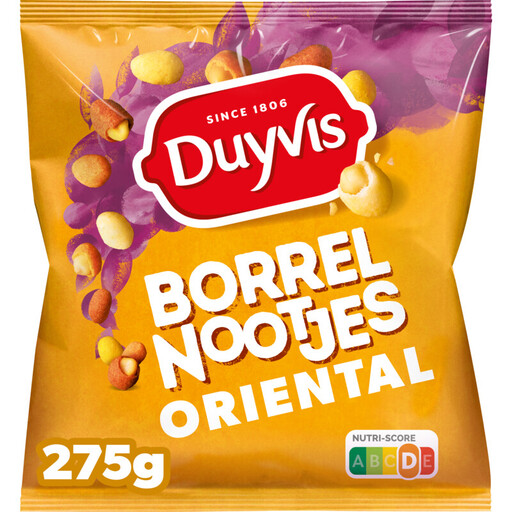 Image unavailable
A crispy-coated peanut snack for anyone after a savoury drink-time treat; the listed fat content means this isn’t a low-fat option.
The product information lists 49% peanuts and, per 100 g, 34 g of fat and 1.4 g of salt. The allergen information lists peanuts, wheat, barley and soya, with possible traces of milk, nuts and mustard.
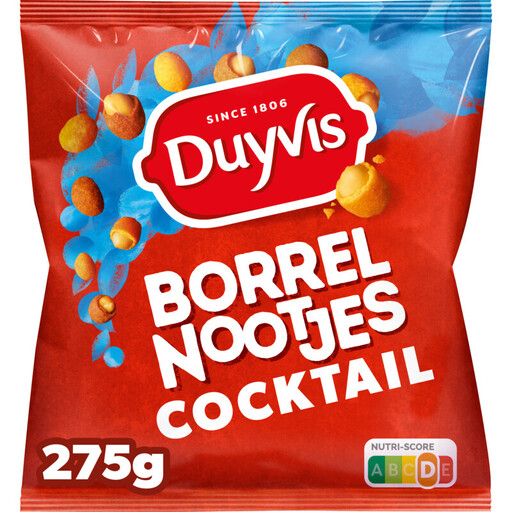 Image unavailable
A snack to share if you want to decide on your portion in advance; the product information gives a serving size of 30 g.
Per 100 g, the product information lists 34 g of fat and 1.4 g of salt, and 50% peanuts. This isn’t a low-fat option. The allergen information lists peanuts, wheat and milk, with possible traces of nuts, soya and mustard.
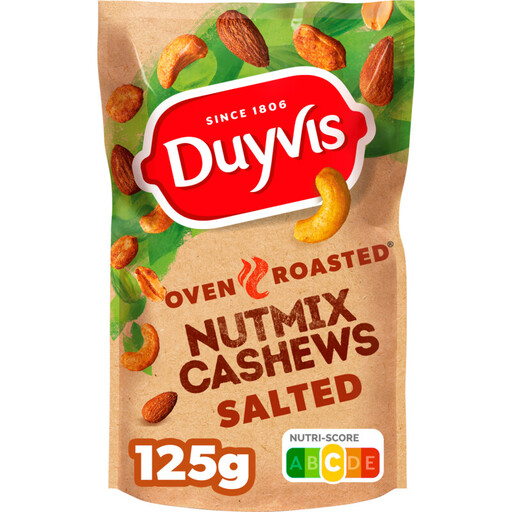 Image unavailable
A roasted nut mix for anyone looking for a savoury snack; the nutritional information listed means this isn’t a low-fat option.
The product information lists cashews, peanuts and almonds, with 47 g of fat and 1.1 g of salt per 100 g.
 Image unavailable
An option if you want roasted, unsalted cashews; the fat content listed means this isn’t a low-fat choice.
The product information lists cashews and, per 100 g, 46.67 g of fat, 9.67 g of saturated fat and 0.067 g of salt.
For solid foods, the European Commission sets a maximum of 3 g of fat per 100 g as a requirement for the ‘low fat’ claim. Compare the nutritional values on the exact packaging before applying that claim to a product.
No. Jumbo lists 47 g of fat per 100 g for Duyvis Oven Roasted Noten Mix. Check the nutritional table for the exact version, not just the preparation method in the product name.
Follow the storage instructions on the packaging and seal the bag securely after use. The Netherlands Nutrition Centre recommends storing nuts in a cool place and notes that fresh chestnuts spoil more quickly than many dried nuts.
Bear choking risks in mind: the checked product information from Jumbo and Duyvis warns about young children and nuts or peanuts. Also consider whether the snack is suitable for the person eating it.
Read the ingredients list and any warning about possible traces on the exact packaging. According to the Netherlands Food and Consumer Product Safety Authority, relevant allergens must be clearly distinguishable in the ingredients list.