
Shoppers who genuinely want less fat
You’re looking for nuts for a neighbourhood get-together and want any claim about reduced fat to apply to the exact product. A description of how a product is prepared is not the same as a nutrition claim.


If you genuinely want less fat, choose a product only on the basis of a substantiated claim for that exact product, and compare like-for-like nutritional information. “No added oil” does not, on its own, prove that a product contains less fat. Unsalted nuts and smaller portions are different choices: unsalted says nothing about fat content, while a smaller portion simply changes how much you serve. If any of your guests have allergies, check the information on the exact packaging.
You’re looking for nuts for a neighbourhood get-together and want any claim about reduced fat to apply to the exact product. A description of how a product is prepared is not the same as a nutrition claim.
You want to serve unsalted nuts or a measured amount. The Netherlands Nutrition Centre includes unsalted nuts in its Wheel of Five, but unsalted doesn’t mean low in fat.
You’re taking peanuts, tree nuts and possible cross-contamination into account. Check the ingredients and warnings on the packaging of the exact variety you’re buying.
First, decide what matters most to you: demonstrably less fat, an unsalted product, portion control, a flavour or quantity that suits your group, or allergen information for a guest.
| What to consider | What to look for | Who is this important to? |
|---|---|---|
| Less fat | Check the claim for the exact variety and compare nutritional information on the same basis. The NVWA and Your Europe explain that nutrition claims must comply with European rules. | If my main aim is to get demonstrably less total fat, I check the claim and compare like-for-like nutritional values. Around 31% of consumers make reduced fat their top purchase priority. |
| Portion and energy | Compare energy and fat for the same quantity. The Netherlands Nutrition Centre’s general example gives 164 kcal and 14,9 g of fat per 25 g serving; these are not product-specific values. | If I want to limit how much I serve, I look at the portion size, not just the size of the bag. Around 25% of consumers put portion size and energy first. |
| Unsalted | Check the product name, ingredients and nutritional information on the exact packaging. Unsalted is not the same as lower in fat. | If I want to serve unsalted nuts, I choose them for that quality and don’t confuse it with a lower fat content. Around 19% of consumers give unsalted products their highest priority. |
| Flavour and quantity | Check the product type and pack size. A crunchy coating, seasoning or larger pack does not prove reduced fat. Store any leftovers in a well-sealed container in a dry place. | If I’m buying for a group, I consider the flavour, a suitable quantity and how I can store any leftovers. Around 13% of consumers put flavour and buying for a group at the top of their list. |
| Allergens | Read the ingredients, allergen information and warnings on the exact packaging. Peanuts and tree nuts are different product groups. | If a guest has a food allergy, I choose with that person in mind and check the packaging. Around 12% of consumers make suitability for a guest with an allergy their top purchase priority. |
A preparation description tells you how a product is made, but does not, on its own, show that it contains less fat. Duyvis describes Oven Baked Peanuts Original as made without adding oil or fat.
Consider the preparation description and any nutrition claim separately. To compare fat content, check the nutritional information for the exact variety on the same basis.
Unsalted describes the salt content, not the total fat or energy. The Netherlands Nutrition Centre’s general example gives 164 kcal and 14,9 g of fat per 25 g of unsalted nuts; these are not values for a specific branded product.
Read the nutritional information on the packaging and decide in advance how much you want to serve.
A brand name doesn’t tell you whether a specific variety is suitable for a guest. The NVWA points out that allergen information for prepacked products appears on the label; warnings about possible traces may also be relevant.
Check the exact packaging and choose with the guest’s allergy in mind.
The range includes borrel nuts, peanuts and mixes. Duyvis describes Oven Baked Peanuts Original as made without added oil or fat.
AH Walnootmix ongebrand is an option if you’re looking for an unroasted nut mix.
The range includes an unsalted nut mix and Cocktail Borrelnoten, described as peanuts with a crunchy batter coating.
Unsalted Californian pistachios are an option if you’re looking for an unsalted pistachio product.
The ALDI range includes an unsalted nut mix under the product name TRADER JOE’S, containing almonds, hazelnuts, walnuts and Brazil nuts.
PLUS Notenmix ongebrand ongezouten is available in a 500 g stand-up pouch.
These product picks focus on nuts for a get-together, including unsalted options and individually portioned snacks. A preparation description alone is not a reason to choose a product as reduced-fat.
 No image available
A good choice if you’re looking for an unsalted peanut snack for a get-together.
The product description lists 99% peanuts and sunflower oil.
Contains peanuts and may contain cashew nuts.
 No image available
A good choice if you’d like to serve raw, unsalted almonds at a get-together.
The product title specifies raw, unsalted almonds; the pack contains 200 g.
Contains almonds.
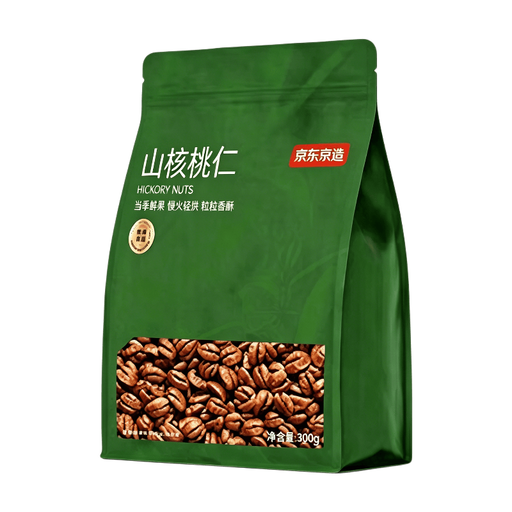 No image available
A good choice if you’d like to serve individually portioned snacks at a get-together.
The product description lists hickory nuts, sugar and salt; the nuts are individually wrapped.
Contains hickory nuts, a tree nut.
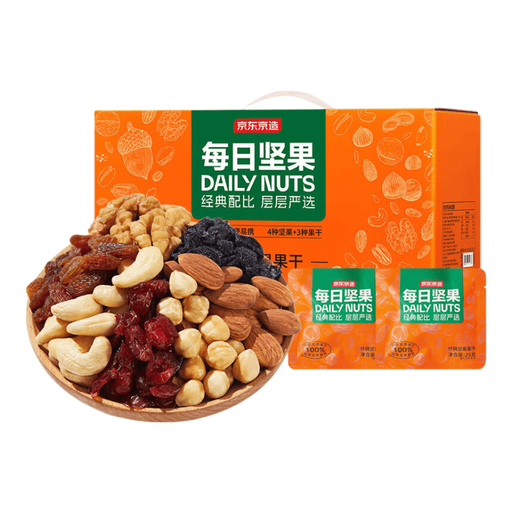 No image available
A good choice if you want to divide snacks into individual portions in advance.
The description lists 30 sachets of 25 g containing walnut, raisin, cranberry, blackcurrant, almond, cashew and hazelnut.
It’s a mix of nuts and dried fruit.
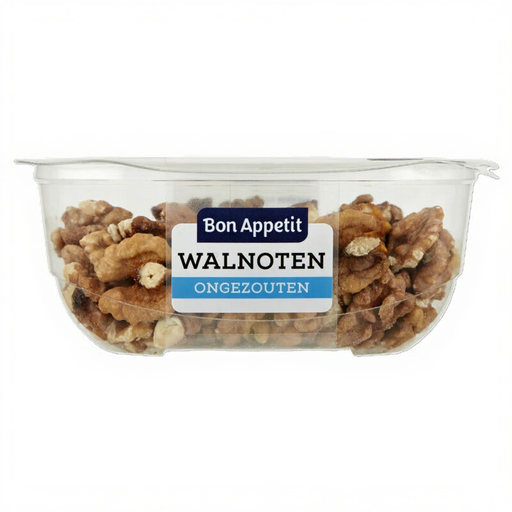 No image available
A good choice if you’re looking for unsalted walnuts to snack on and want to crack them yourself.
The walnuts are in their shells; the pack contains 110 g.
Contains walnuts.
No. Unsalted describes the salt content, not the total fat. The Netherlands Nutrition Centre’s general example gives 14,9 g of fat per 25 g serving of unsalted nuts; this is not nutritional information for a specific product variety.
No. This description refers to how the product is prepared and does not, on its own, prove a lower fat content. Duyvis uses this description for Oven Baked Peanuts Original. Consider any nutrition claim separately from the nutritional information for the exact variety.
Read the ingredients and allergen information on the exact packaging, and look out for any warnings about traces. According to the NVWA, allergen information for prepacked products appears on the label. Choose with the guest in question in mind.
No. The Food Allergy Foundation (Stichting Voedselallergie) describes a peanut as a legume and treats it separately from tree nuts such as almonds, hazelnuts and walnuts. Check which allergy is relevant to your guest and read the packaging.
Store them in a well-sealed container in a dry place, and follow the instructions on the packaging. The Netherlands Nutrition Centre recommends storing them somewhere cool, for example at 10 to 15 °C.