Who is this comparison for?

Students who watch their portions

You want to know how much energy your weighed-out snack provides during a study break. Check the pack weight and nutritional information; the Netherlands Nutrition Centre gives 164 kcal for 25 g of unsalted nuts as a general reference.

Anyone looking for an unsalted snack

You want to compare individual nuts and mixes by their ingredients. The Netherlands Nutrition Centre recommends unsalted nuts and varying the types you eat. Check the nutritional information for individual products at Albert Heijn, Jumbo, PLUS and ALDI.

Shoppers who compare labels

Ingredients and allergens may influence your choice, for example if you’re allergic to peanuts, a particular nut or wheat. Check each pack individually; the NVWA says that pre-packed products must show allergen information on the label.

What should you consider when choosing?

Weigh your portion and compare labels on the same basis. Then choose the ingredients and type of packaging that suit your study break.

What to consider What to look for Who is this most important for?
Energy per portion Check the kcal per 100 g and weigh your portion. Calculate kcal per portion using kcal per 100 g × portion weight in grams ÷ 100. If you want to know how much energy you’re actually eating, weighing your portion makes it easier to compare. Around 36% of consumers prioritise energy per portion.
Ingredients Compare salt, fibre and protein per 100 g, and convert the values to the same portion size if needed. If you want to consider the nutritional make-up as well as energy, these label values are relevant. Around 29% of consumers prioritise this comparison.
Packaging and portions Check the net weight and decide in advance how many grams you want to set aside. Follow the storage instructions on the pack. If you want to grab a measured amount quickly during a study break, pack size and storage matter. Around 21% of consumers prioritise this.
Ingredients and allergens Read the ingredients, allergen information and warnings on the exact pack. If you have a relevant allergy or need to avoid certain ingredients, first check that the product is suitable for you. Around 14% of consumers prioritise this.

Common mistakes when choosing nut snacks

  • Assuming a small portion means the product is low in calories

    A portion may provide less energy than a larger one, but that doesn’t change the energy value per 100 g. For solid foods, the European Commission’s requirement for a ‘low energy’ claim is no more than 40 kcal (170 kJ) per 100 g.

    Compare the energy in a weighed portion and use the nutritional information on the exact pack. Don’t call a product low in calories just because you eat a small amount.

  • Assuming ‘unsalted’ or ‘unroasted’ means lower in calories

    The unsalted products from Albert Heijn, Jumbo and PLUS compared here range from 622 to 672 kcal per 100 g. These descriptions alone don’t tell you how much energy a product provides.

    Check the energy value and other nutritional information on the same pack, and compare products in equal quantities.

  • Using the lowest energy value as a general health ranking

    Duyvis lists 572 kcal per 100 g for its Provencale Coated Peanuts, less than the four unsalted products compared here. The manufacturer also lists 1.7 g of salt per 100 g, so the products differ in other ways too.

    Consider taste, salt, nutritional content and allergens according to your own needs. A lower energy value doesn’t automatically make a product suitable for every dietary goal.

  • Treating a retail pack as one study-break snack

    Jumbo cashews and the PLUS nut mix come in 200 g bags; ALDI describes a 500 g unsalted nut mix. The pack size isn’t the same as the portion you eat.

    Set aside the amount you want to eat in advance, then store the rest according to the instructions on the pack.

    Larger packs need to be stored appropriately and checked for signs of spoilage. The Netherlands Nutrition Centre lists rancid, chewy or mouldy unsalted cashews as signs to look out for; follow the relevant storage advice for other products.

Brands to compare

Duyvis

Worth comparing if you’re looking at peanut snacks or coated peanuts with a crunchy flavour coating; Provencale is one specific flavour mentioned here.

  • Duyvis lists 572 kcal and 1.7 g of salt per 100 g for its Provencale Coated Peanuts.
  • These values apply to this specific variety, not all Duyvis products. The manufacturer lists peanuts and gluten as allergens.

Albert Heijn

The own-brand range includes both unsalted almonds and an unsalted nut mix in the product information checked.

  • The product information makes it possible to compare the two: the almonds list 627 kcal per 100 g and the mix 672 kcal per 100 g.
  • The two products differ in ingredients and nutritional values. Albert Heijn warns that product information can change, so check the pack.

Jumbo

The unsalted cashews described here are an option if you’re specifically looking for a single type of nut with no added salt.

  • Jumbo lists 622 kcal per 100 g for its 200 g pack of cashews, along with storage instructions.
  • This nutritional value applies to this variety and shouldn’t automatically be applied to other cashews or Jumbo products.

Lidl

Lidl describes its 200 g Californian walnuts as unsalted, pure and unprocessed. Alesto is the named product range for nuts and dried fruit.

  • The product description confirms the type of nut, unsalted variety and pack size.
  • The product description doesn’t provide enough information to compare the calories with the other products mentioned.

ALDI

The TRADER JOE’S nut mix described here is an unsalted blend of almonds, hazelnuts, walnuts and Brazil nuts.

  • The ALDI product description lists the ingredients and a 500 g pack size.
  • A larger pack size doesn’t tell you the energy value per 100 g or per snack portion; weigh out your own portion.

PLUS

The nut mix mentioned is an unroasted, unsalted blend of hazelnuts, walnuts, almonds and cashews.

  • PLUS lists 641 kcal per 100 g and the proportions: 30% hazelnuts, 30% walnuts, 20% almonds and 20% cashews.
  • ‘Unroasted’ and ‘unsalted’ don’t mean this particular mix is low in calories.

Nut and snack options on Joybuy

These Joybuy products include individual nuts and mixed snacks for a study break. Compare the nutritional information and allergens for the exact product variety; not all options are unsalted.
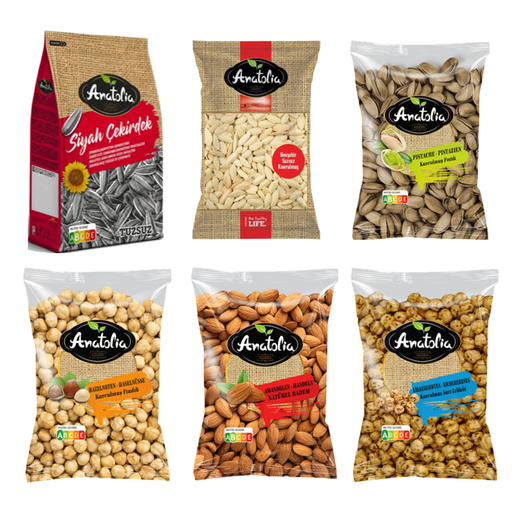
NUTS Deal mix with sunflower seeds, pumpkin seeds, pistachios, hazelnuts, almonds and chickpeas

NUTS Deal mix with nuts, seeds and chickpeas

A good choice if you want to combine different nuts and seeds in one snack mix.

The product description says the mix is roasted and salted, so bear this in mind if you’re looking for unsalted snacks.

View on Joybuy
Duyvis Provencal Coated Peanuts 275 g

Duyvis Provencal Coated Peanuts 275 g

A good choice if you’re looking for peanuts with a crunchy coating and onion and garlic flavour for a study-break snack.

The product information lists 542 kcal and 1.3 g of salt per 100 g. The product contains peanuts and wheat; it also carries a warning that it may contain traces of milk, nuts, soya and mustard.

View on Joybuy

g'woon raw, unsalted almonds 200 g

g'woon raw, unsalted almonds 200 g

A good choice if you want to weigh out individual almonds and are looking for an unsalted variety.

The product information lists 591 kcal, 13 g of fibre, 24 g of protein and 0.03 g of salt per 100 g. Contains almonds.

View on Joybuy

Anatolia Badem Natural almonds 500 g

Anatolia Badem Natural almonds 500 g

A good choice if you’re looking for a larger pack of whole almonds to portion out yourself.

The product information lists 100% almonds, 578 kcal and 0.00 g of salt per 100 g. Contains almonds.

View on Joybuy
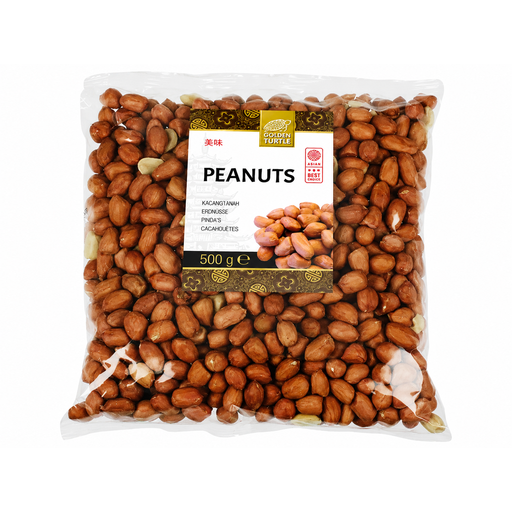
Golden Turtle Premium raw peanuts with skins 500 g

Golden Turtle Premium raw peanuts with skins 500 g

A good choice if you’re looking for peanuts with their skins on, either as a snack or to use in recipes.

The product information lists 567 kcal, 9 g of fibre and 26 g of protein per 100 g. Contains peanuts.

View on Joybuy

Frequently asked questions

Are these nuts really low in calories?

No. None of the five products with a verified energy value meets the European requirement for a ‘low energy’ claim. For solid foods, the limit is 40 kcal (170 kJ) per 100 g, according to the European Commission. A smaller portion provides less energy than a larger one, but that doesn’t make the product itself low in calories.

Is 25 g a compulsory maximum for every school or university student?

No. Here, 25 g is a set portion size for calculations, based on the Netherlands Nutrition Centre’s general nutritional reference for a handful of unsalted nuts. It isn’t a legal maximum or personal calorie recommendation.

How do I calculate the energy in my own portion?

Multiply the kcal per 100 g by the number of grams you’ve weighed out, then divide by 100. For 25 g of Jumbo Unsalted Cashews, that’s 622 × 25 ÷ 100 = 155.5 kcal. For a different pack, use the value on its own label.

What should I look out for if I have a food allergy?

Check the allergen information on the exact pack. According to the NVWA, pre-packed products must show allergen information on the label. Duyvis Provencale Coated Peanuts contain peanuts and wheat; other nut products have their own ingredients and allergens. ‘Unsalted’ doesn’t mean a product is free from allergens.

How should I store an opened bag of nuts?

Follow the storage instructions on the pack: Jumbo recommends storing its product in a cool, dry, dark place, while PLUS recommends keeping its product dry and dark. For opened unsalted cashews, the Netherlands Nutrition Centre’s Storage Guide recommends six months in a kitchen cupboard or one year in the freezer. Don’t automatically apply this advice to other nuts or mixes.
