For a school-break snack, start by checking the portion, ingredients, salt content and what’s allowed at school. Only look specifically for a lower fat content if that’s your aim. Oven-roasted or made without added oil doesn’t automatically mean low fat: the European Commission defines a ‘low fat’ claim for solid foods as no more than 3 g of fat per 100 g. Also check the allergens and, for young children, the product’s form.
Who is this choice relevant to?
Parents planning school-break snacks
You’re looking for something that fits your child’s school day and eating habits. The Netherlands Nutrition Centre lists unsalted nuts as a possible snack for children aged 4 to 12; unsalted or oven-roasted doesn’t automatically mean low fat.
Shoppers specifically looking for less fat in the product
You want to compare the fat content of the product itself. Check the nutritional information per 100 g and what any reduced-fat claim is based on, rather than looking only at how it’s prepared.
Families with allergies or school rules to consider
For you, suitability matters more than flavour or fat content. Check the ingredients, allergen information and the rules set by the school or childcare provider.
What should you look for when buying?
Regular unsalted nuts
Choose these if: you’re mainly looking for a snack where you can decide the portion size yourself. The Netherlands Nutrition Centre lists unsalted nuts as a possible snack for children aged 4 to 12.
Keep in mind: unsalted nuts can still contain a lot of total fat; unsalted refers to the salt content, not the fat content.
Oven-roasted without added oil
Choose this if: you want a roasted variety that, according to the product description, has no oil added during preparation. Duyvis describes Cashews Original this way.
Keep in mind: this preparation method doesn’t prove that the product is low fat; compare the total fat per 100 g.
A product explicitly labelled reduced fat
Choose this if: your main priority is less fat in the product itself. Compare the nutritional information and check what the claim is based on.
Keep in mind: reduced fat and low fat aren’t interchangeable claims; a lower amount per portion could also simply be because you’re eating less.
A nut-free snack
Choose this if: an allergy or school rule means nuts aren’t allowed. The Netherlands Nutrition Centre lists fruit and snack vegetables as possible break-time snacks.
Keep in mind: check that any alternative is suitable for the individual and permitted by the school.
For solid foods, the European Commission defines a ‘low fat’ claim as no more than 3 g of fat per 100 g. So compare nutritional values per 100 g; unsalted, unroasted and made without added oil each describe something different.
| Concern |
What to check |
Who is this important to? |
| Fat content and claims |
Compare fat per 100 g and check what a reduced-fat claim refers to. |
Anyone mainly looking for less fat in the product itself for school will want to compare nutritional values on the same basis. This is the main concern for an estimated 36% of consumers. |
| Allergens and school rules |
Read the ingredients and warnings on the packaging, and check the school’s rules. |
If an allergy or school rule determines what can be packed, suitability and product form come before flavour or fat content. Around 29% of consumers put this check first. |
| Ingredients and salt |
Compare salt and ingredients per 100 g; unsalted doesn’t automatically mean made without oil. |
If you mainly want to assess the everyday nutritional profile, look at the ingredients as well as the salt content. This is the main priority for around 21% of consumers. |
| Portion size and storage |
Decide how much to pack and choose packaging that can be stored properly according to the label. |
If you prepare snacks in advance or store leftovers, portion sizes and a well-sealed container matter more than the bag size alone. An estimated 14% of consumers see this as their main consideration. |
Common selection mistakes
-
Assuming oven-roasted means low fat
The preparation method doesn’t tell you how much total fat the product contains. The European Commission sets a separate threshold for the ‘low fat’ claim on solid foods.
Compare the fat content per 100 g and read the exact claim on the packaging; don’t use ‘oven-roasted’ as a substitute for this information.
-
Confusing unsalted with unroasted or made without oil
These are different product characteristics. For example, Jumbo Unsalted Cashews 200 g lists sunflower oil in its ingredients.
Check the salt content, preparation method and ingredients separately on the packaging of the variety you’re buying.
-
Looking only at the nutritional information
A snack may contain allergens or be unsuitable because of its form. The Netherlands Nutrition Centre advises against giving whole nuts or peanuts to children under 4 because of the risk of choking.
Check allergens, suitability for the child’s age and school rules first; then look at the nutritional information.
-
Buying a large bag without a portion and storage plan
A larger pack doesn’t determine how much you give your child at a time. Nuts should also be stored in a well-sealed container in a dry place.
Choose a pack size you can use, portion the snack thoughtfully and follow the storage advice on the label.
Brands and varieties for reference
Duyvis
Useful for comparing oven-roasted nuts made without added oil with coated peanut snacks.
- Duyvis describes Cashews Original as oven-roasted without added oil.
- That description doesn’t prove that the cashews are low fat. A historical SPAR listing stated that Sweet Paprika cocktail nuts were no longer available through SPAR or the supplier.
Albert Heijn
AH Unsalted Cashews is a specific option for anyone looking for unsalted cashews.
- The product page lists extra-large unsalted cashews in a 170 g pack.
- Unsalted is the stated characteristic; it doesn’t mean the product is lower in fat.
Jumbo
The product information for Unsalted Cashews 200 g gives specific details for comparing ingredients and nutritional values.
- For this variety, Jumbo lists 99% cashews, sunflower oil, 48.6 g of fat and 0.02 g of salt per 100 g.
- These cashews aren’t low fat according to the European Commission’s threshold. This information doesn’t automatically apply to other Jumbo varieties.
Lidl
The described Nut Mix is a regular mixed-nut option for anyone looking for unroasted, unsalted nuts.
- Lidl lists a 200 g pack of unroasted, unsalted nuts.
- Lidl says this mix is available in store only; this doesn’t tell you what’s in stock locally. The product description doesn’t support a low-fat claim.
ALDI
According to ALDI, its range in the Netherlands includes different types of nuts, in both salted and unsalted varieties.
- The range information mentions cashews, almonds, walnuts and Brazil nuts, among others.
- The range description alone doesn’t support a low-fat claim; check the details for the individual product.
PLUS
The unsalted nuts category is a useful place to start if you want to explore this type of product.
- PLUS lists delivery or collection as ways to buy from this category.
- A category page doesn’t guarantee that every variety is low fat or has specific allergen information; check the product itself.
Joybuy products
These Joybuy products include ready-to-eat chestnuts and a range of peanut and cashew snacks; ingredients and fat content vary between varieties.
 No image available
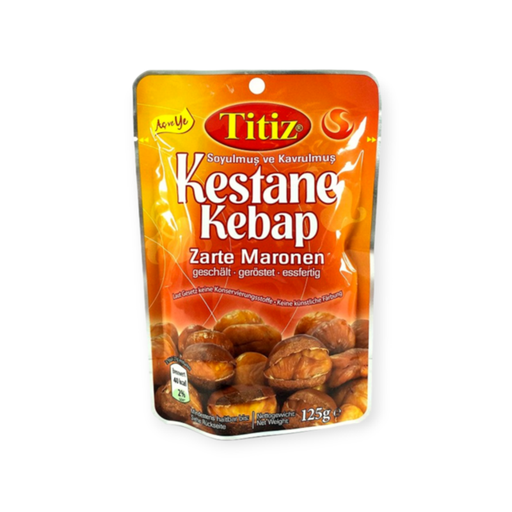
Titiz Roasted Chestnuts 125 g
An option to consider if you’re looking for less fat per 100 g; the listed nutritional value is lower than for the other nut products in this selection.
The product information lists 100% chestnuts, 1.4 g of fat and 0.01 g of salt per 100 g. At the stated fat content, the product falls below the European Commission’s threshold for a ‘low fat’ claim on solid foods; check the packaging for the latest nutritional information.
According to the product information, the chestnuts are peeled, cooked and ready to eat; the pack contains 125 g. Contains chestnuts and isn’t suitable for anyone with a relevant chestnut allergy or for a nut-free school.
View at Joybuy
 No image available
g'woon unsalted peanuts 250 g
Suitable if you’re looking for unsalted peanuts and want to compare the ingredients yourself; based on the listed nutritional values, this isn’t a low-fat option.
The product information lists 99% peanuts, sunflower oil, 50 g of fat and 0.02 g of salt per 100 g. At 50 g of fat per 100 g, this variety is above the European threshold for a ‘low fat’ claim.
According to the product information, it may contain cashews. Check the packaging and school rules if allergens are a concern.
View at Joybuy
 No image available
g'woon Cashew Nuts Roasted & Unsalted 200 g
An option to compare if you’re looking for roasted, unsalted cashews; the listed fat content means this isn’t a low-fat variety.
The product information lists 46.67 g of fat and 0.067 g of salt per 100 g. The fat content is above the European threshold for a ‘low fat’ claim.
The title lists roasted, unsalted cashews in a 200 g pack. Contains cashews; bear any relevant allergies and school rules in mind.
View at Joybuy
 No image available
Duyvis Dry Roasted Cashews 125 g
Suitable if you’re looking for cashews that, according to the product information, are roasted without added fat or oil; this preparation method doesn’t make them low fat.
The listed nutritional information is 43 g of fat and 0.92 g of salt per 100 g. The fat content is above the European threshold for a ‘low fat’ claim.
The product information lists 4–5 servings per 125 g pack. Contains cashews; check the packaging if allergens or school rules are relevant.
View at Joybuy
 No image available
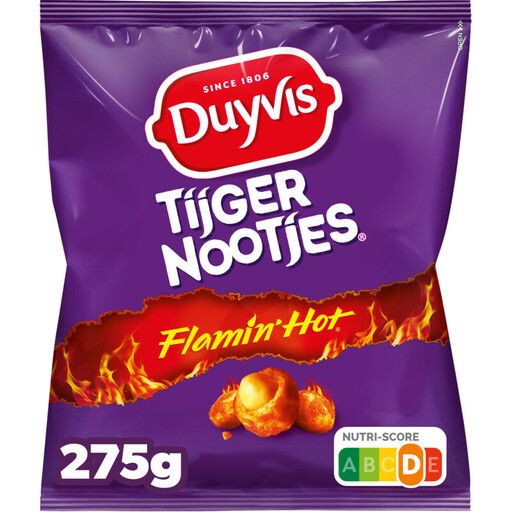
Duyvis Tiger Nuts Flaming Hot 275 g
A seasoned peanut snack to compare if flavour and ingredients matter more to you than a lower fat content.
The product information lists 33 g of fat and 1.4 g of salt per 100 g; the fat content is above the European threshold for a ‘low fat’ claim. The description mentions a double crunchy coating and a spicy flavour.
Contains peanuts and wheat/gluten; according to the product information, it may contain milk, nuts, soya and mustard. Check the packaging and school rules.
View at Joybuy
Frequently asked questions
Can a product with a lot of naturally occurring fat still be called ‘low fat’?
For solid foods, the European Commission defines a ‘low fat’ claim as no more than 3 g of fat per 100 g. No added oil or a small portion doesn’t change this threshold for the product.
What do allergen warnings on Dutch packaging mean?
According to the Netherlands Food and Consumer Product Safety Authority (NVWA), allergen information must appear on the label of prepacked products. The NVWA says that new Dutch rules on warnings about the unintended presence of allergens apply from 1 January 2026; read the current packaging and bear the school’s rules in mind.
Can I pack whole nuts for a child under 4?
The Netherlands Nutrition Centre advises against giving whole nuts or peanuts to children under 4 because of the risk of choking. Also check for allergies and school rules, and choose an alternative that’s suitable for the child if needed.
How should I store an opened bag of unsalted cashews?
The Netherlands Nutrition Centre advises storing unsalted cashews in a well-sealed container in a cool, dark and dry place. Follow the label too, and check the nuts before use.
Where can I look for regular unsalted nut varieties?
Albert Heijn and Jumbo have product pages for unsalted cashews; PLUS lists delivery or collection for its unsalted nuts category. Lidl says its Nut Mix is available in store only. These ways to buy don’t guarantee local availability or a reduced-fat variety.


