What should you look for when choosing?
Start by checking how much protein you’ll get from the portion you’re actually taking. Consider this alongside the rest of your meal, the packaging and the ingredients of the exact variety.
| What to consider |
What to look for |
Who is this most important for? |
| Protein per serving |
Compare the protein per 100 g and calculate the amount for the weight of your portion. |
If I’m taking a snack after exercise, I want to know how much protein my weighed portion provides; around 39% of consumers prioritise protein per serving. |
| Portion and ingredients |
Check the weight of your portion and compare the energy and salt content of the exact variety too. |
I want my portion to fit in with the rest of the picnic, so I check the ingredients; around 23% of consumers prioritise portion size and ingredients. |
| Taking and sharing |
Choose a pack size to suit the number of people eating, and keep the ingredient and allergen information available. |
For a group, I want to be able to divide the amount easily and have the allergen information to hand; around 23% of consumers prioritise taking and sharing. |
| Getting the most from the pack |
Compare the price per kilogram for the same type and variety, and think about how much you’ll actually use. |
I don’t want to buy more than we’ll use, so I compare the price per kilo for the same variety; around 15% of consumers prioritise cost and making the most of the pack. |
Nuts for your picnic at Joybuy
This selection includes peanuts and almonds for a park picnic. Check the preparation method, ingredients and portion size for each variety.
 No image available
g'woon unsalted peanuts, 250 g
An option if you want to take unsalted peanuts and calculate the protein in a weighed portion.
250 g; 27 g of protein per 100 g; salt 0.02 g per 100 g. The description lists 99% peanuts and sunflower oil. Contains peanuts and may contain cashew nuts.
Joybuy
 No image available
g'woon raw, unsalted almonds, 200 g
An option if you want to take raw, unsalted almonds on your picnic.
200 g; 24 g of protein per 100 g; salt 0.03 g per 100 g. Contains almonds.
Joybuy
 No image available
g'woon peanuts in shells, 500 g
An option for a picnic if you want to take peanuts in their shells and crack them open when you get there.
500 g; 29 g of protein per 100 g; salt 0.12 g per 100 g. The peanuts are in their shells and need to be shelled before eating. Contains peanuts.
Joybuy
 No image available
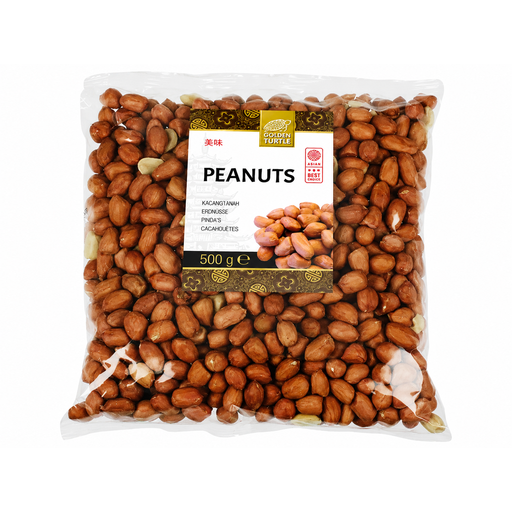
Golden Turtle Premium raw peanuts with skins, 500 g
This variety is a good fit if you want to take raw peanuts and are happy to roast them before eating.
500 g; 26 g of protein per 100 g. The peanuts are raw and unroasted; the description suggests roasting them before use. Contains peanuts.
Joybuy
 No image available
Verse Extra Large roasted, unsalted peanuts, 210 g
An option if you want to take roasted, unsalted peanuts in a 210 g pack.
26 g of protein and 0.02 g of salt per 100 g; the description states 100% peanuts. Contains peanuts.
Joybuy
Frequently asked questions
Is a handful of nuts enough for recovery after intense exercise?
Not without considering the rest of your meal and how hard you’ve exercised. The Dutch Association of Sports Nutrition Experts recommends 0.2–0.4 g of protein per kilogram of body weight within two hours of intense exercise, especially if you’ll be training again soon. This isn’t an individual recovery plan.
Are peanuts the same as tree nuts when someone has an allergy?
No. The Food Allergy Foundation describes peanuts as legumes and treats them separately from tree nuts. Don’t take this distinction as permission to serve someone with a known allergy a different type without an individual assessment.
What allergen information must appear on packaged nuts?
According to the Netherlands Food and Consumer Product Safety Authority (NVWA), allergen information for prepacked products must appear on the label; peanuts and nuts are among the listed allergens. If you decant them, take the packaging or a readable photo of the full label with you.
How should you transport nuts and the rest of your picnic safely?
Follow the storage instructions on the packaging and use clean hands and utensils. The Netherlands Nutrition Centre recommends keeping picnic food chilled, as warm weather gives harmful bacteria more opportunity to grow. Advice to store unroasted, unprocessed nuts in a sealed container in a cool, dark place doesn’t automatically apply to every snack variety.
Is a large pack always better value?
Not necessarily: compare the price per kilogram for the same type and variety, and think about how much you’ll actually use. A larger pack doesn’t, on its own, tell you how much each person will eat.


