
Extra protein at lunchtime
You want to add nuts to your work-from-home lunch and check how much protein your portion provides, perhaps in relation to strength training or endurance sport.


If you want to add a little extra protein to your lunch, compare peanuts and nut mixes based on the amount you actually eat. A mix may be a better fit if variety matters more to you. As a 25 g example portion, the checked unsalted peanuts provide 6.25–6.75 g of protein, while the Jumbo Unroasted Nut Mix provides around 4.8 g, based on product information from Albert Heijn, PLUS and Jumbo. This example portion is not personal nutritional advice: consider energy, ingredients and allergens too, and assess nuts as part of your whole lunch.
You want to add nuts to your work-from-home lunch and check how much protein your portion provides, perhaps in relation to strength training or endurance sport.
You’re looking for a selection of unsalted nuts to complement a varied lunch, rather than choosing solely on the basis of the highest protein figure.
You’re comparing pack sizes for regular lunches and want to consider storage and how much you’ll get through.
First, compare the nutritional values with the portion you’ll actually eat. Then decide whether protein, variety, stock levels or suitability for your allergies matters most to you.
| What to consider | What to check when buying | Who is it for? |
|---|---|---|
| Protein in your portion | Compare protein per 100 g and work out how much that is for the amount you eat; remember to include the rest of your lunch too. | If I mainly want to add protein to a small lunch portion, I work back from the label value to my own serving. Around 31% of consumers say protein content is their top purchasing priority. |
| Portion size and energy | Weigh the amount you want and compare protein and energy for the same portion size. | If I want extra protein without accidentally eating a larger portion, I also check the energy content of that amount. Around 25% of consumers give the most weight to portion size and energy. |
| Variety and use | Read the ingredients and preparation method, and decide whether you want a single type of nut or a mix. | If different types of nuts are what I’m looking for, I choose based on the mix and how I’ll use it in my lunch, not just the protein content. Around 19% of consumers say variety and easy lunchtime use are their top priorities. |
| Packaging and storage | Compare the net weight and follow the storage and resealing instructions on the pack. | For regular use, I want packaging that suits how much I get through and can be sealed securely. Around 13% of consumers prioritise pack size and the cost of keeping stocks. |
| Food allergy | Check both the ingredients and warnings on the current label for your specific allergy. | If I have a specific food allergy, I also check for warnings about the possible presence of allergens. Around 12% of consumers say allergen suitability is their top purchasing priority. |
A 25 g portion is a quarter of 100 g. Based on the label, the checked AH peanuts therefore provide 6.25 g of protein, not 25 g.
Work out the nutritional value for the amount you’ll actually eat.
A larger portion also provides more energy. The Voedingscentrum states that 25 g of unsalted peanuts contains an average of 157 kcal.
Decide on your portion in advance and consider the other parts of your lunch too.
AH Unsalted Peanuts are fried and contain sunflower oil; the checked Jumbo mix is unroasted.
As well as checking the salt information, read the ingredients and preparation method.
The checked Jumbo mix doesn’t list peanuts as an ingredient, but does state that the product may contain peanuts.
If you have a peanut allergy, check the warnings on the exact pack.
The unsalted peanuts are an option if you’re looking for a single-ingredient peanut product; the listed pack contains 235 g.
AH Unsalted Peanuts come in a 300 g pack; the stated serving size is 25 g.
The 200 g Unroasted Nut Mix is an option if you want several types of nuts in one product.
The Lidl Nut Mix described is an unroasted, unsalted mix in a 200 g pack.
TRADER JOE’S Unsalted Nut Mix is a mix in a 500 g pack.
PLUS Unsalted Peanuts come in a 250 g bag.
This selection at Joybuy includes peanuts and a nut mix to add to lunch. Compare the stated protein values, ingredients and product type with what you’re looking for.
 No image available
An option if you want to add unsalted peanuts to your lunch and compare the stated protein value.
The product information lists 27 g of protein per 100 g, 99% peanuts and sunflower oil. The product may contain cashews.
 No image available
An option if you’re looking for peanuts in their shells to enjoy as a snack or use in recipes.
The product information lists 29 g of protein per 100 g. The title indicates that the peanuts are in their shells.
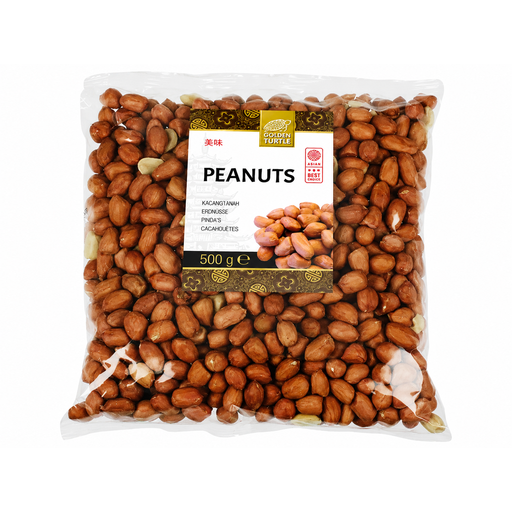 No image available
An option if you want to use raw peanuts with their skins in salads, stir-fries or sauces, among other dishes.
The product information lists 26 g of protein per 100 g. Contains peanuts.
 No image available
An option if you want to add roasted, unsalted peanuts to your lunch or use them in recipes.
The product information lists 26 g of protein per 100 g and peanuts as the sole ingredient. Contains peanuts.
 No image available
An option if you want to combine several types of nuts in one lunchtime addition.
The product information lists 20.1 g of protein per 100 g and includes peanuts, almonds, cashews, Brazil nuts and hazelnuts, as well as sunflower oil. The product may also contain other nuts.
Consider your whole meal and eating pattern, not just the nuts. According to the Voedingscentrum, most people who do sport can get enough protein from a healthy, varied diet; this doesn’t establish that a single portion of nuts meets your overall needs.
Store nuts in a dry place in a tightly sealed container, and follow the instructions on the pack. The Voedingscentrum recommends storing them somewhere dry and keeping them well sealed; Albert Heijn also advises storing its peanuts in a cool, dark place and resealing the pack securely after use.
Use the current packaging to check the ingredients, nutritional values and allergens. Albert Heijn says that product information may change and advises customers to contact its customer service with any questions.
According to the Netherlands Food and Consumer Product Safety Authority, allergen information must appear on the label of prepacked products. Check the ingredients and warnings on the packaging for any allergens relevant to you.
Since 1 January 2026, the Netherlands Food and Consumer Product Safety Authority has overseen the new rules on precautionary allergen warnings. Wording such as ‘May contain X’ and ‘Not suitable for people with an X allergy’ is based on the food business’s risk assessment.