What should you look for when choosing?
First decide whether you want less total fat for the same amount or mainly want to limit the size and energy content of your snack. Then consider the flavour and packaging separately.
| What to consider |
What to look for |
Who is this important to? |
| Total fat |
Compare the total fat per 100 g and check the exact nutrition claim used. According to the European Commission, a solid food can only be labelled ‘low fat’ if it contains no more than 3 g of fat per 100 g. |
If I want less total fat in the same amount, I check the nutrition table rather than looking only at how the product is made. This is the top priority for around 36% of consumers. |
| Portion and energy |
Weigh the amount you want to eat and check the energy per 100 g so you can work it out for your portion. The Netherlands Nutrition Centre’s general reference portion is not a personal portion recommendation. |
If I mainly want to limit the extra snack alongside my sandwich, I start with the amount I plan to eat. Around 29% of consumers prioritise portion size and energy when making this choice. |
| Salt and ingredients |
Check the ingredients, the types of nuts or peanuts and the salt content. Unsalted doesn’t automatically mean lower in fat. |
If I’m looking for plain, unsalted nuts, I check the ingredients rather than relying on a claim about fat. Around 21% of consumers put ingredients first. |
| Packaging and storage |
Check the net weight and number of portions. Choose packaging that you can measure from and reseal securely after opening; the Netherlands Nutrition Centre advises storing nuts in a cool, dark and dry place. |
If I want to take a snack with me or portion it out at home from a larger bag, pack size factors into my choice. Around 14% of consumers prioritise convenient packaging and portioning. |
Nuts and chestnuts at Joybuy
This selection includes ready-to-eat chestnuts and portion-packed nuts and peanuts to take with you. For each product, compare the fat and energy per 100 g with the amount you actually want to eat.
 No image available
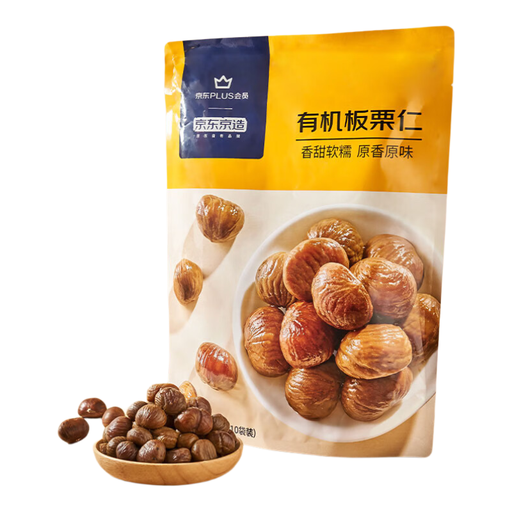
J.ZAO S++ Grade Whole Chestnuts, 1 kg (10 small bags)
The individual bags are handy if you want to take a portion with you.
The pack contains 10 bags of 100 g of peeled, ready-to-eat chestnuts. The nutrition table lists 1.7 g of fat and 191 kcal per 100 g.
View at Joybuy
 No image available
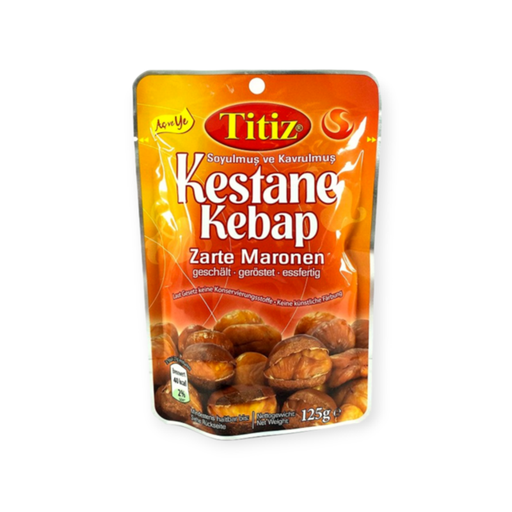
Titiz Roasted Chestnuts, 125 g
The 125 g pack is a handy option if you want to take a ready-to-eat chestnut snack with you.
The ingredients are listed as 100% chestnuts. The product description states that each pack contains 170 kcal.
View at Joybuy
 No image available
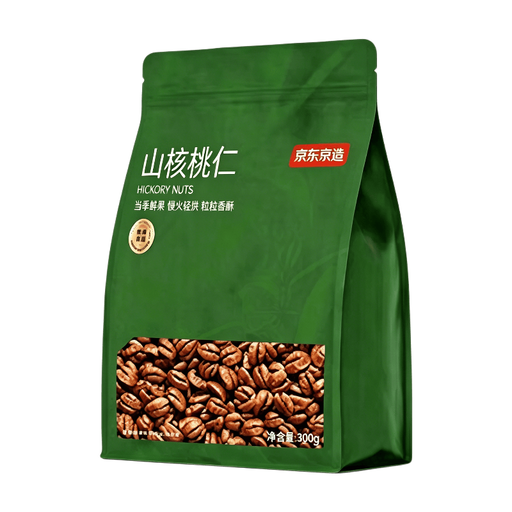
J.ZAO Hickory Nuts, 300 g, Lin’an Small
The individual packs are designed for taking a measured amount with you.
The nutrition table lists 46.4 g of fat per 100 g. The product information identifies hickory nuts; be aware of the tree nut listed as an allergen.
View at Joybuy
 No image available
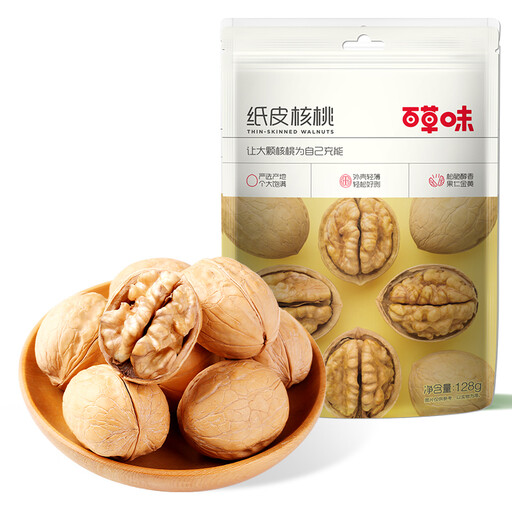
Be&Cheery Paper-shell Walnuts, 128 g
The individual packs are designed as a handy portion to take with you.
The ingredients list contains only walnuts. The nutrition table lists 74.9 g of fat per 100 g; the product contains walnuts, a tree nut.
View at Joybuy
 No image available
g'woon unsalted peanuts, 250 g
These unsalted peanuts are an option if you’re looking for a straightforward nut snack in a 250 g pack.
The product information lists 99% peanuts and 0.02 g of salt per 100 g. Reseal the pack securely after opening; the warning states that the product may contain cashew nuts.
View at Joybuy
Frequently asked questions
When can a nut snack be called ‘low fat’?
According to the European Commission’s official guidance, the claim ‘low fat’ can only be used for a solid food if it contains no more than 3 g of fat per 100 g. A smaller portion doesn’t change that limit per 100 g.
Is 25 g automatically the right portion for my lunch?
No. The 25 g portion on the Netherlands Nutrition Centre’s general nutrition information page is a reference portion, not a personal recommendation for your lunch. Use the weight you want to eat and the nutritional values on your pack.
How should I take nuts with me and store the rest?
Put your measured portion in a securely sealed container. Store the rest in a cool, dark and dry place, and follow the instructions on the packaging. The Netherlands Nutrition Centre points out that nuts can be susceptible to mould and may absorb odours.
What allergen information should I check on a packed lunch-time snack?
The Netherlands Food and Consumer Product Safety Authority states that allergen information must be shown on the label of prepacked products. Check the snack packaging and, if you’re also buying a sandwich, the information for that product too.
Does roasting without oil mean that nuts contain less fat?
No, not necessarily. Albert Heijn’s product information says that Duyvis Oven roasted almonds are roasted without added oil or fat, but also lists 50 g of total fat per 100 g. So compare the nutrition table and consider the method of preparation separately.


