
Film-night snackers keeping an eye on portions
You want to enjoy regular nuts during the film, but know in advance how much energy is in your bowl. Compare a weighed portion rather than the whole pack.


If you want to snack on fewer calories during a film night, start with the amount: weigh your portion and compare the nutritional information per 100 g for products in the same state. The unsalted peanuts, cashews and plain nut mix reviewed contain 614, 622 and 641 kcal per 100 g respectively; Albert Heijn lists 189 kcal per 100 g for raw sweet chestnuts, which still need to be prepared. Under the European claim ‘low energy’, solid foods must contain no more than 40 kcal (170 kJ) per 100 g. None of these examples meets that limit.
You want to enjoy regular nuts during the film, but know in advance how much energy is in your bowl. Compare a weighed portion rather than the whole pack.
You’re open to sweet chestnuts and the preparation they require. Keep the nutritional information for raw chestnuts separate from that for prepared products.
You might choose based on an unsalted recipe and the types of nuts, even though that isn’t the same as choosing the product with the lowest energy content. The Netherlands Nutrition Centre recommends unroasted or lightly roasted nuts.
First decide whether you want regular nuts or a chestnut snack. Then compare the portion, preparation state and ingredients.
| What to consider | What should you check? | Who is this important for? |
|---|---|---|
| Amount per snack occasion | Weigh your portion and calculate the energy from the kcal per 100 g: multiply by the portion weight and divide by 100. | If I want to limit the total amount I eat during the film, I weigh out a portion beforehand. Around 36% of consumers prioritise portion control. |
| Energy for the same weight | Compare kcal per 100 g and check whether the product is raw, roasted, popped or prepared in another way. | I want to know how much energy the same weight contains first, and will consider a different recipe or preparation method if needed. Around 29% of consumers focus mainly on energy per 100 g. |
| Ingredients and preparation | Read the ingredients list and check the salt, sugar, oil used and types of nuts listed separately. | If I care more about a simple, unsalted recipe than just the calorie count, I check the ingredients. Around 21% of consumers prioritise simple ingredients. |
| Packaging and storage | Check the net weight and storage instructions to make sure the amount suits how you’ll use it. | I want a pack that’s right for film night and that I can store properly afterwards. Around 14% of consumers focus mainly on practical packaging. |
The European Commission sets a limit of no more than 40 kcal (170 kJ) per 100 g for the ‘low energy’ claim on solid foods. A smaller portion does not change this per-100 g requirement.
For comparison, based on the values shown in the product information, 25 g of Duyvis Unsalted Peanuts contains 153.5 kcal, 25 g of Jumbo Unsalted Cashews contains 155.5 kcal, and 25 g of PLUS Unroasted Unsalted Nut Mix contains 160.25 kcal. These are calculations based on the stated values per 100 g, not personalised portion recommendations.
‘Unsalted’ describes the salt content, not the amount of energy. The unsalted nuts reviewed are still high in energy.
Check the energy and salt values separately, and decide in advance how much you want to eat.
Duyvis lists a 30 g portion; the Netherlands Nutrition Centre uses 25 g as a handful in its nutritional information table. These amounts are therefore not directly comparable.
First compare products per 100 g, then calculate the figures for the portion you want to have.
The PLUS Cranberry Mix reviewed contains sweetened cranberries and lists 18.8 g of added sugars per 100 g. ‘Unsalted’ does not mean ‘sugar-free’ here.
Choose a mix like this if you want a sweet combination, and check the ingredients and nutritional information.
Nuts can absorb odours and are susceptible to mould. How much you have left over depends in part on the packaging and how you use them.
Choose an amount that suits your needs, and store any leftovers in a tightly sealed container in a cool, dark, dry place, following the instructions on the pack.
Example reviewed: Unsalted Peanuts 235 g.
The examples reviewed are unsalted pistachios and raw sweet chestnuts; this does not necessarily reflect the full range.
Example reviewed: Unsalted Cashews 200 g.
Range information lists unsalted Californian pistachios.
The TRADER JOE’S Unsalted Nut Mix reviewed is a blend of several types of nuts.
The product examples reviewed include a plain unroasted nut mix and a cranberry and nut mix.
These Joybuy products are chestnut snacks for anyone who wants to compare portion sizes, ingredients and the nutritional values listed.
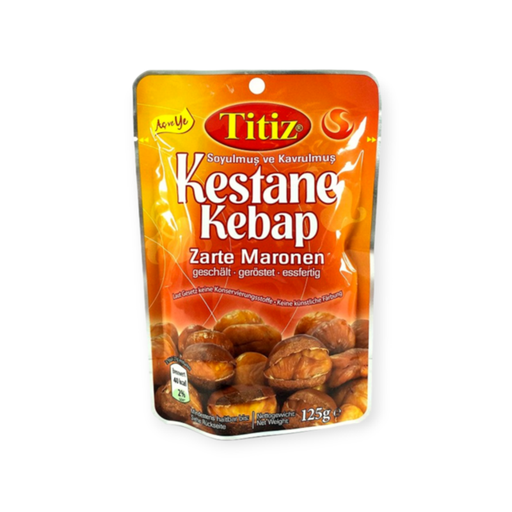 Image unavailable
Suitable if you’re looking for a peeled, baked chestnut snack.
The product description lists 100% chestnuts as the ingredient.
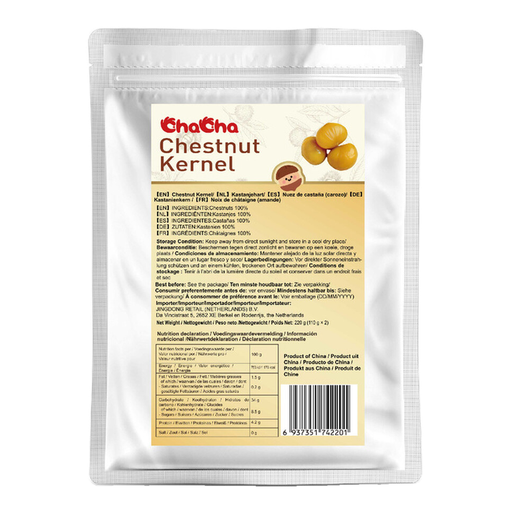 Image unavailable
An option if you want to take the stated energy per 100 g and the portion packaging into account.
The product information lists 178 kcal and 0 g of salt per 100 g, with chestnut kernels as the ingredient. The description mentions two individually packed 110 g portions.
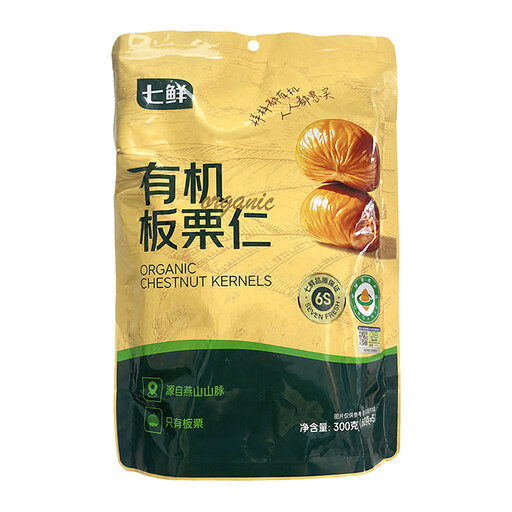 Image unavailable
Suitable if you’re looking for ready-to-eat chestnut kernels and want to compare the nutritional information per 100 g.
The product information lists 185 kcal, 0 g of fat and 0 g of salt per 100 g, and names chestnut as the ingredient.
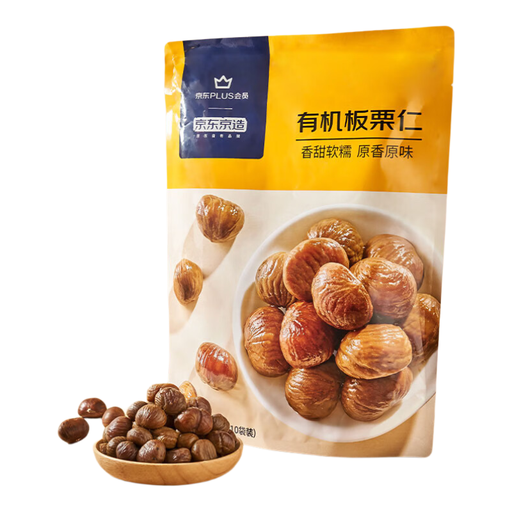 Image unavailable
An option if you want to portion out peeled chestnuts from individual bags.
The product information describes ready-to-eat, peeled chestnuts in ten 100 g bags. The stated energy is 191 kcal per 100 g.
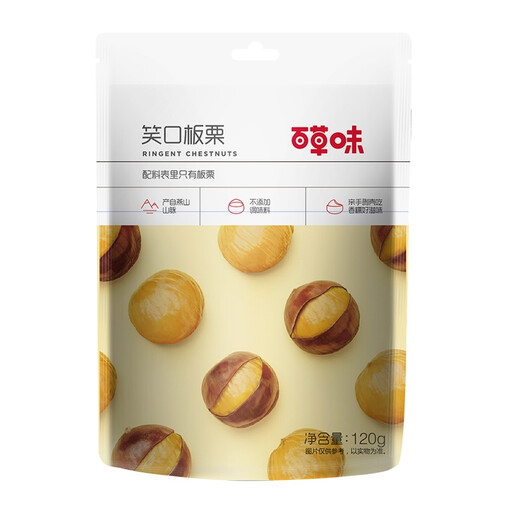 Image unavailable
Suitable if you’re looking for a ready-to-eat, steamed chestnut snack in individual portions.
The product information lists 196 kcal and 0.01 g of salt per 100 g. The ingredients include sugar as well as chestnut.
No. According to the European Commission, the ‘low energy’ claim may only be used for solid foods containing no more than 40 kcal (170 kJ) per 100 g. The nuts, cranberry mix and raw chestnuts mentioned are above this limit; a smaller portion does not change the per-100 g claim requirement.
Compare products in the same state, for example raw with raw or prepared with prepared. Albert Heijn lists 189 kcal per 100 g for raw chestnuts; you can’t apply that figure directly to the same weight after roasting.
Albert Heijn’s instructions are to carefully score the raw chestnuts with a cross, roast them on a baking tray in an oven at 200 °C for 15–20 minutes, leave them to cool briefly and then peel them. If you have a different pack, follow its preparation instructions.
Read the current label on the exact pack and take the known allergy into account. The Netherlands Food and Consumer Product Safety Authority lists peanuts and nuts as separate allergens that must be declared on prepacked products; since 1 January 2026, Dutch rules have applied to warnings about unintended presence.
No. Albert Heijn and Duyvis product information warns that young children can choke on nuts and peanuts. So don’t assume whole nuts are a suitable snack for children.