
Hosts with guests who avoid nuts or peanuts
You want to know which types of nuts a snack contains and what warnings appear on the packaging. Nuts and peanuts are separate allergens, so choose according to what your guest actually needs to avoid.


Choose according to the specific ingredient your guest needs to avoid: gluten-free, lactose-free and nut-free do not mean the same thing. Albert Heijn lists AH Unroasted Almonds as gluten-free and lactose-free, but the product contains almonds and may contain peanuts and other nuts. So check the packaging and keep suitable portions separate from other snacks.
You want to know which types of nuts a snack contains and what warnings appear on the packaging. Nuts and peanuts are separate allergens, so choose according to what your guest actually needs to avoid.
You’re looking for a suitable snack and want to account for ingredients in seasonings or coatings. Check the claim and the information on the specific packaging, rather than relying on the name of the nut alone.
You want to distinguish between lactose intolerance and a milk allergy. The Netherlands Nutrition Centre explains that lactose intolerance relates to milk sugar, while a milk allergy is a reaction to milk proteins.
| What to consider | What should you check? | Who is this important for? |
|---|---|---|
| Type of nut and peanuts | Check which nuts are listed in the ingredients or allergen information, and whether peanuts are included. | If a guest needs to avoid certain nuts or peanuts, you don’t want to rely on the product name alone. Around 31% of consumers say avoiding specific nuts or peanuts is their top priority. |
| Gluten | Check the gluten-free claim and the ingredient and warning information for the exact variant. | If you’re buying gluten-free, you’ll also want to know whether a coating or flavouring adds any ingredients. Around 25% of consumers prioritise avoiding gluten. |
| Lactose or milk | Find out whether the restriction relates to lactose intolerance or a milk allergy, then check the relevant product information. | If a guest needs to avoid milk, you don’t want to confuse a lactose-free claim with information about milk proteins. Around 19% of consumers say distinguishing between lactose and milk is their top priority when shopping. |
| Serving separately | Keep the packaging and serve suitable portions separately, without mixing them with other snacks. | When serving snacks together, you’ll want to reduce the risk of mix-ups and contact with other snacks. Around 25% of consumers prioritise serving snacks clearly and separately. |
A product may be labelled gluten-free or lactose-free and still contain nuts or carry warnings about other allergens.
Check which specific substance your guest needs to avoid, then read the ingredients and allergen information on the packaging.
Lactose intolerance is about milk sugar; a milk allergy is about milk proteins. So a lactose-free claim doesn’t automatically tell you whether a product is suitable for someone with a milk allergy.
Check the information about milk and milk derivatives on the exact packaging, and choose according to your guest’s dietary requirements.
Ingredients and warnings can vary between flavours and variants. For example, Duyvis lists milk, peanuts and gluten for Borrelnootjes Cocktail; Almonds Original has a different composition and a warning for wheat, peanuts and other nuts.
Check the name, flavour and packaging separately, even if you’ve bought a product from the same brand before.
According to the Dutch Coeliac Society, crumbs can transfer gluten to another product. So even if the packaging is suitable, that doesn’t automatically mean the snacks are served separately.
Keep portions separate, don’t mix them with other snacks, and keep the original packaging nearby.
Relevant options include seasoned party nuts and almonds for a get-together.
AH Unroasted Almonds 450 g is a specific variant to consider if almonds are suitable for your guests.
Jumbo Unsalted Mixed Nuts 200 g is a nut mix for guests who can eat the nuts and peanuts listed.
According to Lidl, the Alesto range includes nuts, dried fruit and party snacks.
Aldi describes an unsalted Trader Joe’s nut mix containing almonds, hazelnuts, walnuts and Brazil nuts.
PLUS lists unsalted almonds and unroasted nut mixes, among other products, in its Dutch range.
This selection of Joybuy products includes peanuts, chestnuts, almonds and a nut mix. For each variant, check which ingredients and warnings are suitable for your guests’ dietary requirements.
 No image available
An option if your guests can eat peanuts; the product information lists peanuts as the main ingredient.
Contains peanuts and may contain cashews.
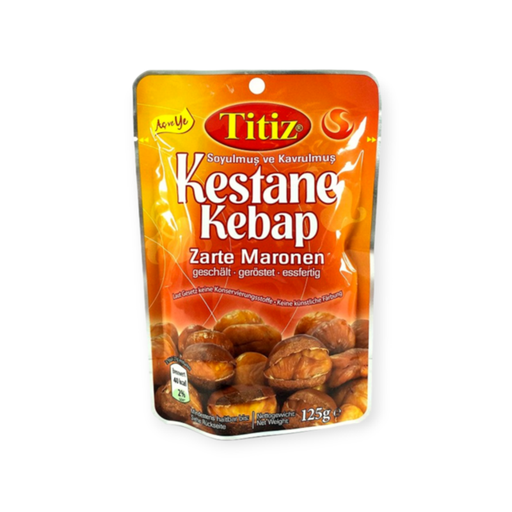 No image available
The product information lists chestnuts as an ingredient and says the product is gluten-free; check whether chestnuts are suitable for your guest.
Contains chestnuts. The gluten-free claim doesn’t mean the product is free from all allergens.
 No image available
An option if your guests can eat almonds; the product name specifies raw, unsalted almonds.
Contains almonds. Check the current packaging for the full ingredient and allergen information.
 No image available
A nut mix to consider if the nuts listed are suitable for your guests’ dietary requirements.
The product information lists hazelnuts, walnuts, almonds and cashews; peanuts and other nuts may also be present.
It warns that an allergen may be unintentionally present; it doesn’t mean the allergen was deliberately added as an ingredient. According to the Netherlands Food and Consumer Product Safety Authority, new rules on warnings about cross-contamination on prepacked foods have applied since 1 January 2026. Discuss the warning for the relevant allergen with your guest.
No. ‘Gluten-free’ refers specifically to gluten and doesn’t mean a product is free from nuts, peanuts, milk or other allergens. EU Implementing Regulation 828/2014 sets out the requirements for the claims ‘gluten-free’ and ‘very low gluten’ and has applied since 20 July 2016.
Keep snacks in their original packaging and serve suitable portions separately, without mixing them with other products. The Dutch Coeliac Society explains that gluten can be transferred, for example, through crumbs.
Check the packaging you’ve received again and ask the retailer or manufacturer for clarification before offering the product to the guest concerned. Ingredients and allergen information can change; the Food Allergy Foundation advises checking the full ingredients list again with every purchase.
Not without checking the rest of the product information. Lactose is milk sugar, while a milk allergy relates to milk proteins. So check the information about milk on the specific packaging and follow your guest’s dietary requirements.