
People who want to keep track of carbohydrates
For people with diabetes who want to include the total amount of carbohydrates in their nut snack in their meal planning.


For everyday snacking, an unsalted option in a measured portion is a useful starting point; the total fat content isn’t the only thing to consider. Diakonessenhuis advises people with diabetes to pay attention to the type and amount of carbohydrates they eat, so compare carbohydrates, energy, saturated fat and salt for the same quantity too. Oven-baked doesn’t automatically mean low-fat; tailor your portion to your personal dietary advice.
For people with diabetes who want to include the total amount of carbohydrates in their nut snack in their meal planning.
For people who want to weigh up energy and portion size without relying solely on a preparation description or total fat content.
For people who want to consider salt and saturated fat as well as total fat, and therefore check the nutritional information for the exact product variant.
When to choose them: if you’re looking for a simple snack and want to limit salt; the Dutch Nutrition Centre includes unsalted nuts in the Wheel of Five.
The trade-off: unsalted doesn’t mean low-fat. AH Unsalted Nut Mix lists 60 g of fat per 100 g.
When to choose them: if the preparation method matters to you; Duyvis describes Oven Baked Peanuts Original as made without added oil or fat.
The trade-off: that description alone doesn’t tell you how much fat, carbohydrates, salt or energy a portion contains.
When to choose it: if you’re specifically looking for a lower-fat snack, compare the claim and nutrition table with a suitable reference product.
The trade-off: a claim about fat doesn’t automatically tell you how much carbohydrate, salt or energy your portion contains.
| What to consider | What should you check? | Who does this matter to? |
|---|---|---|
| Carbohydrates per portion | Check the total carbohydrates per 100 g and calculate the amount in your portion. Albert Heijn lists 8,1 g and PLUS 11,5 g per 100 g for the unsalted mixes mentioned. | If I want to include carbohydrates in my meal planning, I look at the total amount I actually eat, not just the sugars. Around 36% of consumers focus on carbohydrates per portion eaten. |
| Energy and portion size | Compare energy on the same weight basis: Albert Heijn lists 672 kcal and PLUS 641 kcal per 100 g for the mixes mentioned. The Diabetes Fonds suggests around 15 g as a portion; Diakonessenhuis suggests 25 g. | If I want a lighter snack, measuring out my portion in advance helps me, rather than looking at the product alone. Around 29% of consumers give the most attention to limiting energy intake. |
| Salt and saturated fat | Check salt and saturated fat separately. Albert Heijn lists 5,7 g, PLUS 5,8 g and Jumbo 8,6 g of saturated fat per 100 g for the unsalted mixes mentioned. | If I want to limit salt and consider fat quality, I compare the nutritional values on the exact pack. Around 21% of consumers prioritise this consideration. |
| What the claim means | For solid foods, the European Commission defines ‘low fat’ as no more than 3 g of fat per 100 g. Also check exactly what any claim about reduced fat refers to. | If I see a fat claim on the packaging, I want to know what it does and doesn’t tell me before comparing the snack. Around 14% of consumers make checking claims their main consideration when choosing. |
‘Made without added oil or fat’ describes a preparation method. For solid foods, the European Commission sets a maximum of 3 g of fat per 100 g for a ‘low fat’ claim.
Read the nutrition table and check total fat, energy, carbohydrates and salt as well as the preparation description.
Carbohydrates also include starch. So looking only at the sugar content won’t tell you the total amount of carbohydrates.
Compare total carbohydrates per 100 g and take into account the portion you actually eat.
A 500 g pack may contain several portions. AH Unsalted Nut Mix lists 20 portions of 25 g; if you don’t portion it out in advance, it can be harder to keep track of how much you eat.
Divide the contents into portions that suit your personal dietary advice and seal the pack properly.
Without portioning it out or sealing the pack properly, you may eat more or have to throw the contents away sooner.
The NVWA warning dated 20 May 2026 applies only to Trader Joe’s unsalted cashews, 170 g, with a best-before date of 23-09-2026, due to possible metal fragments.
If you still have this specific pack at home, don’t eat the cashews. Check the product, weight, barcode and best-before date; the warning doesn’t automatically apply to other cashews.
The range includes unsalted peanuts and Oven Baked Peanuts Original; the variants differ in how they’re prepared and in their ingredients.
AH Unsalted Nut Mix is a supermarket own-brand product in a 500 g pack.
Jumbo sells, among other products, Unsalted Nut Mix in a 200 g pack.
The Alesto own-brand range includes various nuts, as well as dried fruit and party snacks.
The range includes various types of nuts, including salted and unsalted options.
PLUS Unroasted Unsalted Nut Mix contains walnuts, hazelnuts, almonds and cashews in a 500 g stand-up pouch.
These product options are unsalted nuts and peanuts. They’re intended to help you compare nutritional values per 100 g with your portion, not as low-fat recommendations.
 Image unavailable
An almond option with no added salt, for anyone looking for a simple nut snack.
Joybuy product information lists 19,7 g of carbohydrates, 50 g of fat and 578 kcal per 100 g.
 Image unavailable
A roasted, unsalted cashew option for anyone looking for a savoury snack with no added salt.
Joybuy product information lists 22,67 g of carbohydrates, 46,67 g of fat and 596 kcal per 100 g.
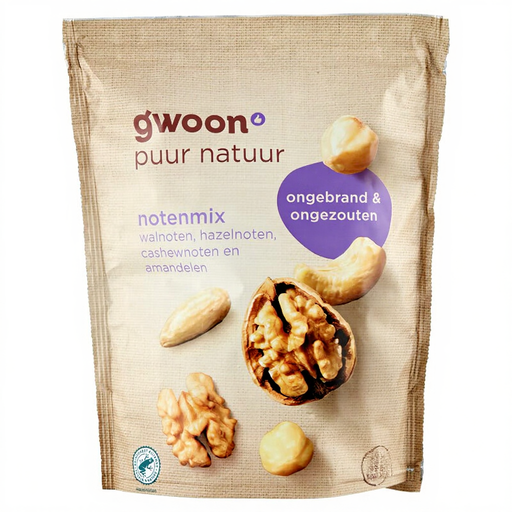 Image unavailable
A mix of hazelnuts, walnuts, almonds and cashews, with no salt listed in the ingredients.
Joybuy product information lists 13,7 g of carbohydrates, 58,7 g of fat and 663 kcal per 100 g.
 Image unavailable
A peanut option made with 100% peanuts and no added salt, for anyone looking for a simple savoury snack.
Joybuy product information lists 15 g of carbohydrates, 50 g of fat and 626 kcal per 100 g.
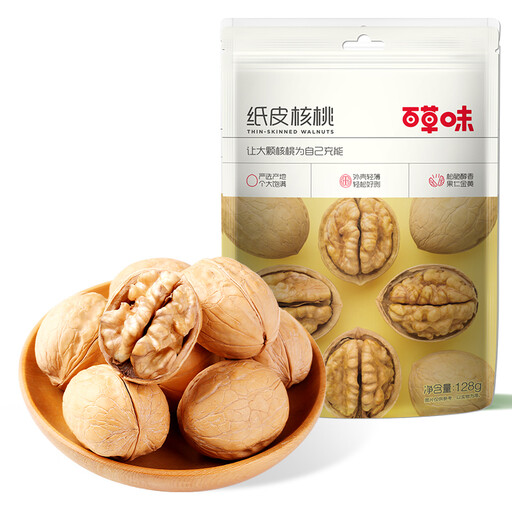 Image unavailable
A walnut option for anyone looking for one type of nut rather than a mix.
Joybuy product information lists 8,0 g of carbohydrates, 74,9 g of fat and 738 kcal per 100 g.
Not necessarily: the Diakonessenhuis nutrition leaflet consulted includes unsalted nuts in its dietary advice. Tailor your diet and portion to your personal circumstances and dietary advice.
The sources mentioned suggest different portions: the Diabetes Fonds suggests around 15 g, while Diakonessenhuis suggests 25 g. Don’t treat either as a personal standard; follow your own dietary advice and weigh your portion if you want to keep track of it accurately.
No. Oven-baked describes the preparation method and doesn’t prove that a product is low-fat. Duyvis says that no oil or fat is added to Oven Baked Peanuts Original; also check the nutrition table and the full ingredients list.
Check the allergen information on the exact pack and follow your personal allergy advice. ‘Unsalted’ and ‘oven-baked’ don’t in themselves tell you anything about allergens.
On 20 May 2026, the NVWA warned about Trader Joe’s unsalted cashews, 170 g, with a best-before date of 23-09-2026, due to possible metal fragments; don’t eat that specific pack. Albert Heijn warned about AH Extra Large Salted Peanuts in a tub with a best-before date of 04-11-2026 and advised customers not to eat the product, but to return the pack for a refund. The warnings apply to the products and packs mentioned.