For an everyday nut snack, compare unsalted varieties by their total carbohydrates per 100 g, then work out the amount for the portion you actually eat. If you also have a food allergy, check the ingredients and any information about possible cross-contamination for the exact variety separately: nuts and peanuts are not universally allergen-free snacks. A label such as ‘unsalted’ or ‘no added sugar’ does not answer the question of allergens.
Who is this guide for?
Everyday snack shopper with diabetes
You’re looking for a practical nut snack and want to know how many carbohydrates you’ll get in your own portion. Compare nutritional values on the same basis and work them out for your portion; this isn’t personal medical advice.
Snack shopper with an additional allergy
As well as making food choices, you need to avoid a specific allergen. So check the ingredients and any information about cross-contamination for the exact variety. Peanuts are legumes, but they can also cause allergic reactions.
Portion-conscious shopper stocking up
You want to buy nuts for everyday use without confusing the pack weight with the portion you eat. Compare nutritional values per 100 g and take into account how much you actually eat.
What should you look for when buying?
First compare total carbohydrates against your actual portion. Then consider any additional allergy and whether you want unsalted nuts as separate points.
| What to consider |
What should you check? |
Who is this important for? |
| Carbohydrates and sugar claims |
Compare total carbohydrates per 100 g, and also check the ‘of which sugars’ figure and the ingredients. |
If I want to tailor my carbohydrate intake to my own portion, I look beyond the sugar figure alone. Around 34% of consumers prioritise checking carbohydrates. |
| Avoiding a specific allergen |
Check the ingredients and any warnings about possible cross-contamination for the exact variety. |
If I need to avoid a particular allergen, I want to know whether the information about that specific ingredient is clear. Around 33% of consumers give avoiding specific allergens top priority. |
| Unsalted everyday snack |
Check the variety name and ingredients; ‘unsalted’ alone tells you nothing about carbohydrates or allergens. |
If I’m mainly looking for an unsalted snack, I want to assess that choice separately from my other label checks. Around 20% of consumers prioritise choosing unsalted products. |
| Portion and pack |
Compare nutritional values per 100 g with your own portion, and keep the net weight separate from the amount you eat. |
When stocking up, I want to be able to choose a pack without treating its full net weight as a portion. Around 13% of consumers focus mainly on portion size and convenient packaging. |
Common mistakes
-
Assuming ‘free from’ means free from all allergens
Nuts and peanuts can cause allergic reactions themselves. Choosing a product based on its salt or sugar content doesn’t change which type of nut or legume it contains.
Establish which allergen you need to avoid, then check the ingredients and any warnings for the exact variety. Don’t assume that a general label means the nuts are allergen-free.
-
Looking only at the ‘of which sugars’ figure
Total carbohydrates and the portion you eat are relevant when comparing nut products. The ‘of which sugars’ figure is only part of the nutritional information.
Compare total carbohydrates per 100 g, then work out the amount for your own portion.
-
Confusing ‘unsalted’ with ‘no added sugar’
‘Unsalted’ describes the salt content, not the full ingredients. Diabetes.nl explains that naturally occurring sugars in fruit can raise blood glucose levels.
For a mix containing fruit or other additions, read both the ingredients list and the nutrition table; assess them separately from the salt claim.
-
Treating a large bag as a portion
The Netherlands Nutrition Centre gives 164 kcal as a category example for 25 g of unsalted nuts. This isn’t a value for every individual product or a personal portion limit.
Keep the pack’s net weight separate from your portion, and follow the storage instructions on the product.
Brands to consider
Duyvis
Duyvis Unsalted Peanuts are a separate product range that the manufacturer presents as both a snack and an ingredient for cooking.
- The unsalted variety is clearly identified as a separate product choice.
- Flink lists 11 g of carbohydrates and 7.1 g of sugars per 100 g for the 235 g variety. So ‘unsalted’ doesn’t mean sugar-free; this product information isn’t an independent assessment of its suitability for people with diabetes or allergies.
Albert Heijn
AH Unsalted Nut Mix is a supermarket own-brand variety to include when comparing unsalted nut snacks.
- The product name clearly identifies it as unsalted.
- Albert Heijn warns that ingredients, nutritional values and dietary or allergy information can change. The brand name doesn’t prove that a product has any specific free-from property.
Jumbo
Jumbo Unsalted Nut Mix 200 g is a clearly identified variety; mixes containing fruit or other nuts have their own ingredients.
- The 200 g unsalted variety is named separately.
- Don’t assume that different mix names have the same recipe, or infer that a product is suitable for people with diabetes or allergies from the range name.
Lidl
Lidl lists unsalted Californian pistachios as a separate type of nut.
- The product name identifies both the type of nut and the unsalted variety.
- The product name doesn’t mean the product is free from any other specific allergen.
Aldi
ALDI lists an unsalted TRADER JOE’S nut mix containing almonds, hazelnuts, walnuts and Brazil nuts.
- The named types of nuts make the ingredients of this mix clearer.
- This isn’t a nut-free snack or an independent assessment of its suitability for a specific dietary need.
PLUS
PLUS lists an unroasted, unsalted nut mix in a 500 g stand-up pouch.
- The variety and pack weight are clearly stated.
- PLUS advises customers to check the current label. ‘Unroasted’ and ‘unsalted’ say nothing about the presence of allergens.
Nut products on Joybuy
These products are unsalted nuts and peanuts for anyone looking for an everyday snack. Compare the carbohydrates per 100 g with your own portion, and if you have an allergy, check the information for the exact variety.
 No image available
g'woon unsalted peanuts - 250 g
For anyone looking for an unsalted peanut snack and wanting to take the carbohydrates per portion into account.
Joybuy lists 13.5 g of carbohydrates per 100 g. The product contains peanuts and may contain traces of cashew nuts.
Joybuy
 No image available
g'woon raw, unsalted almonds - 200 g
For anyone looking for raw, unsalted almonds and wanting to compare the nutritional values with their own portion.
Joybuy lists 4.8 g of carbohydrates per 100 g.
Joybuy
 No image available
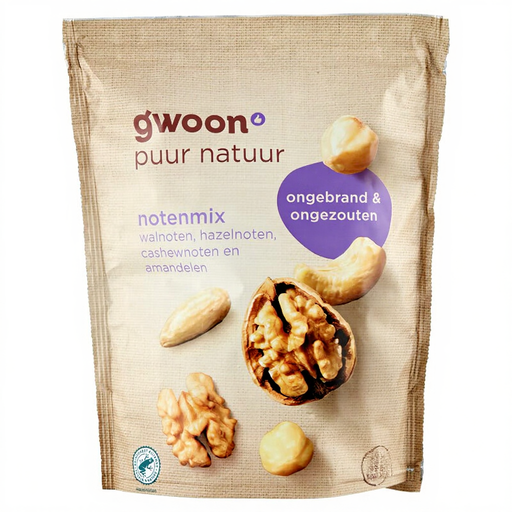
g'woon unroasted nut mix - 500 g
For anyone looking to compare a nut mix for stocking up with the amount they eat at a time.
The product information describes an unroasted, unsalted mix and lists 13.7 g of carbohydrates per 100 g. The mix contains hazelnuts, walnuts, almonds and cashew nuts, and may contain traces of peanuts and other nuts.
Joybuy
 No image available
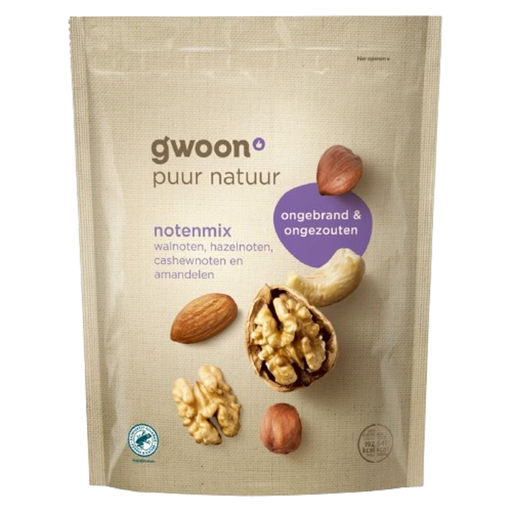
g'woon raw, unsalted nut mix - 200 g
For anyone looking for a raw, unsalted nut mix and wanting to assess the carbohydrates in their own portion.
Joybuy lists 11.5 g of carbohydrates per 100 g. The product may contain traces of peanuts.
Joybuy
 No image available
g'woon unsalted nut mix - 200 g
For anyone looking for an unsalted nut mix and wanting to work out the nutritional values for their own portion.
Joybuy lists 14.2 g of carbohydrates per 100 g.
Joybuy
Frequently asked questions
How do you calculate the carbohydrates in your own portion?
Multiply the carbohydrates per 100 g for the exact variety by your portion weight divided by 100. Use the total carbohydrates, not just the ‘of which sugars’ figure; discuss any personal dietary or medication plan with your healthcare professional.
Does ‘no added sugar’ mean the same as ‘sugar-free’?
No. According to the Diabetes Fund, ‘no added sugar’ means that no sugars or other foods used for their sweetening properties have been added. The product may still contain naturally occurring sugars.
Do food sellers in the Netherlands have to provide allergen information?
Yes. The Netherlands Food and Consumer Product Safety Authority says that providing information about allergens present is a legal requirement. Business.gov.nl states that food information on the label must be in Dutch and available online.
What rules apply to warnings about cross-contamination?
According to the Netherlands Food and Consumer Product Safety Authority, new rules have applied since 1 January 2026 on how and when food businesses must warn about allergens that accidentally get into food. So check the information for the exact variety you want to buy.
What can you do if the product information isn’t clear?
Ask the relevant seller’s customer service team about the exact variety. Albert Heijn and PLUS direct customers to their service channels with questions about product information; have the product name and packaging to hand.


