Who is this comparison for?

Conference buyers working to a portion budget

You want to buy enough snacks without assuming that a pack labelled ‘value’ will automatically save you money. Net weight, ingredients and how you plan to serve the snacks determine what makes a meaningful comparison.

Organisers with allergen requirements

You want to give attendees the right allergen information, even when snacks are served in bowls after being removed from their original packaging.

Catering teams running several serving points

You’re looking for a practical choice between weighing portions yourself, opening small batches and handing out sealed portion sachets.

What should you consider when buying?

Consideration What should you check? Who is this important for?
Cost per planned portion Compare the same type of mix and the same net weight, then calculate the cost of the portion you plan to serve. When buying for a conference, I want to know the cost of a planned portion, not just the price of a bag per kilogram. Around 25% of consumers put cost per usable portion first.
Allergen information Check the ingredients and allergen statements on the packaging you receive, and decide how attendees will get the correct information. When serving food at a buffet, I want to keep the information with the right variety, even if it’s no longer in its original packaging. Around 25% of consumers give allergen information top priority.
Portioning and serving Decide whether you’ll hand out sealed sachets or weigh portions yourself; for sachets, check the quantity and weight per sachet. If the team has to restock several serving points, set serving units can save work compared with weighing portions individually. Around 20% of consumers prioritise easy portioning.
Ingredients and flavour Check which nuts are included and whether fruit, sugar, oil or a seasoned coating has been added. ‘Unsalted’ and ‘unroasted’ are different qualities. When I want to offer a particular type of snack, I don’t compare a pure nut mix directly with a fruit and nut mix or coated peanuts. Around 15% of consumers choose ingredients and flavour as their main consideration.
Leftover stock and storage Plan how many packs you’ll open for each break and follow the storage instructions on the label. For a conference with several breaks, I want to match the quantity to demand and store any unopened stock properly. Around 15% of consumers prioritise keeping leftover stock manageable.

Common purchasing mistakes

  • Assuming a lower price per kilo means better value for the same quantity of nuts

    A fruit and nut mix may contain extra ingredients, so it isn’t directly comparable with a pure nut mix. For example, the Jumbo cranberry mix examined contains 20% sweetened cranberries.

    Compare the product type and ingredients first, then work out the cost per kilogram and per planned portion.

  • Losing track of allergen information when serving the contents in bowls

    A product name or discarded packaging doesn’t give attendees information about the variety actually being served. In the Netherlands, information requirements apply to both prepacked and unpackaged food.

    Keep the information available for each variety and make sure attendees can access it before buying. The NVWA explains the applicable requirements for providing allergen information.

    If you distribute products across several serving points, matching the right product information to each variety takes extra organisation.

  • Confusing the serving suggestion on a pack with individual sachets

    A 500 g pack labelled as containing twenty portions doesn’t automatically contain twenty individually wrapped portions. A box of individual sachets is a different way of serving them.

    Check the net weight and the number of inner packs; for sachets, also check the weight of each one.

  • Buying stock without a plan for opening and storage

    Nuts should be stored in a dry place and kept well sealed. Larger quantities left open therefore need extra stock management.

    Open packs in batches for serving and follow the storage instructions on the label. The Netherlands Nutrition Centre recommends storing nuts in a dry place in a well-sealed container.

    Opened stock means extra storage and checking between serving times.

Brands worth comparing

Duyvis

For conference catering, HANOS lists a box of Provencale containing 20 sachets of 45 g.

  • The individual sachets provide set serving portions. Duyvis describes Provencale as peanuts with a crunchy coating and onion and garlic flavour.
  • This is a coated peanut snack, not a pure nut mix. Check the allergen information on the packaging you receive; the product information for this variety is not entirely clear about milk.

Albert Heijn

The official product information describes a 500 g unsalted nut mix containing almonds, hazelnuts, walnuts and Brazil nuts.

  • The product page lists the net weight, ingredients, allergen information and storage advice.
  • The stated portions are not individual sachets. For this variety, ‘unsalted’ doesn’t mean that all the nuts are unroasted.

Jumbo

The product types examined are a 500 g unroasted, unsalted nut mix and a 500 g cranberry and nut mix.

  • The ingredients make the difference between a pure mix and one containing fruit clear. The cranberry variety contains 20% sweetened cranberries.
  • On 12 October 2026, the product page for the pure value pack stated that it was temporarily unavailable. The cranberry variety has a different composition, so it isn’t an identical substitute.

Lidl

Lidl’s official product page for article 6602026 describes a 60 g pack of Alesto nut mix.

  • Lidl confirms that its relevant Alesto ranges include nuts, dried fruit and party snacks.
  • According to the product page, the 60 g pack is only available in store and isn’t a bulk pack.

Aldi

ALDI sells a 500 g unsalted nut mix under the TRADER JOE’S name, as well as a separate 200 g fruit and nut mix.

  • The 500 g mix contains almonds, hazelnuts, walnuts and Brazil nuts. The 200 g fruit and nut mix examined is described as resealable.
  • The resealable packaging applies to the 200 g fruit mix examined; don’t assume that every ALDI nut pack is resealable.

PLUS

The official product specification describes a 500 g unroasted, unsalted nut mix containing walnuts, hazelnuts, almonds and cashews.

  • The ingredients list gives the proportions of the four nuts included.
  • PLUS notes that local variations and the price at the time of delivery may apply. The product specifications don’t support a general price comparison.

Joybuy products for conference catering

These products suit both bulk buying for portioning yourself and pre-portioned snacks. The range includes nut mixes as well as options featuring a single type of nut or dried fruit.
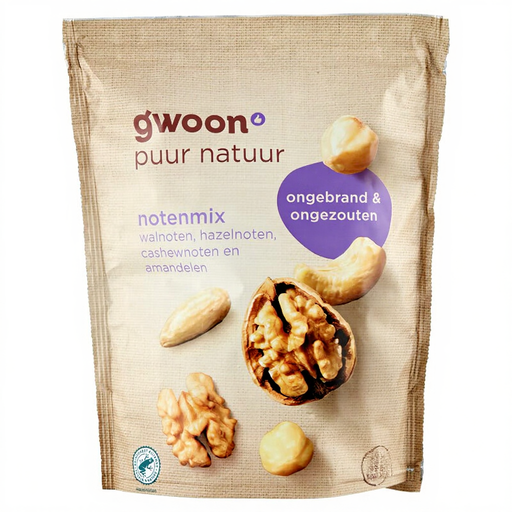
g'woon unroasted mixed nuts, 500 g

g'woon unroasted mixed nuts, 500 g

Suitable for portioning yourself from a bulk pack. The mix contains 30% hazelnuts, 30% walnuts, 20% almonds and 20% cashews.

May contain traces of peanuts and other nuts.

Joybuy
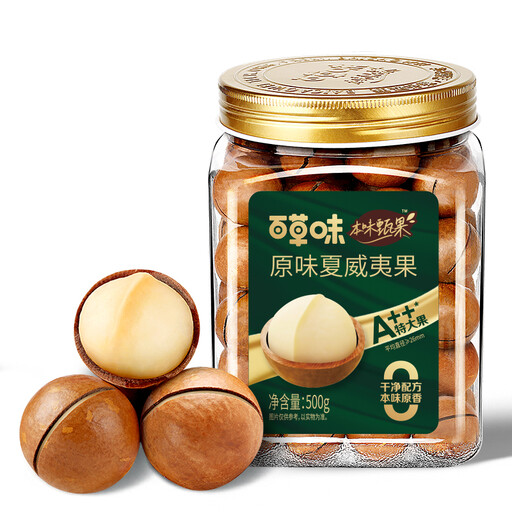
BE&CHEERY macadamia nuts, 500 g

BE&CHEERY macadamia nuts, 500 g

An option when you want to offer a single type of nut. The ingredients are 100% macadamia nuts.

Contains macadamia nuts; this is not a mixed nut selection.

Joybuy
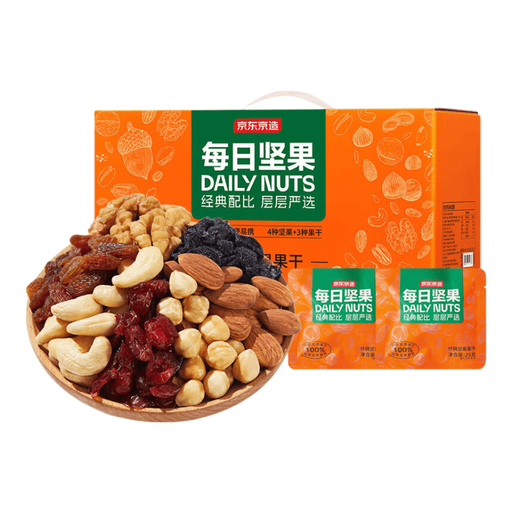
J.ZAO Classic Daily-Nut Mix, 750 g, 30 sachets

J.ZAO Classic Daily-Nut Mix, 750 g, 30 sachets

The individual sachets provide set portions for serving. The pack contains 30 sachets of 25 g.

The mix contains 47.4% dried fruit, including raisins, cranberries and blackcurrants; the cranberries are sweetened. It also lists walnuts, almonds, cashews and hazelnuts.

Joybuy
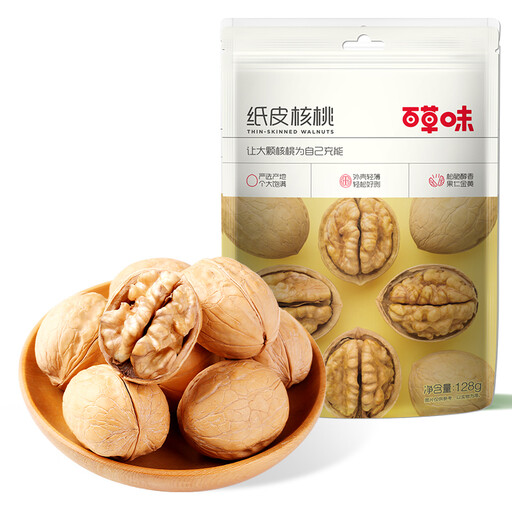
Be&Cheery walnuts in shell, 128 g

Be&Cheery walnuts in shell, 128 g

A suitable choice if you want to serve walnuts in their shells; bear in mind that opening them takes extra work.

Contains walnuts.

Joybuy
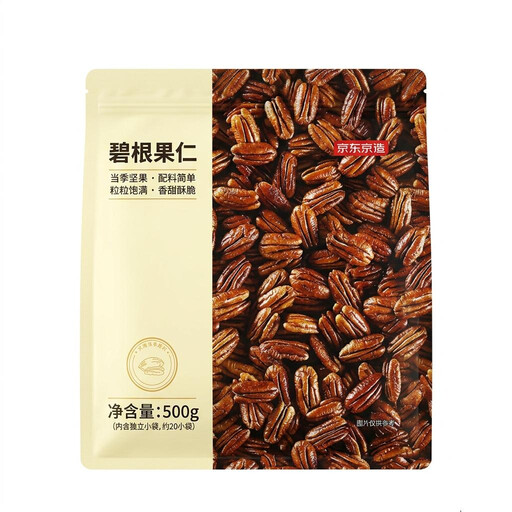
J.ZAO pecans, 500 g

J.ZAO pecans, 500 g

An option for serving pecans as the main ingredient. The description states that it contains 87.6% pecans.

The ingredients also include sugar and salt; this is not a mixed nut selection.

Joybuy

Frequently asked questions

How do you work out how many nuts you need?

Multiply the number of planned portions by the chosen weight per portion, then divide by the net weight per pack. For 100 portions of 30 g, you’ll need 3,000 g; with 500 g packs, that’s six packs, plus any extra you want to allow for. For portion sachets, count the individual sachets.

Does a pack labelled as containing twenty portions mean it has twenty sachets?

No. Albert Heijn lists twenty portions for a single 500 g pack, while HANOS lists twenty individual sachets of 45 g for the Duyvis box examined. Check the packaging description, not just the serving suggestion.

How do you provide allergen information for conference catering?

Make sure attendees can get the correct information about the variety being served before buying. Allergen information for prepacked products is on the label; unpackaged food has separate information requirements. The NVWA explains that information must be available to staff and the NVWA in writing or electronically. Use the details from the packaging you receive.

How should you store an opened bag of nuts for the next serving time?

Follow the storage instructions on the label and seal the pack securely. The Netherlands Nutrition Centre recommends storing nuts in a dry place in a well-sealed container. Don’t automatically apply this advice to leftovers that have already been offered to guests.

Does a professional catering business need a food safety plan?

The NVWA states that food businesses must register and work with an HACCP food safety plan. An approved hygiene code can meet the HACCP requirement. If you’re only responsible for purchasing, agree the arrangements with the caterer or venue in charge.
