What should you look for when buying?
First decide how much you plan to serve per portion, arrange allergen information for your chosen serving format, then match the pack size to the number of serving occasions.
| What to consider |
What should you check? |
Who should pay particular attention? |
| Protein per portion |
Compare the value per 100 g with the weight of the portion you hand out. Set this amount alongside the energy content of the same portion. |
If I want to work out the protein contribution of a conference break, I use the portion guests actually receive. Around 29% of consumers prioritise protein per portion served. |
| Allergen information |
Check the ingredients and warnings for the exact variety. Arrange how guests can find the information if you serve unpackaged nuts; the NVWA and the Warenwetregeling set out the applicable information requirements. |
When catering for a mixed group, I want allergen information to be clearly available at the point of service. Around 29% of consumers put allergen management first. |
| Portioning and storage |
Compare the pack size with your planned portions and check the storage instructions for after opening. For example, Albert Heijn lists 20 portions of 25 g for AH Unsalted Peanuts 500 g; Jumbo lists 14 portions of 25 g for its 350 g pack. |
If I weigh out portions in advance for several serving occasions, I want to know how many I can get from a pack and how to store what is left. Around 24% of consumers prioritise portions and serving arrangements. |
| Quantity to serve |
Work out the required weight based on the number of portions and the portion size you have chosen. Check that the pack size is suitable. |
For a group order, I want to match the total quantity to the planned number of portions. Around 18% of consumers want to plan the quantity for the entire service. |
Products at Joybuy
This selection includes unsalted peanuts, almonds and nut mixes for portions you can weigh out yourself for a conference break.
 No image available
g’woon unsalted peanuts 250 g
A good fit for a peanut portion you weigh out yourself and want to calculate the protein contribution for each serving occasion. The product information lists 27 g of protein per 100 g, which works out mathematically at 8.1 g for a 30 g portion; the ingredients are 99% peanuts and sunflower oil. Contains peanuts and may contain cashews; keep allergen information available at the point of service.
View at Joybuy
 No image available
Jia Zhou Yuan Ye Original almond kernels 160 g
This variety is suitable for a portion of almonds that you weigh out yourself. The product information lists 21.5 g of protein per 100 g, which works out mathematically at 6.45 g for 30 g; the ingredients are 100% almond kernels. Contains almonds, so keep allergen information available at the point of service.
View at Joybuy
 No image available
Anatolia Badem Natural almonds 500 g
The 500 g pack may suit several serving occasions when you weigh out portions yourself. The product information lists 21 g of protein per 100 g, or 6.3 g for 30 g mathematically; the ingredients list states 100% almonds. Contains almonds; keep allergen information available at the point of service.
View at Joybuy
 No image available
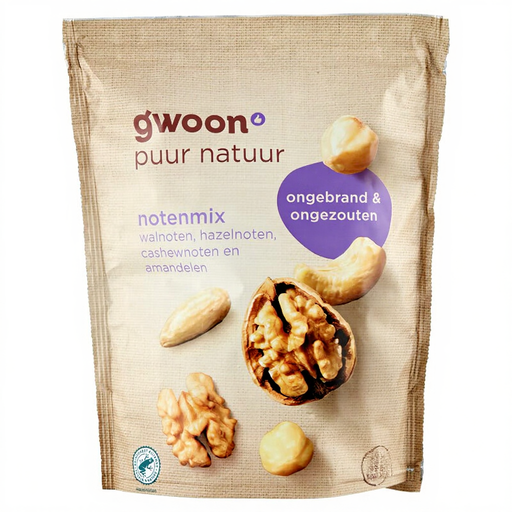
g’woon unroasted mixed nuts 500 g
This larger pack provides a nut mix that you can weigh out yourself for several serving occasions. The product information lists hazelnuts, walnuts, almonds and cashews, and states that it contains 16.9 g of protein per 100 g; mathematically, that is 5.07 g per 30 g. The mix may also contain peanuts and other nuts, so keep allergen information available.
View at Joybuy
 No image available
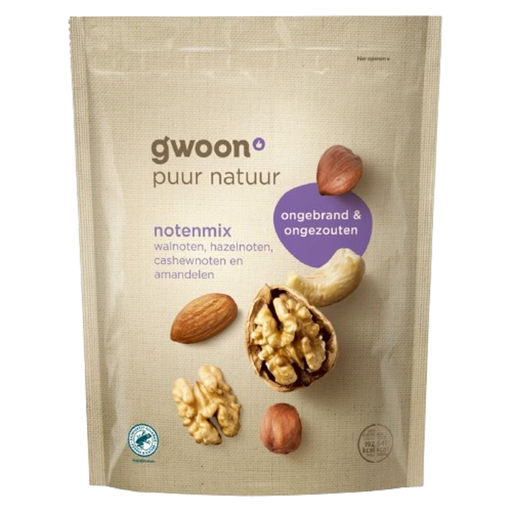
g’woon raw unsalted nut mix 200 g
This mix combines different types of nuts for a snack portion you can weigh out yourself. The product information lists 19.1 g of protein per 100 g, which works out mathematically at 5.73 g for 30 g, and names hazelnuts, walnuts, almonds and cashews. The mix may also contain peanuts; keep allergen information available at the point of service.
View at Joybuy
Frequently asked questions
How much protein does a small serving actually provide?
A 30 g portion of the products reviewed, which contain 25–27 g of protein per 100 g, provides 7.5–8.1 g of protein mathematically. To calculate the value for your own portion, use: value per 100 g × portion weight ÷ 100.
Can any product with a high protein content be called ‘high in protein’?
Not on the basis of a protein value per 100 g alone. Before using the commercial claim, check the applicable conditions for the exact claim and product composition; the NVWA explains that nutrition claims must not be misleading, confusing or ambiguous.
What allergen information should be available at an open buffet?
Make it clear where guests can find allergen information about unpackaged products. Under the Warenwetregeling allergen information for non-prepacked foods must be available in the prescribed way; information can only be given verbally if the legal conditions are met.
Are nuts enough to promise a specific recovery benefit?
No. Do not promise a specific recovery benefit based on a bag of nuts or a single snack portion. The Voedingscentrum explains that protein requirements can vary with strength training or endurance sports, and that your overall diet also matters.
How should you store opened nuts between serving occasions?
Follow the instructions on the pack you choose and seal the remaining nuts properly. The Voedingscentrum recommends storing nuts in a dry place in a well-sealed container, and suggests keeping them cool, for example at 10–15 °C; this is storage advice, not a universal legal temperature limit.


