What should you look for when choosing?
First decide how much your portion will weigh, then compare the labels, ingredients and packaging.
| What to consider |
What should you check? |
Who is this important for? |
| Kcal per portion |
Compare kcal per 100 g and calculate the amount for the weight you want to eat. |
If I want to limit the energy in my snack, I weigh my portion rather than relying on an undefined ‘handful’. Around 39% of consumers prioritise the kcal in a portion when making this choice. |
| Allergens |
Check the current allergen information and any warnings about possible traces on the packaging. |
If I need to manage an allergy, clear and suitable allergen information matters more than a small difference in kcal. Around 15% of consumers prioritise this information when making this choice. |
| Ingredients and salt |
Check whether anything besides nuts, such as oil, is listed, and distinguish between no added salt and the total salt content. |
If I’m looking for an unsalted product with a simple ingredients list, I want to be able to compare the exact ingredients. Around 23% of consumers put the ingredients first. |
| Portioning and storage |
Check the net weight and the weight of each bag; a multipack may contain standard-sized packs. Store the nuts in a tightly sealed container in a dry place. |
If I’m preparing snacks for several morning breaks, I want to know how much to weigh out and how to store the rest. Around 23% of consumers prioritise this preparation. |
Nut products at Joybuy
These Joybuy products are suitable for nut snacks during coffee breaks; check the portion size, energy content and ingredients on each pack.
 No image available
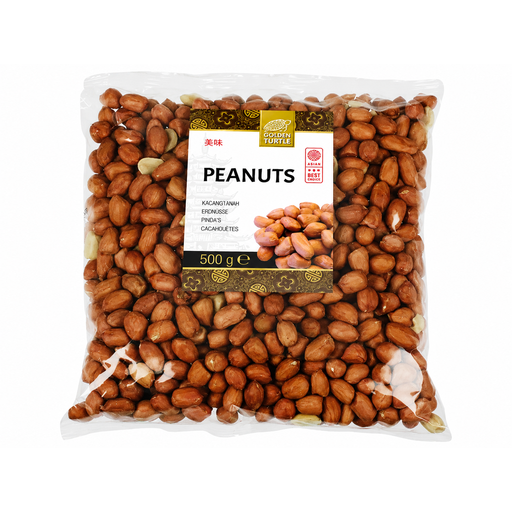
Golden Turtle Premium Raw Peanuts with Skin, 500 g
The product title describes raw peanuts with their skins on. Check the nutritional table and ingredients on the pack to calculate the kcal in your portion.
View at Joybuy
 No image available
Anatolia Badem Natural almonds, 500 g
If you’re considering almonds as a snack, the Joybuy product information lists 578 kcal per 100 g and almonds as the sole ingredient. The pack contains 500 g, so weigh out your own portion.
View at Joybuy
 No image available
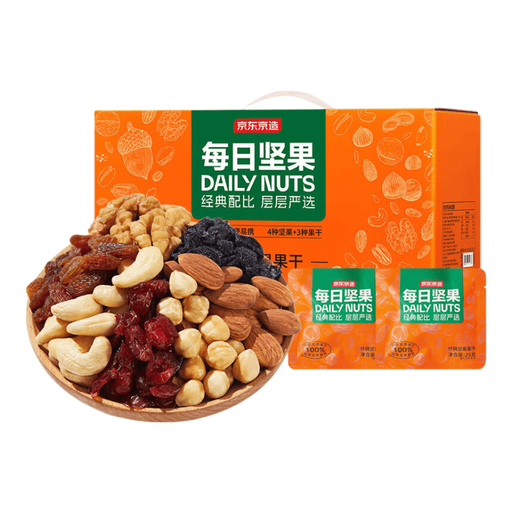
J.ZAO Classic Daily-Nut Mix, 750 g, 30 sachets
If you want to prepare portions in advance, the product information lists 30 individual 25 g sachets and 564 kcal per 100 g. The mix also contains dried fruit, including cranberries with sugar and sunflower oil.
View at Joybuy
 No image available
g’woon roasted, unsalted cashews, 200 g
If you’re looking for cashews to enjoy with your coffee, the product information lists cashews as the ingredient and gives 596 kcal per 100 g. Weigh your portion according to how much you want to eat.
View at Joybuy
Frequently asked questions
Can standard nuts be described as ‘low in calories’ in the Netherlands?
Not if they don’t meet the requirements for that nutrition claim. In the EU, the European Commission sets a limit of 40 kcal (170 kJ) per 100 g for a ‘low energy’ claim on solid foods. The label values for the AH almonds, Jumbo pistachios and PLUS cashews mentioned here are all above that limit.
How do I calculate the kcal in my coffee-break snack?
Multiply the kcal per 100 g on the label by the weight of your portion, then divide by 100. PLUS lists 598 kcal per 100 g for the cashews mentioned here; a 15 g example portion works out at 89.7 kcal. This is an example calculation, not a recommended portion.
Does a handful of nuts always weigh the same?
No. For its general nutritional guidance, the Netherlands Nutrition Centre (Voedingscentrum) uses a 25 g handful of unsalted nuts. For your own calculation, weigh your portion in grams and also check the portion information on the specific pack.
Does ‘unsalted’ mean the label will show 0 g of salt?
No. The Jumbo pistachios mentioned here are called unsalted, but list 0.21 g of salt per 100 g. Jumbo explains that this salt content comes from naturally occurring sodium. Added salt and total salt content are therefore two different things.
What should I do if there’s a warning about possible allergens?
Check the current packaging and take account of the allergens listed on it. Peanuts and nuts are listed as separate allergens. The NVWA states that new rules for precautionary allergen warnings apply in the Netherlands from 1 January 2026, and gives examples such as ‘May contain X’ and ‘Not suitable for people with an X allergy’.


