What should you look for when choosing?
First decide whether you’re mainly looking for less total fat, a smaller portion or an unsalted option. Then compare the nutritional values for the same quantity and check the description of the exact product variant.
| What to consider |
What to look for |
Who is this important to? |
| Total fat |
Compare the grams of fat for the same quantity; consider the preparation method separately from the nutritional value. |
If I mainly want to eat less total fat with my coffee, I compare the same portion size. Around 36% of consumers clearly prioritise eating less fat. |
| Portion size |
Weigh the amount you’re taking with you and compare the nutritional values for that quantity. |
When I want to measure out my snack for the journey, I’d rather take a set amount with me in advance than eat from the bag. Around 29% of consumers say portion control is their main consideration. |
| Unsalted and saturated fat |
Check whether the exact product variant is unsalted, and look at saturated fat separately from total fat. |
If I eat nuts regularly, I also want to check whether they’re unsalted and how much saturated fat they contain. Around 21% of consumers prioritise these factors. |
| Taking them with you and storage |
Choose packaging that suits how you’ll use the product, and follow the storage advice on the pack once opened. |
When I take nuts with me and want to keep the rest at home, packaging and ease of storage matter too. Around 14% of consumers say portability and managing their supply are their main considerations. |
For unsalted cashews, Voedingscentrum gives average values of 12.2 g total fat and 2.1 g saturated fat per 25 g handful. For unsalted mixed nuts, the general values are 14.9 g total fat and 1.6 g saturated fat per 25 g. These are values for types of nuts, not nutrition tables for specific supermarket products.
Joybuy product selection
This Joybuy selection is a portion-packed, ready-to-eat option if you want to compare the stated nutritional value per 100 g when having coffee on the go.
 No image available
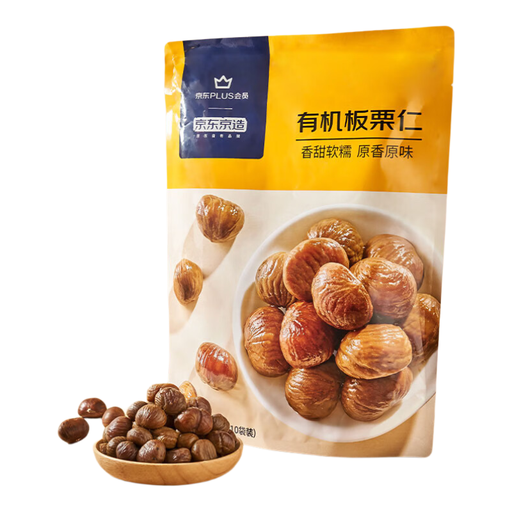
J.ZAO S++ Grade Whole Chestnuts, 1 kg (10 sachets)
An option if you’re looking for peeled chestnuts that, according to the product description, are ready to eat and come in individual sachets.
The product information lists 1.7 g of fat per 100 g and 10 sachets of 100 g. A 100 g sachet is larger than the 25 g portion used for Voedingscentrum’s general values for nuts; measure out a smaller amount yourself if needed.
View at Joybuy
Frequently asked questions
Does ‘no added fat’ mean the same as low fat?
No. ‘No added fat’ describes how a product is made, not how much total fat the finished product contains. For solid foods, the European Commission defines a ‘low fat’ claim as no more than 3 g of fat per 100 g.
Are cashews always the better choice if I’m watching my fat intake?
Not for every type of fat. According to Voedingscentrum’s general values, unsalted cashews contain less total fat per 25 g than unsalted mixed nuts, but more saturated fat. For a specific purchase, check the label on the exact product variant.
How do I decide how many nuts to take with me?
Weigh out the amount in advance and compare the nutritional values for that same quantity. The 25 g reference used for Voedingscentrum’s general values isn’t a personal portion recommendation; adjust the amount to suit your own preference.
What should I check if I have a peanut or nut allergy?
Check the ingredients, allergen information and any precautionary ‘may contain traces’ warning on the exact pack. The Netherlands Food and Consumer Product Safety Authority lists peanuts and nuts separately as allergens that must be shown on the label of pre-packed products. Duyvis advises checking the packaging for product-specific information.
How should I store the nuts I don’t take with me?
First, follow the storage advice on the pack. For opened packs of mixed unsalted nuts, Voedingscentrum’s general storage guide recommends six months in a kitchen cupboard or one year in the freezer; quality may decline after that. If nuts are rancid, tough or mouldy, don’t eat them.


