Who is this choice relevant to?

Label-conscious gluten-free snackers

You’re buying for someone with coeliac disease and want to check the ingredients and cross-contamination information for the exact variety. Don’t rely on a brand name or the word ‘nuts’ alone. The Dutch Coeliac Society advises checking the product information.

Snackers who want something ready to take with them

You’re looking for an individually wrapped pack that you can keep sealed until you’re ready to eat, without weighing it out at home. The exact variety still needs to be suitable for a gluten-free diet.

Snackers who portion their own

You want to choose the amount yourself and are happy to portion nuts from a larger pack at home, using clean equipment and a clean work surface. The Dutch Coeliac Society describes these precautions for preventing cross-contamination.

What should you look for when choosing?

Individually wrapped nuts

A good fit if: you want to take a snack with you without weighing it out in advance and keep the original packaging sealed until you’re ready to eat, once you’ve confirmed the exact variety is suitable.

Bear in mind: the amount in each pack is fixed, and sealed packaging doesn’t in itself rule out possible cross-contamination during production.

Portioning nuts yourself from a larger pack

A good fit if: you can prepare them in a clean environment at home and want to choose how much to take with you.

Bear in mind: you’ll need to weigh them out in advance and use clean equipment; the pack itself isn’t an individual snack pack.

Seasoned, coated or mixed snacks

A good fit if: you’re looking for a different flavour and have checked the exact ingredients and gluten-free suitability of that variety.

Bear in mind: added ingredients change the product’s composition; a nut base doesn’t automatically make the whole product gluten-free.

What to consider What to look for Who is this most important for?
Gluten-free product information Check the exact variety, ingredients, gluten-free labelling and warnings on the packaging. If you’re buying for someone with coeliac disease, you’ll want to check the information for that exact variety. Around 31% of consumers put clear information first.
Taking a sealed pack with you Check that they really are individual packs, rather than one larger bag with several stated portions. If you want something to grab while you’re out, without weighing it at home, an individual pack is practical. Around 25% of consumers prioritise this convenience above all else.
Amount per snack break Compare the weight of each individual pack with the amount you’d like to take with you. If you prefer to choose how much you eat or take with you, portioning your own suits your preferences better. Around 19% of consumers put this flexibility first.
Flavour and ingredients Check the exact flavour, any coating and the ingredients; salted and unsalted varieties have different ingredients. If you want to mix things up with different flavours or types of nuts, check the full ingredients for each variety. Around 13% of consumers make this distinction first.
Packaging and portion size Compare the number of individual packs and the weight of each with the total weight of a larger pack. If you want to compare packs by how many convenient snack breaks they provide, it helps to use the same portion size as a basis. Around 12% of consumers start with this comparison.

Common mistakes when buying nut snacks

  • Assuming everything with ‘nuts’ in the name is gluten-free

    A coating or other added ingredient changes the product’s composition. For example, the shop listing for Duyvis Borrelnootjes Provençale mini packs mentions wheat starch, so the name of the nut alone doesn’t tell you what else is in the product.

    Check the full product information for the exact variety, and don’t treat a short product or category description as confirmation that it’s gluten-free.

  • Assuming a sealed pack proves it was made without gluten

    An unopened pack can help protect the product after purchase, but it doesn’t in itself tell you whether cross-contamination may have occurred during production.

    First check the ingredients and information about possible cross-contamination. Then keep a suitable product sealed for as long as possible, as advised by the Dutch Coeliac Society.

  • Confusing a large bag with individual packs to take with you

    Lidl describes its 200 g Notenmix as one bag, while PLUS sells a 500 g stand-up pouch. These are different packaging formats from the individual 60 g packs that HANOS lists for Duyvis Pinda’s Gezouten.

    Check both the number of packs and the weight of each one. A total weight or a stated number of portions doesn’t automatically mean the contents are individually wrapped.

  • Comparing packs by total weight alone

    A box of individual packs and a larger loose bag can differ in how many ready-to-go snack portions they provide, as well as how much preparation is needed.

    Compare the weight of each pack, or use the same portion size of your choice when comparing larger bags.

Relevant brands to compare

Duyvis

Worth considering for salted peanuts in a listed small format, and for the difference between plain peanuts and coated products.

  • Duyvis lists a 60 g pack of Pinda’s Gezouten, among other sizes; HANOS describes a box of 20 x 60 g packs.
  • Duyvis distinguishes products with a dough coating. FoodWorld-XL’s shop information lists wheat starch in the Provençale mini packs, so check that variety separately.

Albert Heijn

AH Ongezouten notenmix is worth considering if you want to portion a larger pack yourself.

  • Albert Heijn lists a 200 g version.
  • Albert Heijn advises reading the packaging because ingredient and allergen information can change. The product name doesn’t confirm that all AH nuts are gluten-free.

Jumbo

The own-brand nuts offer different ingredients for anyone who wants to weigh out their own portion.

  • The official product information lists Jumbo Noten Mix Ongezouten in a 200 g pack and distinguishes between different mixes.
  • A nut mix or a 200 g pack isn’t an individual snack pack or confirmation that a specific product is gluten-free.

Lidl

Worth considering for an unroasted, unsalted nut mix and for a product called Mini-notenmix.

  • Lidl Netherlands describes its Notenmix as unroasted and unsalted, in a 200 g bag.
  • The name Mini-notenmix doesn’t in itself tell you how many packs there are, the weight of each pack or whether it’s suitable for a gluten-free diet.

ALDI

The official range description lists different types of nuts, in both salted and unsalted versions.

  • ALDI lists cashews, almonds, walnuts and Brazil nuts, among others.
  • This range information doesn’t confirm that individual packs are available to take with you, or that a specific variety is suitable for a gluten-free diet.

PLUS

PLUS Notenmix ongebrand ongezouten is worth considering if you want to make up your own portions at home.

  • PLUS lists a 500 g stand-up pouch.
  • A stand-up pouch isn’t a set of individual packs to take with you. PLUS advises reading the packaging before eating.

Nut products at Joybuy

This selection includes both individually wrapped nuts and larger packs for portioning yourself. The available product information doesn’t confirm that the exact varieties are suitable for people with coeliac disease, so check the current packaging for ingredients and information about possible cross-contamination before choosing.
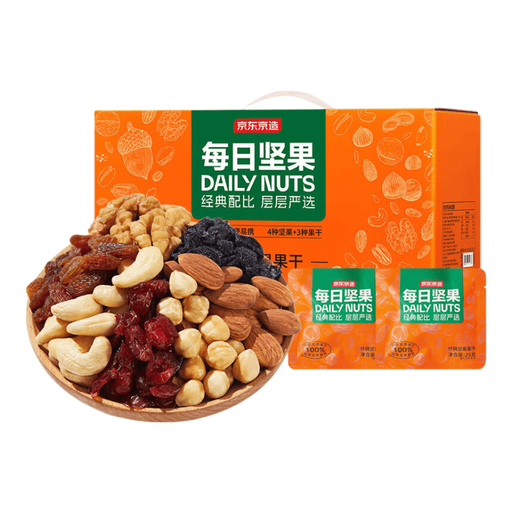
J.ZAO Classic Daily-Nut Mix, 750 g, 30 sachets

J.ZAO Classic Daily-Nut Mix, 750 g, 30 zakjes

The individual packs are handy if you want to take a snack with you without weighing it out at home; this exact variety hasn’t been confirmed as suitable for a gluten-free diet.

The description lists 30 sealed 25 g packs. According to the product information, the mix includes walnuts, almonds, cashews, hazelnuts and dried fruit.

Check the current packaging for ingredients and information about possible cross-contamination.

View at Joybuy
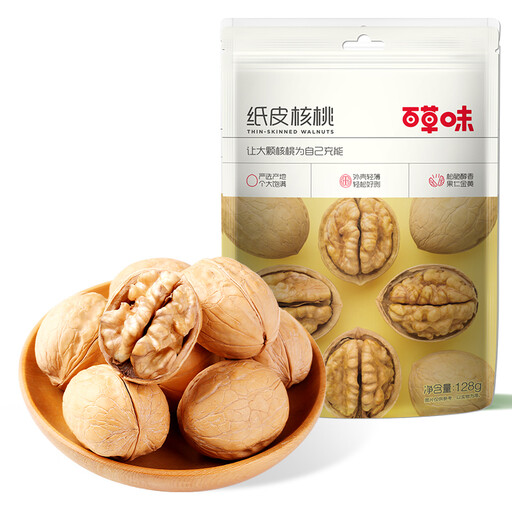
Be&Cheery Paper-Shell Walnuts, 128 g

Be&Cheery Paper-Shell Walnuts, 128 g

These walnuts could be a good fit if you’re looking for a nut snack that the product description says is individually wrapped; this exact variety hasn’t been confirmed as suitable for people with coeliac disease.

The pack contains 128 g of walnuts. Check the current packaging for the number and weight of each individual pack, as well as the ingredients and information about possible cross-contamination.

View at Joybuy

g’woon Raw & Unsalted Almonds, 200 g

g’woon Raw & Unsalted Almonds, 200 g

This pack is suited to portioning yourself if you want to choose how many almonds to take with you; this exact variety hasn’t been confirmed as suitable for people with coeliac disease.

The product information lists raw, unsalted almonds in a 200 g pack. You’ll need to portion them yourself if you want to take a smaller amount with you.

Check the current packaging for ingredients and information about possible cross-contamination.

View at Joybuy
Duyvis Salted Peanuts, 235 g

Duyvis Salted Peanuts, 235 g

This larger bag is an option if you want to measure out your own portion; this exact variety hasn’t been confirmed as suitable for a gluten-free diet.

The pack contains 235 g. The listed ingredients are peanuts, sunflower oil and salt. You’ll need to portion them yourself if you want smaller servings.

Check the current packaging for ingredients and information about possible cross-contamination.

View at Joybuy

g’woon Roasted & Unsalted Cashew Nuts, 200 g

g’woon Roasted & Unsalted Cashew Nuts, 200 g

This pack could suit you if you want to weigh out your own amount of cashews at home; this exact variety hasn’t been confirmed as suitable for people with coeliac disease.

The product information lists roasted, unsalted cashews in a 200 g pack. You’ll need to portion them yourself if you want smaller servings to take with you.

Check the current packaging for ingredients and information about possible cross-contamination.

View at Joybuy

Frequently asked questions

Does every suitable pack of nuts have to say ‘gluten-free’?

Not all naturally gluten-free staple foods carry that label. The Dutch Coeliac Society lists unprocessed nuts as naturally gluten-free staples, and also distinguishes between products that are gluten-free based on their ingredients. For those products, read the ingredients list and check the information about possible cross-contamination too; don’t assume that all products from one brand are suitable.

Do ‘may contain cereals containing gluten’ and ‘not suitable for people with coeliac disease’ mean different things?

According to the Dutch Coeliac Society, these warnings mean the same thing when they relate to the same gluten risk. They refer to possible cross-contamination, not certainty that every pack contains gluten. So don’t automatically treat differently worded warnings as less important.

Which Dutch rules on allergen labelling are relevant?

Since 1 January 2026, Dutch rules have applied to warnings about the unintended presence of allergens, overseen by the Netherlands Food and Consumer Product Safety Authority (NVWA). According to the NVWA’s guidance, products made before then may still be sold under certain conditions; the production date is relevant. So check the information on the packaging of the product you’re actually buying.

How can you take self-portioned nuts with you while taking care to avoid cross-contamination?

Use a product that’s suitable for your gluten-free diet, and work with clean hands, clean equipment and a clean surface. Keep your portion separate from food containing gluten. If you’re using a suitable factory-sealed pack, leave it sealed for as long as possible; this won’t prevent cross-contamination that may have occurred during production.

Is a 60 g pack a recommended portion?

No. 60 g is the pack weight that Duyvis and HANOS list for one variety of salted peanuts; it isn’t personal dietary advice. Choose an amount that suits your snack break. Portioning them yourself is an option if you want to take a different amount with you.
