
Calorie-conscious snackers
You want to keep eating nuts, but weigh your portion and compare the energy values of specific varieties on the same weight basis.


Regular nuts are not low in calories: compare the energy per 100 g for the exact variety, then calculate it for a weighed portion. To compare prices, look at both the price per kilo and the cost per portion. Also check the ingredients, allergens and any safety warnings that apply to a specific product.
You want to keep eating nuts, but weigh your portion and compare the energy values of specific varieties on the same weight basis.
You’re looking for an affordable unsalted snack and want to distinguish between the cost of a whole pack and the cost of a portion.
You want to check the ingredients, allergens and storage instructions for the exact variety before choosing a pack. The NVWA explains that allergen information must appear on the label of prepacked products.
First, weigh the portion you want to eat. Then compare the energy value of the exact variety, and look separately at the cost of a pack and how much you use per portion.
| What to consider | What should you look for? | Who is this important for? |
|---|---|---|
| Energy per snack portion | Compare kcal per 100 g and calculate this for the same edible portion weight. | If I want to weigh my snack portion, I check the energy value for that exact variety. Around 34% of consumers prioritise calorie control. |
| Cost per portion | Check the price per kilo as well as the pack size you’ll actually use. | If you’re mainly looking to manage the cost of an everyday snack, compare the cost per portion you use. Around 33% of consumers prioritise snack costs. |
| Ingredients and allergens | Check the ingredients, salt information and allergens on the label for the exact variety. | If I’m looking for an unsalted variety with ingredients that suit my preferences, I read the label carefully. Around 20% of consumers prioritise ingredients. |
| Packaging and storage | Check how many portions are in the pack and follow the storage instructions after opening. | If you don’t eat nuts often, choose a quantity that’s easy to portion and store. Around 13% of consumers prioritise managing their supplies. |
Unsalted describes the ingredients, not the amount of energy. For solid foods, the European Commission sets a limit of no more than 40 kcal (170 kJ) per 100 g for the claim ‘low in energy’.
Check the energy value on the label and weigh your portion; don’t take ‘unsalted’ to mean that a product is low in energy.
The AH peanuts in the products reviewed list a 25 g portion, while Jumbo lists a 30 g portion for the Duyvis variety. This means the figures per portion aren’t directly comparable.
First compare kcal per 100 g, then use the same portion weight for both products. For nuts in shells, use the weight of the edible nuts.
A smaller bag may cost less to buy, while having a higher price per kilo than a larger pack. These two prices answer different questions.
Compare the price per kilo with the amount you expect to use, and don’t let a larger supply automatically dictate your snack portion.
Safety warnings can apply to a specific product and batch. Albert Heijn has issued a warning about AH Extra Large Salted Peanuts in a tub with a best-before date of 04-11-2026 due to possible metal fragments. The NVWA warning dated 20 May 2026 concerns Trader Joe’s Unsalted Cashews 170 g, barcode 2003020120930, with a best-before date of 23-09-2026.
Check the product name, packaging and date covered by the warning. Don’t eat a product from an affected batch; these warnings don’t automatically apply to all nuts sold by those retailers.
The examples below relate to specific product ranges and labels, rather than a general assessment of an entire brand.
Worth considering if you want to compare own-brand peanuts or another unsalted nut variety by its label and packaging.
Worth considering for unsalted own-brand peanuts in a smaller pack, as well as a separate cashew variety.
Worth considering if you want to compare smaller and larger packs of unsalted own-brand peanuts.
A retailer of the Trader Joe’s roasted unsalted peanuts reviewed here, sold in a 250 g pack.
Worth considering for the Alesto range, which includes natural nuts and separate party snacks.
Worth considering if you want to compare a branded variety of unsalted peanuts with own-brand products.
This selection includes unsalted peanuts and cashews, alongside individually portioned and seasoned nut snacks. Check the energy value, ingredients and portion size for each variety.
 No image available
A good fit if you’re looking for a smaller pack of unsalted peanuts. The product information lists 99% peanuts and sunflower oil; the product contains peanuts and may contain cashews.
 No image available
A good fit if you want to compare an unsalted cashew variety with peanuts. The product information lists 596 kcal and 0.067 g of salt per 100 g; the product contains cashews.
 No image available
A good fit if you’re looking for individual portions to take with you. The product information lists five 23 g portions, 540 kcal and 28 g of sugars per 100 g, and sweetened cranberries in the mix. The desiccant in the pack is not intended for consumption.
 No image available
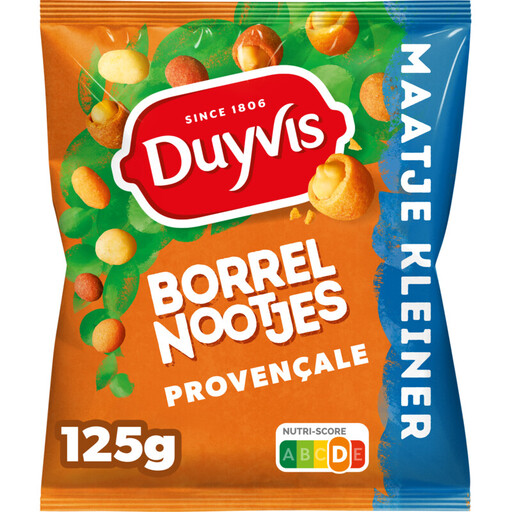
A good fit if you want to assess a seasoned peanut snack, rather than a simple unsalted nut. The product information lists 527 kcal per 100 g, 50% peanuts and 1.2 g of salt per 100 g; portions are 30 g. Contains peanuts and wheat, and may contain milk, nuts, soya and mustard.
 No image available
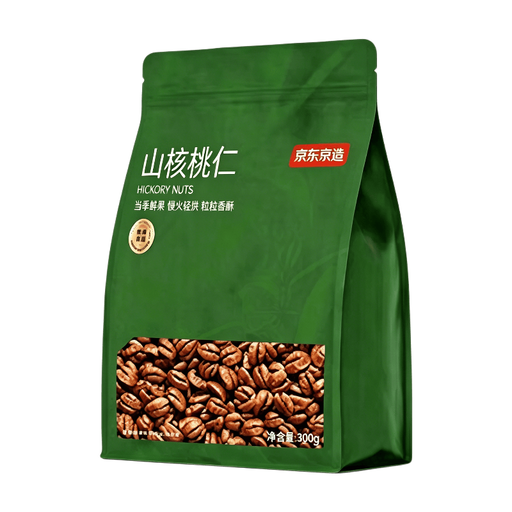
A good fit if you’re looking for individually wrapped hickory nuts to take with you. The product information lists at least 85% hickory nuts, sugar and salt, and 614 kcal and 1.6 g of salt per 100 g.
Not based on the energy values of the varieties reviewed. According to the European Commission, a solid food can only be described as ‘low in energy’ if it contains no more than 40 kcal (170 kJ) per 100 g. So compare the declared value for the exact variety and describe a weighed portion, rather than calling the nuts low in calories.
No. The AH peanuts list a 25 g portion, while Jumbo lists a 30 g portion for the Duyvis peanuts reviewed. Compare products per 100 g first, then use the same portion weight; 25 g is a basis for comparison here, not personal dietary advice.
Check the ingredients and allergen information on the label for the exact variety. The NVWA says allergen information must appear on the label of prepacked products; a description such as ‘unsalted’ tells you nothing about whether a product is suitable for someone with an allergy.
Check that the product and date match the warning. Albert Heijn has issued a warning about AH Extra Large Salted Peanuts in a tub with a best-before date of 04-11-2026 due to possible metal fragments. The NVWA warning dated 20 May 2026 concerns Trader Joe’s Unsalted Cashews 170 g, barcode 2003020120930, with a best-before date of 23-09-2026. Don’t eat a product from an affected batch; these warnings don’t apply to all nuts sold by either retailer.
No. The AH and Jumbo packs reviewed warn that young children may choke on peanuts. Follow the product warning, and don’t assume that a portion suitable for adults is automatically suitable for young children.