Don’t choose nuts just because they’re unsalted or made without added oil. Check the nutritional information, portion size and the precise basis for any fat claim. The Voedingscentrum advises against choosing a large portion or a product high in fat, protein or fibre just before exercise. Plain unsalted nuts can still be a good choice at another time of day.
Who is this guide for?
Having a snack shortly before your workout
You want to avoid a large or high-fat snack that might feel heavy while you exercise. When you eat and how much you have matter more than appealing wording on the packaging. The Voedingscentrum advises against having a large portion around the time you exercise.
Choosing less fat with confidence
You’re looking for demonstrably less total fat and want to distinguish a comparative claim from ‘low fat’, ‘unsalted’ and ‘no added fat’. The European Commission sets out the threshold for low-fat claims, while the Nederlands Bakkerij Centrum explains how a reduced-content claim is assessed.
Portioning nuts in advance
You want to know how much fat and energy you’re actually eating, rather than treating a whole pack as one snack. Portion information can help you work this out, but it isn’t personalised sports nutrition advice.
What should you look for when choosing?
First, consider when you plan to eat and how much you’ll have. Then check the fat claim and ingredients for that exact variant. The percentages below show which buying consideration comes first in each scenario.
| What to consider |
What should you check? |
Who might find this important? |
| Timing and portion size |
Think about when you’ll be exercising and whether you’re having a large portion. The Voedingscentrum advises against having a large portion just before exercise. |
If I eat shortly before my workout, I want a small portion that suits the timing. Around 36% of consumers prioritise when they eat and how comfortable they feel. |
| Fat claim |
Read the fat content per 100 g. For a comparative claim, check the specific variant and what it’s being compared with. The European Commission sets the low-fat threshold for solid foods at no more than 3 g of fat per 100 g; the Nederlands Bakkerij Centrum explains that a reduced-content claim means at least 30% less than comparable products. |
If reducing my total fat intake is my main priority, I want to be able to compare the claim with the nutritional information for that variant. Around 29% of consumers prioritise a demonstrable reduction in fat. |
| Amount per snack |
Check the weight of your portion and calculate the values per 100 g for that amount. A smaller portion doesn’t change the product’s composition. |
If I weigh out my snack in advance, I can better estimate how much fat and energy I’m eating. Around 21% of consumers prioritise portion and energy control. |
| Ingredients and allergens |
Check the ingredients, salt and allergen information on the packaging separately. ‘Unsalted’ doesn’t automatically mean ‘no oil’. |
If I need to consider certain ingredients or an allergen that’s relevant to me, I check the exact packaging. Around 14% of consumers prioritise ingredients and personal allergen requirements. |
Common buying mistakes
-
Confusing no added fat with low fat
A preparation method that uses no added oil doesn’t mean the nuts’ natural fat has been removed. Duyvis’s description of Oven Baked Peanuts Original explains how they’re prepared; it doesn’t prove a reduced-fat claim.
Read the fat content per 100 g and assess any comparative claim separately from the preparation method.
-
Treating a whole pack as one small snack
The 100 g pack of AH Unsalted Cashews states that it contains four 25 g portions. The amount you eat determines how much fat and energy you get from your snack.
Weigh out your portion in advance and calculate it based on that amount, not just the pack weight.
-
Assuming unsalted means no oil
The ingredients in Jumbo Unsalted Cashews include sunflower oil. Unsalted and no added oil are therefore separate characteristics.
Check the salt and added oil separately in the ingredients list and nutritional information table.
Brands to consider
Duyvis
The Oven Baked Peanuts Original range we looked at may be of interest if you’re looking for a product made without added oil.
- Duyvis describes the peanuts as oven-roasted without added oil or fat.
- This doesn’t prove a reduced-fat claim or better sports performance. The variant we looked at contains salt.
Albert Heijn
The 100 g pack of AH Unsalted Cashews is a specific example you can use to compare portion information with a fat claim.
- The shop page lists a 25 g portion and four portions per pack.
- Albert Heijn lists 50 g of fat per 100 g and sunflower oil as an ingredient. This particular variant isn’t low fat according to the threshold of no more than 3 g per 100 g.
Jumbo
Jumbo Unsalted Cashews 200 g is an example of the difference between unsalted and low fat.
- Jumbo’s product information lists 48.6 g of fat per 100 g.
- Sunflower oil is listed in the ingredients. So, in this case, unsalted doesn’t prove that no oil has been added or that the finished product is low fat.
Lidl
The nut mix we looked at contains unroasted, unsalted nuts and is sold in a 200 g bag.
- Unroasted and unsalted are useful characteristics for distinguishing this variant.
- On their own, these characteristics don’t prove a reduced-fat claim.
ALDI
The Trader Joe’s Nut Mix we looked at is an unsalted blend of almonds, hazelnuts, walnuts and Brazil nuts.
- The product description lists the ingredients in this particular mix.
- Being unsalted doesn’t prove that the mix is low fat or has a reduced fat content. Trader Joe’s is the product name here, not a standardised ALDI nut range.
PLUS
PLUS Unsalted Unroasted Cashews 200 g is an example of a variant whose listed ingredients contain only cashews.
- PLUS lists cashews as the ingredient and states that the product contains 46.5 g of fat per 100 g.
- This particular variant isn’t low fat. PLUS also warns that it may contain peanuts.
Nut products at Joybuy
This selection includes chestnuts, cashews, peanuts and almonds. Check the fat content and ingredients for each variant, especially if you’re looking for something to eat shortly before your workout.
 No image available
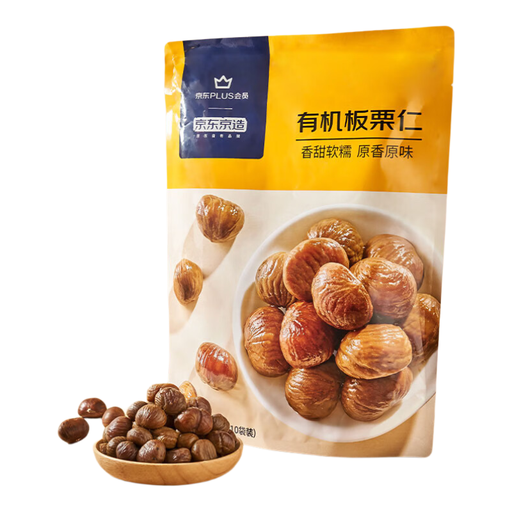
J.ZAO S++ Grade whole chestnuts, 1 kg (10 x 100 g bags)
A ready-to-eat option if you’re looking for peeled chestnuts in individual bags.
The product information states that they contain 1.7 g of fat per 100 g. For solid foods, the European Commission sets the low-fat claim threshold at no more than 3 g of fat per 100 g.
The chestnuts are peeled and ready to eat; the pack contains ten 100 g bags.
View at Joybuy
 No image available
Jiazhouyuanye Original Flavour Large Cashew Nuts, 160 g
According to the product description, these cashews are ready to eat, but they’re less suitable if you’re looking for a low-fat option shortly before exercise.
The nutritional information table lists 47.7 g of fat per 100 g; the ingredients list states 100% cashew kernels.
View at Joybuy
 No image available
g’woon unsalted peanuts, 250 g
An option if you’re looking for unsalted peanuts to enjoy at a time other than just before your workout.
The nutritional information table lists 50 g of fat and 0.02 g of salt per 100 g. The ingredients list states 99% peanuts and sunflower oil.
View at Joybuy
No image available
g’woon raw unsalted almonds, 200 g
This variant is for anyone looking for raw, unsalted almonds. Its fat content makes it less suitable as a low-fat snack shortly before exercise.
The nutritional information table lists 50 g of fat per 100 g. The product title describes the almonds as raw and unsalted.
View at Joybuy
 No image available
g’woon roasted unsalted cashews, 200 g
An option if you’re looking for roasted, unsalted cashews, but not if you specifically want to eat very little fat shortly before exercise.
The nutritional information table lists 46.67 g of fat per 100 g. The product title describes the cashews as roasted and unsalted.
View at Joybuy
Frequently asked questions
Do ‘low fat’ and ‘reduced fat’ mean the same thing?
No. For solid foods, the European Commission sets the threshold for ‘low fat’ at no more than 3 g of fat per 100 g. The Nederlands Bakkerij Centrum explains that ‘reduced content’ means at least 30% less than comparable products. So, a relative reduction doesn’t automatically mean a product is low fat. Check the claim and nutritional information for the specific variant.
How long before exercise should you plan to have a regular meal?
The Voedingscentrum advises having a proper meal around 2 to 3 hours before exercise. This is general guidance on meal timing, not proof that a specific nut product is right for your workout.
How do you calculate the nutritional values for your snack from the figures per 100 g?
Multiply the value per 100 g by the weight of your portion, then divide by 100. For AH Unsalted Cashews, Albert Heijn lists 50 g of fat and 622 kcal per 100 g. For a 25 g portion, that works out to 12.5 g of fat and 155.5 kcal. The stated portion size isn’t personalised training advice.
How should you store an opened bag of nuts?
Keep nuts in a well-sealed, dry place, and follow the storage instructions on the packaging too. This is in line with the storage advice from the Voedingscentrum.
What should you check if you have a nut or peanut allergy?
Check the allergen information and warnings on the packaging of the exact variant. The Netherlands Food and Consumer Product Safety Authority (NVWA) stresses that sellers must inform customers about allergens present in their products. PLUS also warns that the cashews we looked at may contain peanuts. Bear this in mind if it’s relevant to you.


