For your baby, the form of the product is what matters most: don’t give them whole nuts, and choose smooth peanut butter, as recommended by the Netherlands Nutrition Centre. A reduced-fat label doesn’t prove that a product is suitable for your baby, so keep that preference separate from your own snack choices. With baby-led weaning, your baby should also be able to sit upright and swallow and chew well before you offer larger pieces.
Who is this relevant to?
Parents who want to offer nuts safely
You’re looking for a form that’s suitable for what your baby can eat. The Netherlands Nutrition Centre advises against giving whole nuts or peanuts to children under 4; for your baby, choose smooth peanut butter without pieces.
Parents introducing peanuts
You’re looking for a simple smooth peanut butter and want to plan the introduction around your baby. If your baby has eczema or is prone to allergies, discuss the timing and approach with a doctor or dietitian, as advised by the Netherlands Nutrition Centre.
Carers looking for a lower-fat snack for themselves
You want to assess a product for yourself based on its specific claim and nutritional information, without assuming that lower fat means it’s suitable for a baby.
What should you look for when choosing?
First, decide who the product is for. For your baby, focus on the product’s form and their eating skills. If you want to eat less fat, assess that separately using the product’s specific information.
| What to consider |
What should you look for? |
Who is this important to? |
| Suitable texture |
Don’t give whole nuts or peanuts to children under 4. For your baby, choose smooth peanut butter without pieces. Larger pieces are only suitable once your baby can sit upright and swallow and chew well, according to the Netherlands Nutrition Centre. |
I want to avoid offering a form that isn’t right for what my baby can already eat. Around 31% of consumers prioritise a suitable texture for their baby. |
| Ingredients and dietary needs |
Check the ingredients and distinguish between added sugar or salt and naturally occurring fat. Don’t assess a product solely on the basis of wanting to eat less fat. |
I want to assess the ingredients without letting an adult snack preference determine what I choose for my baby. Around 25% of consumers prioritise ingredients and dietary needs. |
| Peanuts and allergens |
Check whether the product contains peanuts or other nuts. If your baby has eczema or is prone to allergies, discuss introducing peanuts with a doctor or dietitian; the Netherlands Nutrition Centre offers further advice on this. |
I want to know which nut I’m offering and how to introduce peanuts. Around 19% of consumers prioritise introduction and allergen information. |
| Lower fat for yourself |
Compare nutritional information on a like-for-like basis and check what the claim means for that specific product. The Netherlands Food and Consumer Product Safety Authority notes that nutrition claims must comply with EU rules; roasted without oil, unsalted and reduced fat are not interchangeable descriptions. |
I’m looking for a lower-fat snack for myself and don’t want to confuse that with choosing food for my baby. Around 19% of consumers start with their own preference for lower-fat options. |
| Using and taking it with you |
Check which variety you’re buying, such as smooth or crunchy. If you’re sending food to nursery or school, check the venue’s rules on nuts. |
I want a variety that’s practical for how I’ll use it and complies with the rules where the food is going. Around 6% of consumers prioritise practical use. |
Common pitfalls
-
Choosing whole unsalted nuts as finger food for your baby
Being unsalted doesn’t change the fact that whole nuts and peanuts aren’t recommended for children under 4 because of the risk of choking, according to the Netherlands Nutrition Centre.
Choose a suitable form of product for your baby; don’t give them whole nuts or peanuts.
-
Assuming reduced fat means a product is suitable for your baby
A nutrition claim and a suitable texture answer different questions. A lower-fat product isn’t automatically suitable for your baby.
First assess the form and ingredients for your baby. Keep your own preference for eating less fat separate, and check the product’s claim.
-
Buying a 100% product range without checking the variety
A product range may include both smooth and crunchy varieties. For peanut butter you’re giving your baby, the Netherlands Nutrition Centre recommends a smooth variety without pieces.
Check the exact variety’s name and packaging before choosing it.
-
Taking a taste test as advice on baby suitability or reducing fat
The Dutch Consumers’ Association published a taste test of smooth peanut butter and crunchy varieties on 25 April 2023. The test assesses taste, not suitability for babies or fat reduction.
Use a taste test only for information about taste preferences, not as approval for your baby.
Relevant brands to consider
Duyvis
Duyvis describes, among other products, fried and roasted peanuts, including unsalted varieties.
- Duyvis states that certain roasted peanuts are roasted without oil.
- This describes how they’re prepared and isn’t, by itself, proof of fat reduction. Whole peanuts aren’t a suitable form for your baby.
Albert Heijn
Albert Heijn identifies AH 100% Notenpasta amandel as a product range made with almonds.
- Almonds are different from peanuts.
- The product name doesn’t prove that it’s lower in fat or suitable for a baby. Check the current ingredients and allergen information on the packaging.
Jumbo
The product range reviewed is Jumbo 100% Pindakaas Naturel 600 g.
- The product page identifies a smooth peanut butter variety.
- The range name doesn’t make it clear whether the texture is suitable for your baby. Check that the exact variety is smooth and has no pieces.
Lidl
Lidl Netherlands lists a 100% smooth peanut butter range.
- The product description states that it contains no added sugar and no palm oil.
- These features don’t prove that it’s lower in fat or suitable for a baby; check the variety and current packaging.
ALDI
ALDI lists HELAES 100% peanut butter in smooth and crunchy varieties, in a 350 g pack included in the review.
- The product range makes it easy to identify the choice between smooth and crunchy.
- For your baby, the Netherlands Nutrition Centre recommends smooth peanut butter without pieces. Peanuts as the only ingredient doesn’t automatically mean reduced fat.
PLUS
PLUS lists a 100% peanut butter product in a 350 g jar.
- The product page identifies a peanut butter range within the specified brand scope.
- The range name doesn’t prove that it’s lower in fat or suitable for a baby. Check the current ingredients, allergen information and variety.
Joybuy products
These product choices are peanut pastes and peanut butters that can be spread; before using one for your baby, check that the specific variety is smooth and has no pieces.
 No image available
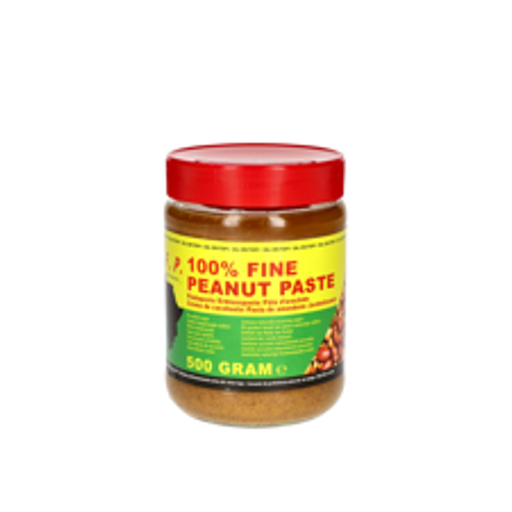
A.F.P. Fine Peanut Paste 500 g
The smooth texture described makes this a good option if you’re looking for a spreadable peanut base; the Netherlands Nutrition Centre recommends smooth peanut butter for your baby.
The product description states that it contains 100% roasted peanuts, with no added sugar or salt.
View at Joybuy
 No image available
PCD Peanut Butter 350g
This peanut butter is an option if you’re looking for a peanut-based spread; check the packaging to make sure the variety is smooth and has no pieces before giving it to your baby.
The product description states that it contains 100% peanuts, with no added sugar or salt, and 50.0 g of fat per 100 g.
View at Joybuy
 No image available
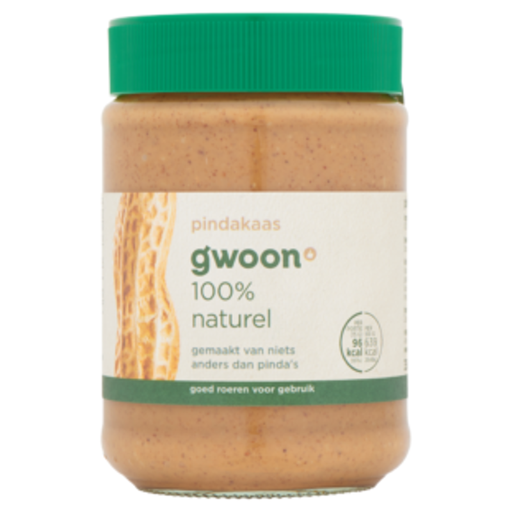
g’woon Peanut Butter 100% Natural - 350g
This is a peanut butter variety for anyone looking for a spreadable peanut base; check that the exact variety is smooth and has no pieces before giving it to your baby.
The product description states that it contains 100% roasted peanuts, with no added sugar or salt.
View at Joybuy
 No image available
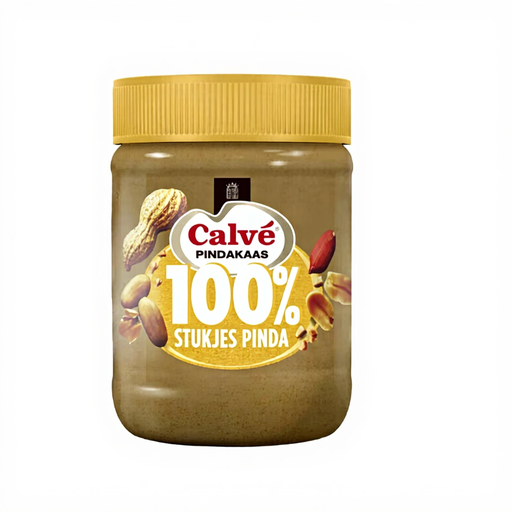
Calve Peanut Butter Nut 100% - 350 g
This peanut butter is an option if you’re looking for a peanut-based product; check that the exact variety is smooth and has no pieces before giving it to your baby.
The product description states that it contains 100% peanuts, 44 g of fat per 100 g and 0 g of salt.
View at Joybuy
Frequently asked questions
When can my baby eat larger pieces independently?
According to the Netherlands Nutrition Centre, your baby should be able to sit upright and swallow and chew well before you offer larger pieces. Whole nuts still aren’t suitable for your baby.
How can I offer peanuts if I’m planning to use baby-led weaning?
Use smooth peanut butter without pieces. The Netherlands Nutrition Centre suggests mixing it into a vegetable or fruit purée and, once your baby eats bread, using it as a spread.
What if my baby has eczema or is prone to allergies?
In this situation, the Netherlands Nutrition Centre advises introducing peanuts and eggs before 6 months and discussing the best approach with a doctor or dietitian. This advice applies to specific circumstances and doesn’t mean that every nut product is generally suitable.
Should I throw away the layer of oil on top of 100% peanut butter?
No. The Dutch Consumers’ Association explains that this is oil separation in 100% peanut butter; a quick stir will mix the oil back in.
Do peanuts and nuts have to be listed on the label?
Pre-packed products must show allergen information on the label, according to the Netherlands Food and Consumer Product Safety Authority. Check the packaging of the product you buy, especially if its ingredients are important to you.


