
Afternoon snackers keeping an eye on portions
You want to enjoy nuts while keeping track of the energy in your snack. Compare the labels per 100 g and weigh out the amount you want to eat.


Standard nuts are not low in calories: the four labels reviewed list 598–627 kcal per 100 g, well above the EU threshold of 40 kcal per 100 g for a ‘low energy’ claim on solid foods (European Commission). Of the products compared, PLUS Unsalted Unroasted Cashews have the lowest figure on the label, at 598 kcal per 100 g; at 25 g, the difference between the lowest and highest figures is 7.25 kcal. Portion size therefore makes more difference in this comparison: an extra 10 g of the same nuts adds around 60–63 kcal, based on the labels from PLUS, Duyvis, Jumbo and Albert Heijn.
You want to enjoy nuts while keeping track of the energy in your snack. Compare the labels per 100 g and weigh out the amount you want to eat.
You want to know whether a product contains only nuts or also oil or other ingredients. So, as well as the product name, check the ingredients list.
You’re looking for a type or mix of nuts that suits your taste. Variety alone doesn’t tell you how much energy a portion contains; compare the label and the weight of your portion to find out.
First decide how much you want to eat, then compare the nutritional information and ingredients for the specific variety.
| What to consider | What to check | Who is this most relevant to? |
|---|---|---|
| Energy per portion | Compare kcal per 100 g and weigh your portion. Calculate the energy using: kcal per 100 g × number of grams ÷ 100. | If you want to limit the energy in your afternoon snack, the amount you actually eat matters; around 42% of consumers prioritise the energy in a portion. |
| Ingredients | Check the ingredients, salt content and any allergen information for the specific variety. | If you’re looking for unsalted nuts and want to check for added ingredients, look beyond the product name; around 25% of consumers give ingredients the highest priority. |
| Taste and nutritional information | Compare the types of nuts listed and, if relevant to you, the protein and fibre per 100 g. | If you’re mainly looking for a flavour or combination you enjoy, you’ll want a choice of varieties; around 17% of consumers prioritise taste and nutritional profile. |
| Packaging and storage | Check the net weight, whether the packaging can be resealed and the storage instructions. | For several snack occasions, packaging that’s easy to store is practical; around 16% of consumers prioritise convenient packaging and storage. |
‘Unsalted’ tells you about the salt, not the energy content. For a ‘low energy’ nutrition claim, solid foods must contain no more than 40 kcal per 100 g, according to the European Commission.
Compare the kcal per 100 g and calculate the amount for your weighed portion. Don’t describe standard nuts as low in calories just because you’re eating a small portion.
A handful doesn’t always weigh the same. The Netherlands Nutrition Centre bases its general reference of 164 kcal for unsalted nuts on a 25 g portion.
Weigh out the amount you want to eat, then put the pack away.
The Duyvis peanuts and Jumbo cashews reviewed contain sunflower oil; the PLUS variety reviewed lists cashews as its ingredient. This varies by product.
Read the ingredients list and nutrition table on the specific pack. Don’t judge the ingredients based only on words such as ‘unsalted’ or ‘unroasted’.
A mix or a larger bag doesn’t tell you how much energy your weighed portion contains. The ALDI nut mix reviewed contains 500 g; that isn’t a portion size.
Choose packaging that suits when you plan to eat the nuts. Store them in a dry place in a tightly sealed container, as recommended by the Netherlands Nutrition Centre.
If a large pack isn’t sealed and stored properly after opening, its contents may spoil and go to waste.
The unsalted peanuts reviewed are an option if you’re specifically looking for peanuts.
AH Unsalted Almonds are the roasted almond variety reviewed.
The unsalted cashews reviewed are a cashew variety with added sunflower oil.
According to Lidl, the Alesto range includes nuts, dried fruit and party snacks.
The Trader Joe’s Unsalted Nut Mix reviewed contains almonds, hazelnuts, walnuts and Brazil nuts in a 500 g pack.
PLUS Unsalted Unroasted Cashews are the variety reviewed whose ingredients list contains no added oil.
This Joybuy selection includes nuts and nut mixes for a measured afternoon snack. Compare the nutritional information and ingredients for the variety you choose, then decide on your portion size.
 Image unavailable
An option if you’re looking for raw, unsalted almonds and want to calculate the energy in your weighed portion.
The label lists 591 kcal per 100 g; the ingredients list says almonds.
 Image unavailable
A good fit if you’re looking for almonds with no other listed ingredients; weigh out your own portion from the pack.
The label lists 100% almonds, 0.00 g of salt per 100 g and 578 kcal per 100 g.
 Image unavailable
An option if you’re looking for roasted, unsalted cashews for a measured snack.
The label lists 596 kcal per 100 g; the ingredients list says cashews.
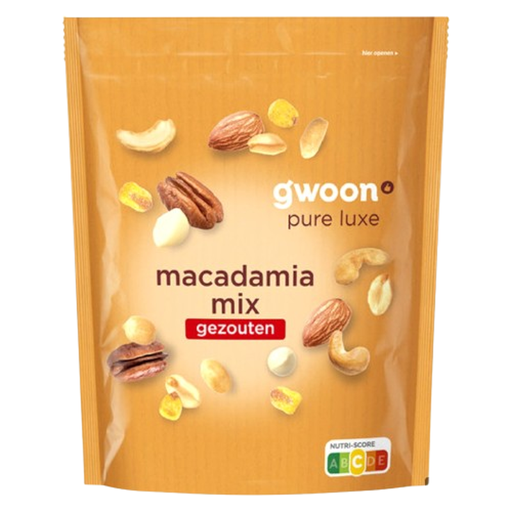 Image unavailable
A nut mix that lets you combine different varieties in one snack; check the ingredients if you’re looking for unsalted nuts.
The ingredients list includes peanuts, almonds, cashews, macadamias, pecans, maize, salt and sunflower oil.
 Image unavailable
An option if you’re looking for cashew kernels with no other listed ingredients; choose your portion separately from the pack size.
The label lists 100% cashew kernels and 604 kcal per 100 g.
For a ‘low energy’ nutrition claim, solid foods must contain no more than 40 kcal (170 kJ) per 100 g, according to the European Commission. The four products reviewed list 598–627 kcal per 100 g. So describe them as nuts for a measured, calorie-conscious snack, not as low-calorie products.
Multiply the kcal per 100 g on the label by the number of grams you weigh out, then divide by 100. For example, 25 g of the PLUS cashews reviewed is 598 × 25 ÷ 100 = 149.5 kcal. Use the label figure for the variety you’re actually eating.
Check the ingredients and allergen information on the packaging. The NVWA lists peanuts and nuts separately as allergens that must be declared on prepacked products. For example, the PLUS cashews reviewed state that the product may contain peanuts.
Store nuts in a dry place in a tightly sealed container. The Netherlands Nutrition Centre recommends keeping them somewhere cool, ideally at 10–15 °C. Also follow the storage instructions and use-by information on the packaging.
Do not eat the pack if it is a 170 g pack of Trader Joe’s Unsalted Cashews with barcode 2003020120930 and best-before date 23-09-2026. On 20 May 2026, the NVWA warned that this specific pack may contain metal fragments. The warning does not automatically apply to other ALDI nut products or the 500 g nut mix reviewed.