
You want a demonstrably lower fat content
You want to compare the total fat content of the specific variety and distinguish a nutrition claim from a description of how it is prepared. Check the nutrition table and the claim on the packaging.


For a lighter afternoon snack, choose according to what you want to change: the product’s fat content, how much you eat or how it is prepared. A smaller portion or roasting without added oil does not prove that nuts are low in fat, so compare the nutritional information per 100 g and weigh your portion. The Netherlands Nutrition Centre recommends unsalted nuts, but unsalted does not mean low in fat.
You want to compare the total fat content of the specific variety and distinguish a nutrition claim from a description of how it is prepared. Check the nutrition table and the claim on the packaging.
You want to keep eating regular nuts, but decide in advance how much to have in the afternoon. In a general example, the Netherlands Nutrition Centre uses a handful weighing 25 g; these values do not automatically apply to every nut, mix or brand variety.
You want roasted nuts with no oil as an added ingredient, and assess salt and total fat separately. Duyvis describes Cashews Original as oven-roasted without added oil.
First decide whether you want to change the product’s composition or simply how much you eat. This distinction helps you avoid mistaking a preparation method or smaller portion for a lower fat content per 100 g.
| What to consider | What to look for | Who is this important for? |
|---|---|---|
| Fat content and claim | Compare total fat per 100 g and check which reference is used for a comparative claim. According to the European Commission, the claim ‘low fat’ for solid foods allows a maximum of 3 g of fat per 100 g. | If I’m mainly looking for a product with a lower fat content, I compare the specific nutritional information and claim. Around 32% of consumers put reducing fat first. |
| Portion and nutritional information | Weigh the amount you eat and use the values on the packaging for that specific variety. Look at energy separately from fat if that’s relevant to your choice. | If I want to keep eating regular nuts but measure out my afternoon snack, I check the weight of my portion. Around 31% of consumers put portion control first. |
| Preparation and salt | Read the ingredients and compare salt and total fat separately. ‘No added oil’ describes how the product is prepared; it does not automatically tell you its fat content. | If I’m mainly looking for an unsalted variety or nuts without added oil, I check these two features separately. Around 25% of consumers put preparation method and salt choice first. |
| Packaging and storage | Check the pack size and whether you can seal it properly again. The Netherlands Nutrition Centre advises storing unsalted cashews in a cool, dark and dry place. | If I’m choosing a pack that suits my snack plans, I consider its size and how I can store what’s left. Around 12% of consumers put packaging convenience first. |
A description of the preparation method doesn’t tell you how much total fat the finished product contains. Duyvis describes Cashews Original as oven-roasted without added oil; this is not evidence of reduced fat.
Compare the total fat shown on the packaging and treat the preparation method as a separate feature.
Eating a smaller amount doesn’t change the nutritional values per 100 g of the nuts. In a general example, the Netherlands Nutrition Centre states that a 25 g handful of unsalted nuts contains 14,9 g of fat; this is not a product specification for every type or mix.
Keep the portion weight and the product’s nutritional information separate when making comparisons.
These words describe the salt choice or preparation method, not the fat content in itself. A product name alone is no substitute for the nutrition table.
Compare the fat, energy and salt values for the exact variety separately.
On 20 May 2026, the NVWA issued a warning about 170 g packs of Trader Joe’s unsalted cashews, with barcode 2003020120930 and best-before date 23-09-2026, due to possible metal fragments. The warning applies to that specific pack.
Do not eat the affected product and follow the recall instructions. Do not confuse this 170 g pack with the separate ALDI listing for 250 g packs of Trader Joe’s cashews.
Duyvis Cashews Original is worth considering if you’re looking for nuts oven-roasted without added oil.
The product page lists AH Unsalted Cashews as a supermarket own-brand variety.
Jumbo Unsalted Cashews comes in a 200 g pack.
Lidl has a product page for unsalted cashews; Lidl is the retailer in this case.
An ALDI product page lists Trader Joe’s Roasted and Unsalted Cashews, 250 g.
PLUS lists a 200 g bag of unsalted, unroasted cashews.
This selection includes nuts and cashews for comparing nutritional information and portion sizes, as well as an oven-roasted cashew variety with no added oil. None of these features means that a product is low in fat.
 No image available
A good choice if you want to compare cashews using the nutritional information per 100 g.
The product information lists 47,7 g of fat and 604 kcal per 100 g. The ingredients are listed as 100% cashew kernels; the pack contains 160 g.
 No image available
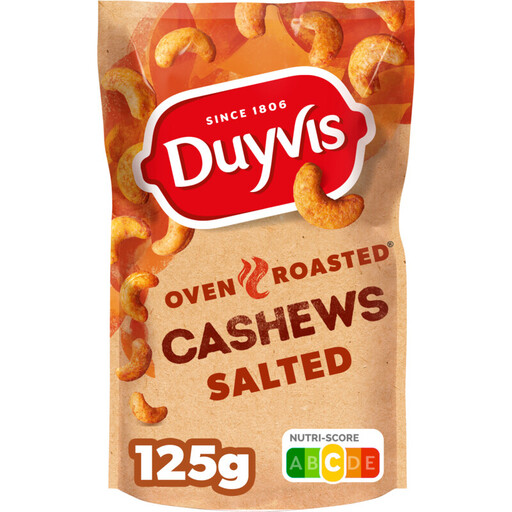
Suitable if you’re looking for roasted cashews with no added oil and want to assess the nutritional information separately.
The product information lists 43 g of fat, 586 kcal and 0,92 g of salt per 100 g, with 4–5 servings per pack. The listed allergens are cashews, gluten, wheat and peanuts.
 No image available
A good choice if you want to look at a peanut variety and its nutritional information per 100 g.
The product name states that the peanuts are unsalted. The ingredients list 99% peanuts and sunflower oil; the nutritional information lists 50 g of fat and 2690 kJ per 100 g. May contain cashews.
 No image available
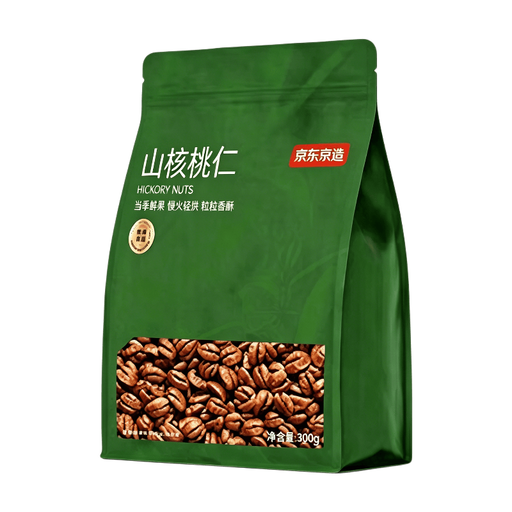
Suitable if you’re looking for roasted cashews and want to assess their unsalted status as a separate feature.
The product information lists 46,67 g of fat, 596 kcal and 0,067 g of salt per 100 g. Contains cashews.
 No image available
A good choice if individually wrapped portions would be useful for planning your snacks.
The product information lists 46,4 g of fat and 614 kcal per 100 g, and includes sugar and salt in the ingredients. The description mentions individually wrapped portions.
No. According to the European Commission, the ‘low fat’ claim for solid foods allows a maximum of 3 g of fat per 100 g. For Duyvis Cashews Original, ‘no added oil’ describes the preparation method; check the total fat on the label as well.
Use the values on the packaging of your product. If a value is given per 100 g, multiply it by your portion weight in grams and divide by 100. For 25 g, the factor is 0,25; don’t automatically use the values for a different nut or mix.
The Netherlands Nutrition Centre advises storing unsalted cashews in a cool, dark and dry place, in a tightly sealed container. Also follow the instructions on the packaging.
Check the allergen information on the packaging of the exact variety. The NVWA treats peanuts and nuts as separate allergens, so don’t rely on the product name alone or information from a different pack.
The NVWA warning issued on 20 May 2026 concerns 170 g packs of Trader Joe’s unsalted cashews, with barcode 2003020120930 and best-before date 23-09-2026, due to possible metal fragments. Do not eat the affected pack and follow the recall instructions. The warning applies to this specific pack, not to all cashews or the separately mentioned 250 g pack.