
Parents looking for an everyday snack
You’re looking for an after-school snack for a child aged 4 to 12 and don’t want to rely solely on packaging with a light-style look. Voedingscentrum lists unsalted nuts as a possible snack for this age group.


Voedingscentrum lists unsalted nuts as a possible snack for children aged 4 to 12. So don’t choose based solely on a reduced-fat claim: compare the ingredients and the amount you eat, too. For solid foods, the European Commission sets a maximum of 3 g of fat per 100 g for a ‘low fat’ claim. ‘No added fat’ describes only how a product is prepared, as Duyvis says about its Oven Baked Peanuts Original. If your child has a relevant allergy or their school has restrictions, suitability comes before fat content: check the ingredients and the rules where the snack will be eaten.
You’re looking for an after-school snack for a child aged 4 to 12 and don’t want to rely solely on packaging with a light-style look. Voedingscentrum lists unsalted nuts as a possible snack for this age group.
You want to distinguish between ‘low fat’, a product claim about having less fat, and a preparation method that uses no added fat, so you know which information to compare on the label.
You take your child’s allergies, age and eating skills into account, as well as any rules at school or childcare. Jeroen Bosch Ziekenhuis offers advice for people with a nut allergy, while OBS De Venen sets out its own local rules.
When to choose them: if you’re looking for a snack for a child aged 4 to 12 and there’s no relevant allergy or restriction, Voedingscentrum lists unsalted nuts as an option.
The trade-off: unsalted doesn’t mean low fat. Albert Heijn and Jumbo list 60 g and 54.7 g of fat per 100 g respectively for two different nut mixes.
When to choose it: if you’re looking for less fat compared with a specifically named comparison group.
The trade-off: the product information for Duyvis Oven Roasted Sweet Paprika says it contains 30% less fat than ordinary peanuts in a crispy coating. Albert Heijn also lists 21 g of fat and 2 g of salt per 100 g for this variety.
When to choose it: if a preparation method that uses no added oil or fat is your priority.
The trade-off: Duyvis describes its Oven Baked Peanuts Original as prepared without added oil or fat. Also check the total fat per 100 g on the label.
When to choose this: if a relevant allergy or the rules at school or childcare mean nuts aren’t allowed.
The trade-off: a lower fat content doesn’t change the allergens. Choose an alternative that suits the person eating it and the rules in place.
Start by checking whether the snack is suitable for your child and the place where it will be eaten. Then compare the claim with the nutritional information per 100 g, and finally consider portioning and storage.
| What to consider | What to look for | Who is this important for? |
|---|---|---|
| What the fat claim means | Check the exact claim, the stated comparison group and the total fat per 100 g. For solid foods, the European Commission sets a maximum of 3 g of fat per 100 g for a ‘low fat’ claim. | If I’m looking for less fat, I want to know exactly what’s being compared and how much fat the product contains. Around 29% of consumers prioritise clarity about fat claims. |
| Ingredients for everyday use | Compare ingredients and salt per 100 g. Don’t treat unsalted nuts and peanuts in a crispy coating as the same type of product. | For a regular snack, I also want to check the rest of the nutritional information, not just the fat. Around 29% of consumers prioritise everyday ingredients. |
| Allergies and eating safely | Read the allergen information on the specific pack and check the rules at school or childcare. Also consider your child’s age and eating skills when serving whole nuts. | If my child takes the snack with them or has an allergy, it needs to be safe for both the person eating it and the setting. Around 24% of consumers prioritise suitability. |
| Portioning and storage | Check the net weight and any serving size on the label separately, and follow the storage instructions on the pack. | If I buy a bag for several snack times, I want to be able to measure out portions and store it easily. Around 18% of consumers prioritise this convenience. |
A preparation claim doesn’t tell you how much total fat the finished product contains. For solid foods, the European Commission sets a maximum of 3 g of fat per 100 g for a ‘low fat’ claim.
Check the total fat per 100 g separately from the preparation method, and compare the claim with the relevant definition.
A claim about having less fat compares a product with a specific group. The product information for Duyvis Oven Roasted Sweet Paprika also lists 2 g of salt per 100 g.
Alongside the claim, check the salt, ingredients and intended use of the snack.
A serving size on a product page or pack is packaging information. It doesn’t automatically tell you what amount is right for your child.
Keep label information separate from dietary advice based on your child’s age and eating habits.
A fat claim doesn’t change the allergens or the rules in place where the snack will be eaten. The NVWA provides information about allergens on labels, while school rules can vary locally.
Check the ingredients and allergen information on the pack, and ask the school or childcare setting about its current rules if needed.
Useful for comparing peanuts in a crispy coating with oven-baked peanuts.
The 500 g AH Unsalted Nut Mix is a specific example you can use to compare label information.
Jumbo Unsalted Nut Mix 200 g is a supermarket own-brand option with a detailed nutritional breakdown.
The product name Unsalted Californian Pistachios identifies a specific type of nut and indicates that it is unsalted.
The unsalted nut mix described contains almonds, hazelnuts, walnuts and Brazil nuts.
The 500 g PLUS Unroasted Unsalted Nut Mix is a specific own-brand option for comparing labels.
This selection includes chestnuts and unsalted nuts. Compare the nutritional information for each product: unsalted or ready to eat doesn’t automatically mean low fat.
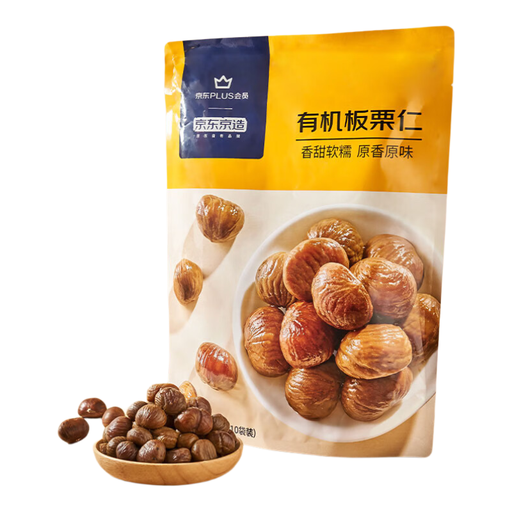 Image unavailable
The product information describes the peeled chestnuts as ready to eat and lists ten individual 100 g bags.
The label lists 1.7 g of fat and 0 g of salt per 100 g. For solid foods, the European Commission sets a maximum of 3 g of fat per 100 g for a ‘low fat’ claim.
 Image unavailable
A ready-to-eat peanut snack. The product information lists 99% peanuts and sunflower oil.
The label lists 50 g of fat and 0.02 g of salt per 100 g. The product contains peanuts and may contain cashews.
 Image unavailable
According to the product information, these roasted cashews are ready to eat.
The label lists 46.67 g of fat and 0.067 g of salt per 100 g. The product contains cashews and other tree nuts.
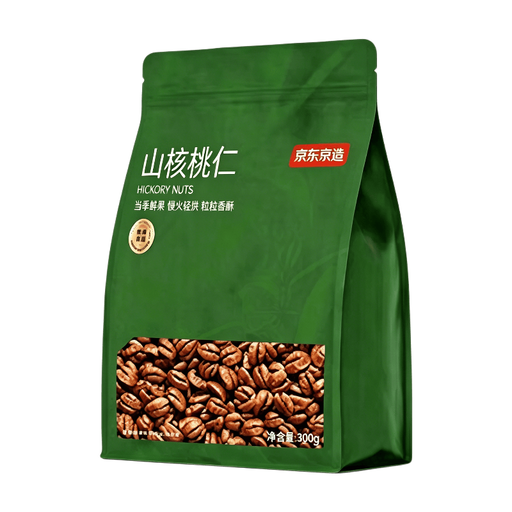 Image unavailable
The product information describes the hickory kernels as ready to eat and packed in individual portions.
The label lists 46.4 g of fat and 1.6 g of salt per 100 g.
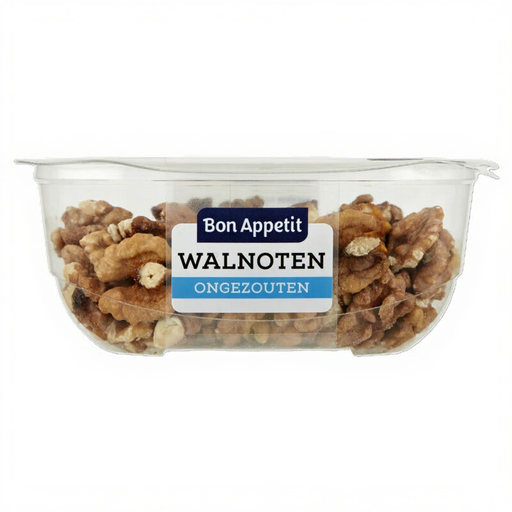 Image unavailable
These unsalted walnuts are in their shells, which need to be cracked before eating.
The label lists 64.3 g of fat and 0 g of salt per 100 g.
For solid foods, the European Commission sets a maximum of 3 g of fat per 100 g for a ‘low fat’ claim. A claim about having less fat means something different: compare it with the product group named on the pack or in the product information.
Check the ingredients list on the pack of the specific product. According to the Netherlands Food and Consumer Product Safety Authority, allergens must be clearly distinguishable in the list. Check the latest information before giving the snack to your child.
Amsterdam UMC advises giving nut butter rather than whole nuts to children under 4 because of the risk of choking. The hospital also notes that older children can still choke; eating calmly at the table and staying with them are part of its advice. This is safety guidance, not a legal age limit.
Voedingscentrum gives general storage guidance of 6 months in a kitchen cupboard or 1 year in the freezer. Also follow the instructions on the pack and look out for rancidity, a tough texture or mould.