
A lighter snack after training
You want to keep eating nuts, but are mainly watching the fat and energy in the portion you actually have. Compare the nutrition information for the exact product and weigh out your portion.


If you want to eat less fat after exercise, check the fat content per 100 g of the exact product. A smaller portion of regular nuts reduces how much you eat, but it doesn’t make the product itself low in fat. The Netherlands Nutrition Centre gives 25 g of unsalted nuts as a general portion, while the European Commission sets a maximum of 3 g of fat per 100 g for a ‘low-fat’ claim on solid foods.
You want to keep eating nuts, but are mainly watching the fat and energy in the portion you actually have. Compare the nutrition information for the exact product and weigh out your portion.
You’re looking at how much protein nuts contribute to your overall diet. Think of them as a possible addition, not automatically a complete recovery snack; the Netherlands Nutrition Centre says recreational exercisers don’t need special protein products.
You want to take an unsalted snack with you and choose a pack you can divide into portions at home. Storing it in a tightly sealed container in a dry place is also part of making a practical choice.
This buying guide is for people considering nuts as a lighter snack after a gym session; the percentages give a broad indication of the priorities that may influence their choice.
| What to consider | What to look for | Who is this important to? |
|---|---|---|
| Fat and energy | Compare the fat and energy per 100 g on the pack, then calculate the values for the portion you weigh out. | If I want a lighter snack after exercise, I pay attention to both what it contains and how much I eat. Around 36% of consumers in this context give fat and energy the highest priority. |
| Protein contribution | Check how much protein is in your portion and consider it alongside the rest of your diet. | If I want to top up my protein after training, I look at the contribution from the whole snack, not just the nuts. Around 29% of consumers give protein contribution the highest priority. |
| Salt and flavour | Check the salt per 100 g and per portion, as well as the seasonings, oil and other ingredients. | If I’m looking for unsalted nuts or prefer a savoury flavour, I check the label of the variety I’ve chosen. Around 14% of consumers give salt and flavour the most weight. |
| Portioning and storage | Check the net weight and number of portions, and read the storage instructions on the pack. | If I want to take nuts to the gym, I look for a pack that’s easy to portion and store at home. Around 21% of consumers give practical portioning and storage the highest priority. |
‘Unsalted’ and ‘no added oil’ describe different product characteristics from fat content. Nuts roasted in the oven without added oil still contain their naturally occurring fat. For a ‘low-fat’ claim on solid foods, the European Commission sets a maximum of 3 g of fat per 100 g; a smaller portion doesn’t change the nutrition information per 100 g.
The Netherlands Nutrition Centre gives 164 kcal and 4.5 g of protein as a general reference for 25 g of unsalted nuts. Values can vary between types of nuts and individual packs, so use the label for that product when calculating your intake.
Roasting without added oil doesn’t tell you how much fat the nuts themselves contain. Albert Heijn lists 47 g of fat per 100 g for Duyvis Oven roasted nutmix cashews salted.
Check the fat content per 100 g and assess any nutrition claim separately from the preparation method.
Albert Heijn’s product page lists four 25 g portions in the 100 g pack.
Weigh out the amount before taking or opening the bag, and compare it with the portion you plan to eat.
According to the Netherlands Nutrition Centre’s general table, a 25 g handful of unsalted nuts provides 4.5 g of protein. This figure shows how they contribute to your diet; it doesn’t, on its own, tell you what makes up a complete snack.
Consider your whole snack and, if needed, add other everyday protein-rich foods rather than simply increasing your portion of nuts.
The unsalted cashews from Albert Heijn and Jumbo included in this comparison contain sunflower oil; the ingredients list for the unroasted PLUS variety lists cashews.
If you want to avoid added oil, check both the preparation method and the ingredients list.
The range reviewed includes a roasted, savoury nut mix.
The own-brand variety reviewed is a 100 g pack of unsalted cashews.
The variety reviewed is Jumbo Unsalted Cashews 200 g.
The product listing reviewed is for a 500 g pack of unsalted cashews.
The product reviewed is TRADER JOE'S roasted and unsalted cashews, sold by Aldi in a 250 g pack.
The own-brand variety reviewed is PLUS unsalted, unroasted cashews 200 g.
This Joybuy selection is aimed at anyone looking for a snack with a low fat content per 100 g after exercise; also bear in mind the portion size of the individual sachets.
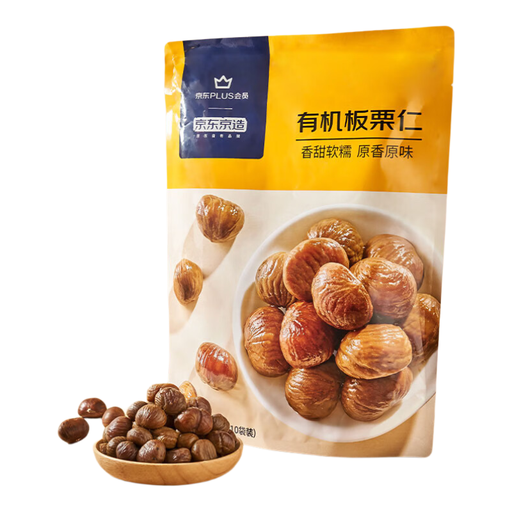 Image unavailable
An option if you’re looking for a ready-to-eat chestnut snack and want to consider its fat content per 100 g.
The product information lists 1.7 g of fat, 191 kcal, 4.2 g of protein and 0 g of salt per 100 g. The stated 1.7 g of fat is below the European Commission’s maximum of 3 g per 100 g for a ‘low-fat’ claim on solid foods.
The pack contains 10 sachets of 100 g, so you’ll need to weigh out a smaller portion yourself.
According to the European Commission’s guidance, a solid food can contain no more than 3 g of fat per 100 g to make a ‘low-fat’ claim. A smaller portion of a product with more fat doesn’t change its value per 100 g.
The Netherlands Nutrition Centre’s general nutrition table lists 154 kcal, 12.2 g of fat and 5.3 g of protein for 25 g of unsalted cashews. For a specific pack, use the nutrition information for that variety.
No. According to the Netherlands Nutrition Centre, recreational exercisers don’t need special protein products. If you do intensive strength or endurance training, you can review your total protein intake and use everyday foods to top it up.
Before buying, read the allergen information on the pack of the exact product. The Netherlands Food and Consumer Product Safety Authority says allergens must be clearly indicated in the ingredients list. Since 1 January 2026, new rules have applied in the Netherlands to warnings about unintended allergens, including the wording ‘May contain X’ and ‘Not suitable for people with an X allergy’.
Store nuts in a tightly sealed container in a dry place. The Netherlands Nutrition Centre recommends keeping them cool, for example at 10 to 15 °C; also follow the storage instructions on the pack.