
Regular lunch planners
If you often take nuts with you alongside a sandwich, or share a supply with housemates, a larger bag may suit you if you portion it yourself and store it properly.


Choose a larger bag if you take nuts with you regularly, can store them properly and want to portion them yourself. A smaller pack may suit you better if you eat nuts less often or want to try a particular type or mix with your lunch first. Pack size alone doesn’t tell you whether the contents are right for the way you’ll use them.
If you often take nuts with you alongside a sandwich, or share a supply with housemates, a larger bag may suit you if you portion it yourself and store it properly.
If you’re mainly interested in the ingredients and types of nuts, check what the mix contains rather than looking only at the pack weight.
If you don’t eat nuts with every lunch, a smaller bag may be a better fit for your needs and require less stock management.
First, match the quantity to how often you eat nuts and how much you want to portion yourself. Then consider the ingredients, storage and how easy they are to take with you.
| What to consider | What should you look for? | Who might this suit? |
|---|---|---|
| Pack size | Choose a net weight that suits how often you eat nuts and how many people you’ll be sharing them with. | If I regularly prepare portions for lunch, I want a quantity that suits how we use them. Around 36% of consumers prefer a pack size that matches the amount they want to keep in stock. |
| Ingredients | Check whether the pack contains peanuts, a mixed nut selection, or seasoned or coated snack nuts. | If I’m looking for particular types of nuts or an unsalted option, I want to choose ingredients that suit my preferences. Around 29% of consumers put the ingredients first. |
| Storage and using them up | Consider how long you’ll need to use the contents and whether you can keep the opened bag well sealed and dry. | If I don’t eat nuts often, I want to avoid leaving a large supply unused for a long time. Around 21% of consumers focus mainly on using up and storing the contents. |
| Taking portions with you | Decide whether you want to portion them at home or take a smaller quantity with you; a bag isn’t automatically divided into lunch portions. | If I take my lunch with me, I want to know in advance how much I’ll need to portion myself. Around 14% of consumers make portioning and carrying their main priority. |
A coating or seasoning changes what’s in the bag. So, if you’re comparing plain nuts with snack nuts, don’t look at the weight alone.
First decide which type of product you’re looking for, then read the ingredients list.
The term “stand-up pouch” doesn’t confirm that the pack can be sealed properly after opening. The Voedingscentrum advises storing nuts in a dry, well-sealed container.
Check the seal and think about where you’ll store the remaining contents.
If the packaging doesn’t seal properly, you may need a separate airtight storage container.
An unsalted product may still contain peanuts or other nuts. Peanuts and tree nuts are listed as separate allergens.
If someone with a relevant allergy will be eating them, check the latest ingredients and allergen information on the pack.
Duyvis describes an unsalted peanut option in a 235 g pack.
Albert Heijn lists unsalted nut mixes in 200 and 500 g packs.
Jumbo describes an unroasted nut mix in a 500 g pack.
Lidl describes a 200 g mix of unroasted, unsalted nuts.
The unsalted nut mix reviewed is sold by ALDI under the product name TRADER JOE'S, in a 500 g pack.
PLUS describes a 500 g stand-up pouch of unroasted, unsalted mixed nuts.
This selection ranges from peanuts and almonds to mixed nuts and macadamias, in packs of 200, 250 and 500 g.
 No image available
The 250 g pack contains peanuts for you to portion yourself.
The product information lists 99% peanuts and sunflower oil, with 0.02 g of salt per 100 g. May contain traces of cashew nuts.
 No image available
The 200 g pack may suit you if you want a smaller quantity of almonds to portion yourself.
The product information lists almonds with no added salt. Store in a cool, dry place and reseal the pack after opening.
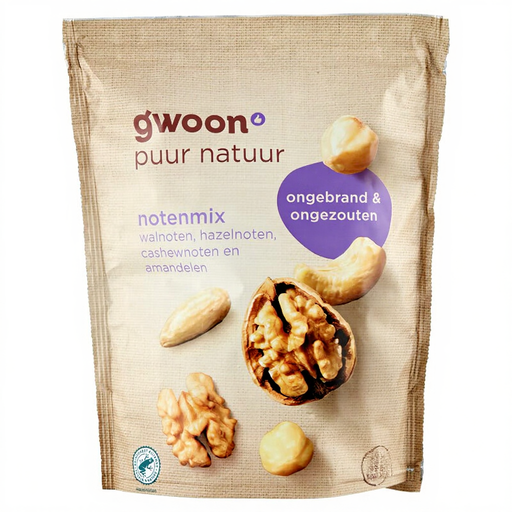 No image available
At 500 g, this is a larger supply of mixed nuts for you to portion yourself.
The mix contains 30% hazelnuts, 30% walnuts, 20% almonds and 20% cashew nuts. The product information advises resealing the pack securely after opening and storing the nuts in a cool, dry place.
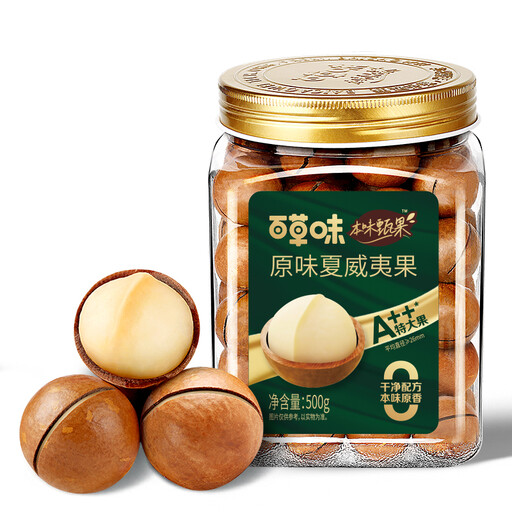 No image available
This pack contains 500 g of macadamias, making it a good option if you want to portion one type of nut.
The product information lists 100% macadamias, with no added salt or sugar, and advises consuming the contents immediately after opening.
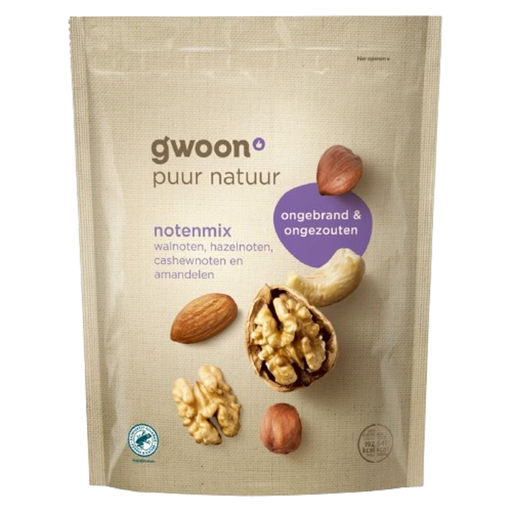 No image available
The 200 g pack contains a smaller quantity of mixed nuts for you to portion yourself.
The product information lists hazelnuts, walnuts, almonds and cashew nuts. The product may contain traces of peanuts and other nuts.
A large bag may suit you better if you eat nuts regularly, want to portion them yourself and can store them properly. A smaller pack may be more convenient if you eat nuts less often or want to try a mix first.
At 25 g per portion, you’ll get 20 portions from 500 g and 8 from 200 g. This is just a calculation; the Voedingscentrum gives 25 g as an example of a handful, not as personal advice on how much to eat at lunch.
Store nuts in a dry, well-sealed container. The Voedingscentrum recommends 10 to 15 °C for cool storage. Also follow the storage instructions and use-by information on the specific pack.
Check the latest ingredients and allergen information on the pack. According to the NVWA, allergen information must appear on the label of prepacked foods; peanuts and tree nuts are listed as separate allergens. Unsalted doesn’t mean allergen-free.