
Parents of toddlers
For children under 4, the product format matters more than the convenience of individual packs. The Netherlands Nutrition Centre recommends nut butter with no added sugar or salt instead of nuts.


For children under 4, a multipack of whole nuts is not a suitable snack to eat as they are: the Netherlands Nutrition Centre recommends nut butter with no added sugar or salt instead of nuts. Once you’ve chosen a suitable format, compare products by their ingredients, allergens and intended use. If it’s for childcare or school, check the local policy too.
For children under 4, the product format matters more than the convenience of individual packs. The Netherlands Nutrition Centre recommends nut butter with no added sugar or salt instead of nuts.
If you’re preparing food for childcare or school, you need to be able to check the ingredients and allergen information. Only pack a product if it also meets the local policy.
If you’re organising food for several family members, keep whole nuts for other family members separate from the format you choose for your toddler. A pack of individual sachets and a jar serve different purposes.
For children under 4, the Netherlands Nutrition Centre recommends nut butter with no added sugar or salt instead of nuts. So check the product format first, then look at allergens, packaging and storage.
| What to consider | What should you check? | Who should give this more weight? |
|---|---|---|
| Age-appropriate product format | Check whether the pack contains whole nuts or nut butter. For children under 4, the Netherlands Nutrition Centre recommends nut butter instead of nuts. | If you’re choosing something for a child under 4, the product format matters more than the convenience of small sachets. Around 29% of consumers say an age-appropriate format is their top priority. |
| Allergens and venue policy | Read the ingredients and allergen warnings, and ask the childcare provider or school what’s allowed. The Netherlands Food and Consumer Product Safety Authority (NVWA) lists peanuts and nuts separately. | If you’re managing an allergy or need to follow the policy at the place where food will be eaten, check in advance which ingredients and warnings are relevant. Around 23% of consumers put allergens and venue approval first. |
| Packaging convenience | Compare the number of individual packs, the weight per sachet and the product format. Duyvis lists its Unsalted Nutmix Walnut as a 4x30gr multipack; this is not a recommended portion for toddlers. | If you’re preparing portions to share or packing a lunchbox, you’ll want a pack size that suits how you plan to use it, without losing sight of the product format. Around 18% of consumers say ease of preparation is their main consideration. |
| Ingredients | Check the full ingredients list for the exact variety you’ve chosen. The word ‘natural’ alone isn’t enough to establish what it contains. | If you’re choosing nut butter for a toddler, check whether the variety fits the advice on added sugar and salt. Around 18% of consumers put checking ingredients at the top of their list. |
| Storage and stock | Choose a jar size that suits your household and follow the storage instructions on the packaging. The Netherlands Nutrition Centre recommends keeping a jar of peanut butter tightly closed and in a dry place. | If you’re organising supplies for several mealtimes, choose a pack size that suits how you’ll use it. Around 12% of consumers say storage and stock are their main considerations. |
The packaging and whether salt has been added don’t change the product format. For children under 4, the Netherlands Nutrition Centre recommends nut butter instead of nuts.
Rule out whole nuts as a snack for your toddler to eat as they are, then compare suitable product formats.
The stated quantity describes the pack size, not whether the product is suitable for a toddler or what portion they should have.
Treat the manufacturer’s pack size, your family’s supplies and the product format for your toddler as separate choices.
The advice on nut butter for under-4s also relates to its ingredients. Product information can vary between varieties.
Check the latest ingredients and allergen information on the packaging of the exact variety you’re buying.
A jar and individual sachets have different packaging and need to be prepared differently.
Think of nut butter as an alternative product format and follow the storage instructions on the packaging after opening.
A jar needs to be closed and stored after use. The Netherlands Nutrition Centre recommends keeping peanut butter tightly closed and in a dry place.
The product ranges mentioned show a variety of packaging and product formats. A brand name alone doesn’t tell you whether a particular variety is suitable for a toddler.
Duyvis lists its Unsalted Nutmix Walnut as a 4x30gr multipack.
Albert Heijn lists AH 100% Natural Peanut Butter as a product range in the alternative nut butter category.
Jumbo offers several peanut butter and nut butter varieties, including different jar sizes and varieties made with different nuts.
Lidl’s product page lists 100% Natural Peanut Butter in a 600 g jar and describes it as having no added ingredients.
ALDI lists HELAES 100% Peanut Butter with the description ‘Peanuts only’.
PLUS lists 100% peanut butter in a 350 g jar.
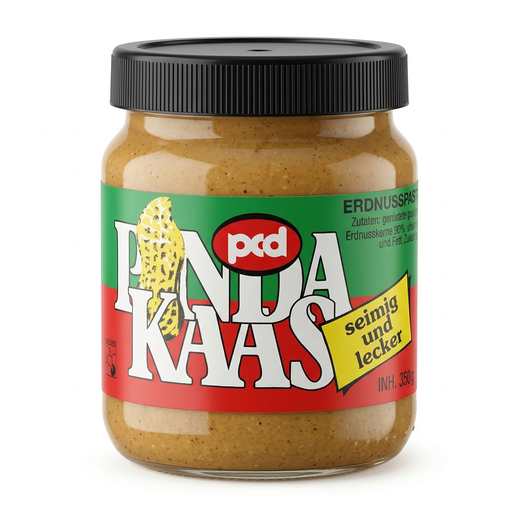
This Joybuy product selection features peanut butter as an alternative format for toddlers. It’s a jar, not a multipack of whole nuts.
 No image available
A relevant option if you’re looking for peanut butter rather than a multipack of whole nuts for your toddler. Check that the exact variety fits the advice on added sugar and salt, and take any allergies into account.
Packaging: jar. Contents: 350g.
No. For children under 4, the Netherlands Nutrition Centre recommends nut butter with no added sugar or salt instead of nuts, because of the risk of choking. The amount in a sachet doesn’t change that advice.
No. The Netherlands Food and Consumer Product Safety Authority lists peanuts and nuts separately. If relevant to the allergy you’re managing, check both entries.
Allergen information must appear on the label. The Netherlands Food and Consumer Product Safety Authority also outlines Dutch rules, in force since 1 January 2026, on how and when food businesses must warn about the possible unintended presence of allergens, for example due to cross-contamination. These labelling rules don’t prove that an individual product is suitable for a child with an allergy.
The Netherlands Nutrition Centre recommends closing the jar tightly and storing it in a dry place. Also follow the storage instructions on the packaging; this isn’t a guarantee of how long homemade lunchbox food will keep.
Not necessarily. Choose a size that suits your household and follow the storage instructions for the variety you’ve chosen. Jar sizes aren’t toddler portion recommendations and don’t replace a multipack of individual sachets.