What should you look for when buying?
For children under 4, the Netherlands Nutrition Centre recommends nut butter with no added sugar or salt instead of whole nuts. Also compare the energy per 100 grams and work out how much it provides for the amount you actually use.
| What to consider |
What should you check? |
Who is this important for? |
| Form and texture |
Choose a spread rather than whole nuts; check whether the variety contains pieces. |
If you’re looking for a smooth option for a toddler and want to avoid whole nuts, texture is a priority. Around 36% of consumers say safe texture is their top priority when buying. |
| Energy per portion |
Compare kcal per 100 g and calculate the energy in the amount you use. |
If you want to know how much energy the amount served on a plate or on bread provides, check both the portion and the value per 100 g. Around 29% of consumers prioritise energy and portion size. |
| Ingredients |
Read the ingredients and check for added sugar and salt. |
If you’re looking for nut butter for a young child and ingredients are a deciding factor, check the ingredients list. Around 21% of consumers say simple ingredients are their top priority when buying. |
| Allergens and setting policies |
Check the allergen information, warnings about cross-contamination and any rules set by the school or childcare provider. |
If your child has a known allergy or their school or childcare setting has specific rules, these may determine your choice. Around 14% of consumers prioritise allergy-related requirements or setting policies. |
Peanut butter and nut butter at Joybuy
These products are peanut butters in spread form, with differences in ingredients and texture. For toddlers, the Netherlands Nutrition Centre recommends a spread with no pieces and no added sugar or salt. Check the product information for each variety.
 No image available
PCD Peanut Butter, 350 g
A spread for anyone looking for peanut butter instead of whole peanuts; check the packaging to see whether this variety contains pieces.
The product information states that it contains 100% peanuts, with no added sugar or salt.
Contains peanuts; not suitable for anyone with a peanut allergy.
View at Joybuy
 No image available
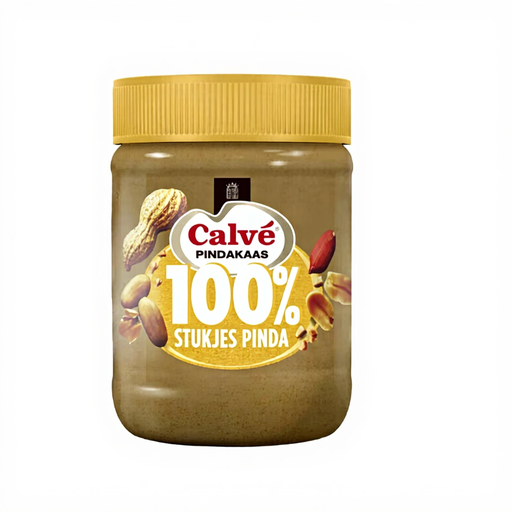
Calvé Peanut Butter Nut 100%, 350 g
A spread for anyone looking for peanut butter instead of whole peanuts; check the packaging for details of this variety’s texture.
The product information states that it contains 100% peanuts, with no added sugar or salt.
Contains peanuts; not suitable for anyone with a peanut allergy.
View at Joybuy
 No image available
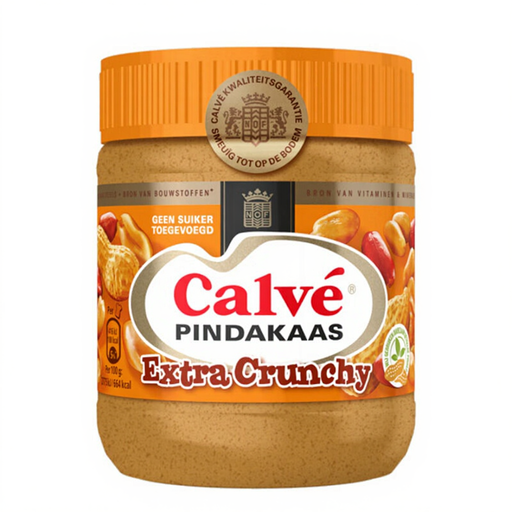
Calvé Extra Crunchy Peanut Butter, 350 g
This variety contains pieces of peanut, so it isn’t in line with choosing a smooth peanut butter for a toddler.
The product information lists pieces of peanut and salt, and says there is no added sugar.
Contains peanuts; not suitable for anyone with a peanut allergy.
View at Joybuy
 No image available
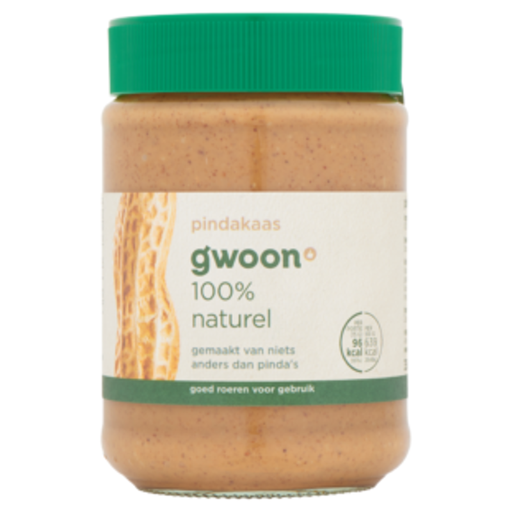
g’woon Peanut Butter 100% Natural, 350 g
A spread for anyone looking for peanut butter instead of whole peanuts; check whether this variety contains pieces.
The product information states that it contains 100% peanuts, with no added sugar or salt, and provides 639 kcal per 100 g. For solid foods, the European Commission sets a maximum of 40 kcal per 100 g for the claim ‘low energy’.
Contains peanuts; not suitable for anyone with a peanut allergy.
View at Joybuy
 No image available
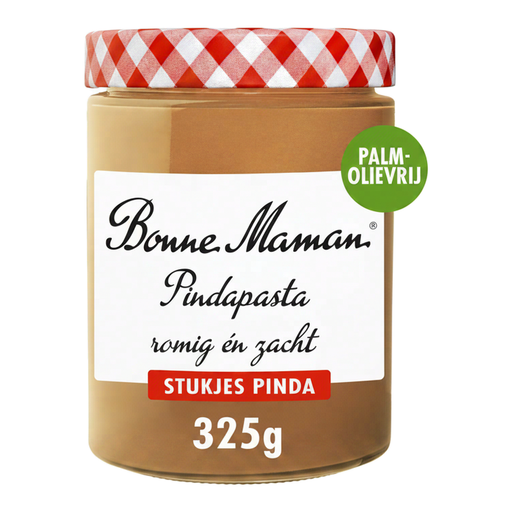
Bonne Maman Peanut Butter With Peanut Pieces, 325 g
This variety contains pieces of peanut, so it isn’t in line with choosing a smooth peanut butter for a toddler.
The product information states that it contains 79% peanuts, with added sugar and salt.
Contains peanuts; not suitable for anyone with a peanut allergy.
View at Joybuy
Frequently asked questions
Does ‘100% nuts’ mean a product is low in calories?
No. ‘100%’ describes the ingredients, not a low energy value. For solid foods, the European Commission sets a maximum of 40 kcal (170 kJ) per 100 grams for the claim ‘low energy’. The Netherlands Nutrition Centre gives 128 kcal per 20 grams as a general nutritional reference for nut butter.
Is 20 grams of nut butter a recommended portion for a toddler?
No. The 20-gram amount is a reference used for nutritional values by the Netherlands Nutrition Centre, not a recommendation for a toddler’s snack. According to the Netherlands Nutrition Centre, a suitable amount depends on factors including age and sex.
How do I calculate the energy in the amount I use?
Multiply the kcal per 100 grams shown on the label by the number of grams you use, then divide the result by 100. EU nutrition declarations list average values, so compare products on the same basis.
Are peanuts and nuts treated as the same thing in allergen information?
No. The Netherlands Food and Consumer Product Safety Authority lists peanuts and nuts separately. An allergy to one type of nut doesn’t automatically mean an allergy to all nuts. Ask a healthcare professional to assess whether products are suitable for your individual circumstances.
Which allergen rules apply to packaged snacks in 2026?
Allergen information must appear on the label of pre-packed products. Since 1 January 2026, the Netherlands Food and Consumer Product Safety Authority has also checked that warnings about cross-contamination are used correctly. This requirement for businesses doesn’t guarantee that a product is suitable for every child with an allergy.


