
Consumers avoiding a specific ingredient
You want a snack that fits around something you avoid. Check both the precise dietary claim and the allergen information: they answer different questions.


Start with the ingredient you need to avoid: nuts and peanuts can themselves be allergens, so a ‘gluten-free’ label doesn’t mean a product is free from all allergens. The Dutch Food Allergy Foundation lists nuts as allergens, so check the ingredients and allergen information on the specific pack. Then compare protein and energy using the same weighed portion, and refer to the nutrition table for the variant you want to buy.
You want a snack that fits around something you avoid. Check both the precise dietary claim and the allergen information: they answer different questions.
You want to know how much protein your snack actually provides. A value per 100 g doesn’t tell you how much protein is in the portion you eat.
As well as nutritional values, you consider pack size, portioning and storage. The Netherlands Nutrition Centre advises storing nuts in a tightly sealed container in a dry place.
First decide which ingredient you need to avoid. Then compare protein and energy on the same portion basis, and check whether the pack is practical for the way you’ll use it.
| What to consider | What to look for | Who is this important for? |
|---|---|---|
| The ingredient you’re avoiding | Check the specific dietary claim, ingredients and warnings about possible cross-contamination. | If I need to avoid a particular ingredient, I want to know whether it’s listed in the ingredients or mentioned as possibly present. For around 36% of consumers, avoiding a specific ingredient is their top purchasing priority. |
| Protein per serving | Weigh your portion and compare the nutrition tables for the exact variants using the same weight. | If I want to top up my protein intake with a snack, I look at the amount I actually eat, not just the value per 100 g. For around 29% of consumers, protein per serving comes first. |
| Energy as well as protein | Compare protein and kcal for the same portion, using the information on the specific pack. | If I’m keeping an eye on my energy intake, I want to weigh it against the protein provided by the same portion. For around 21% of consumers, managing energy intake is their top purchasing priority. |
| Portioning and storage | Check the pack size and store opened packs tightly sealed in a dry place. | If I want to eat nuts regularly, I look for an amount that’s practical to portion and store. For around 14% of consumers, everyday convenience is the top priority. |
A gluten-free claim tells you about gluten, not whether a product contains almonds, peanuts or other nuts. For example, an Albert Heijn almond variant we checked is labelled gluten-free, but contains almonds and may contain peanuts and other nuts.
Check the claim against the specific ingredient you need to avoid, and also read the ingredients and allergen warnings on the pack.
The amount you eat determines how much protein and energy the snack provides. For example, Duyvis’s manufacturer specification lists protein per 100 g; that isn’t necessarily the amount in your portion.
Weigh your portion and compare products using the same weight. Keep calculated values separate from rounded values shown on the label.
‘Unsalted’ doesn’t tell you whether a product contains particular ingredients or allergens. The PLUS almonds we checked contain almonds and sunflower oil; Duyvis unsalted peanuts contain peanuts and may contain traces of nuts.
Read the product description, ingredients and allergen information separately from the salt claim.
The Netherlands Nutrition Centre advises storing nuts in a tightly sealed container in a dry place. If you can’t seal a pack properly after opening it, you’ll need to take extra care with storage.
Choose an amount that’s practical for you to use, and seal the pack tightly after each serving.
Worth considering if you want to assess the nutritional values and ingredients of a specific unsalted peanut variant.
The own-brand range includes variants with specific product and dietary claims.
The unsalted Kingsize peanuts we checked show nutritional values per 100 g and per serving.
Lidl sells nuts and snacks under the Alesto product line.
The unsalted Trader Joe’s mix we checked combines several types of nuts.
The unsalted roasted almonds we checked are available in a stand-up pouch.
This selection includes unsalted peanuts, almonds, cashews and a nut mix. Each variant has its own ingredients and potential allergens, so check the pack for the ingredient you want to avoid.
 No image available
An option to compare if peanuts fit your diet; the product description lists 27 g of protein per 100 g.
The description lists 99% peanuts with sunflower oil. The product contains peanuts and may contain cashews.
 No image available
Worth comparing if almonds fit your diet and you’re looking for a raw, unsalted option.
The product description lists 24 g of protein and 591 kcal per 100 g. The ingredients are almonds, so this isn’t suitable if you need to avoid almonds.
 No image available
An option to compare if cashews are suitable for your dietary needs and you’re looking for a roasted, unsalted snack.
The nutrition table lists 18,67 g of protein per 100 g. The product contains cashews.
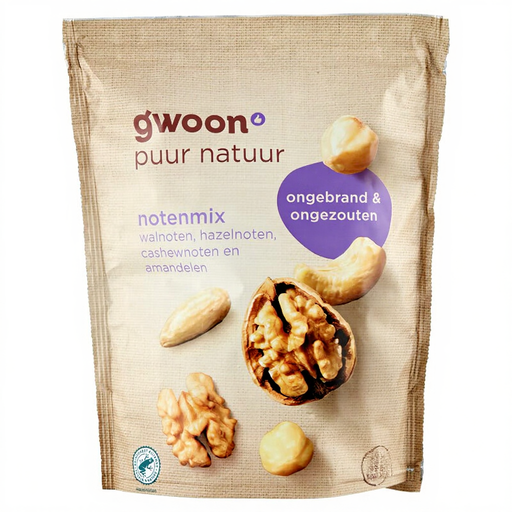 No image available
Worth considering if the listed types of nuts fit your diet and you want to enjoy a mix.
The description lists 20,1 g of protein and 0 g of salt per 100 g. The mix contains hazelnuts, walnuts, almonds and cashews, and may also contain peanuts and other nuts.
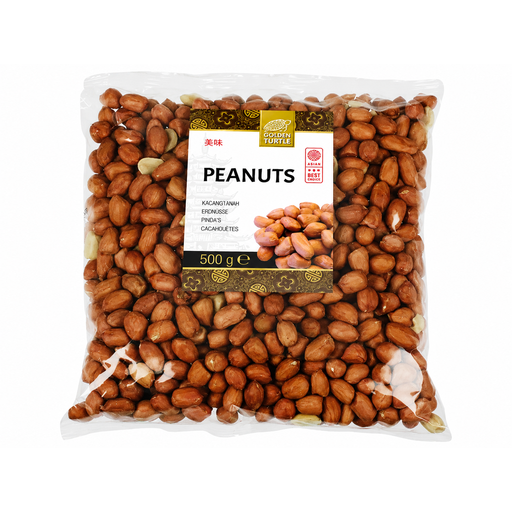 No image available
An option if peanuts fit your diet and you’d like to decide how to prepare them yourself.
The nutrition table lists 26 g of protein per 100 g. The peanuts are unroasted, and the product description suggests roasting them yourself. Contains peanuts.
No. Nuts as a category aren’t allergen-free. Nuts and peanuts can themselves be allergens, so consider the ingredient you want to avoid and check the ingredients and warnings on the specific pack. For example, a gluten-free claim doesn’t mean that the product contains no almonds.
Having a protein goal isn’t, by itself, a reason to avoid gluten. The Netherlands Nutrition Centre says that people without the gluten-related conditions it lists don’t need to eat a gluten-free diet.
It varies by type, product and weight. The Netherlands Nutrition Centre’s general table lists 4,5 g of protein for 25 g of unsalted nuts. When comparing products, use the nutrition table for the exact variant and the weight you eat.
Store nuts in a tightly sealed container in a dry place, as advised by the Netherlands Nutrition Centre. Also follow the instructions on your own pack. For AH Unroasted Almonds, the product page advises storing them in a cool, dark, dry place and resealing the pack tightly after use.
Check the pack again before choosing the product. Albert Heijn warns that ingredients, nutritional values and dietary or allergy information can change, so base your choice on the latest information for that variant.