If you want to eat less fat, compare the fat content and nutrition table; ‘unsalted’ or ‘no added fat’ alone doesn’t tell you how much fat the nuts contain. If you’re mainly looking for a smaller snack, choose an amount that suits you and check the nutritional values for that portion.
Who is this choice relevant to?
Snackers who genuinely want less fat
You want to compare the total fat content rather than relying on phrases such as ‘oven roasted’ or ‘unsalted’. For example, the preparation description for Duyvis Almonds Original says that no oil or fat has been added. That’s not the same as having a lower total fat content. The Netherlands Nutrition Centre explains nutrition claims.
Snackers who want to keep portions smaller
You’re looking for a manageable snack portion to enjoy as a small addition. Compare the nutritional values with the amount you actually eat, not just the weight of the whole pack. The Netherlands Nutrition Centre provides general nutritional values for a portion of unsalted nuts.
Shoppers who don’t want to buy a large stock
You want a pack that suits how much you expect to use. Product examples from Duyvis, Jumbo, PLUS, ALDI and Lidl range from 125 to 500 grams. The Netherlands Nutrition Centre also gives different storage advice for unsalted cashews and coated cocktail nuts.
What should you look for in nut snacks?
| What to consider |
What to check when buying |
Who is this important to? |
| Verified lower fat content |
Check the fat per 100 grams, the exact product variant and the basis for comparison behind any claim. |
If I want less fat, I compare the total fat content and check what a claim is based on. Around 36% of consumers make reducing fat their main priority. |
| Portion and energy |
Compare nutritional values for the same amount, then work them out for your own portion. |
If I’m looking for a smaller snack portion, I want to know what I’m getting for the amount I actually eat. Around 29% of consumers put portion size and energy first. |
| Unsalted ingredients |
Read the ingredients and nutrition table; don’t treat ‘unsalted’ as a way of saying ‘lower in fat’. |
If unsalted is my main priority, I assess that separately from the total fat content. Around 21% of consumers make unsalted ingredients their main priority. |
| Pack size |
Choose a net weight and follow the storage advice that suit the number of snack occasions you expect. |
For a small addition, I want a pack that suits how much I’ll use and that I can store as advised. Around 14% of consumers put pack size first. |
Common mistakes when choosing nut snacks
-
Reading ‘no added fat’ as ‘low fat’
A preparation description doesn’t tell you how much fat the nuts themselves contain.
Read the nutrition table alongside the preparation description and assess any nutrition claim separately.
-
Treating a whole pack as one light snack
The weight of the pack isn’t the same as the amount you eat in one snack break.
Decide on your portion first, then compare the nutritional values for that amount.
-
Buying more than you’re likely to use
A larger pack calls for a different approach to stocking up; general storage advice also varies by type of nut snack.
Choose a net weight that suits the number of snack occasions you expect, and follow the storage advice for the exact pack.
Brands to consider
Duyvis
The preparation description may be useful if you’re looking for nuts with no added oil or fat.
- Duyvis describes Almonds Original as oven-roasted, with no oil or fat added, in a 125-gram pack.
- This description doesn’t confirm a lower total fat content.
Albert Heijn
An own-brand option if you’re looking for unsalted cashews.
- The product name AH Cashewnoten ongezouten clearly identifies the variant.
- ‘Unsalted’ doesn’t indicate a lower fat content; check the pack for the latest product information.
Jumbo
An unsalted cashew option with a stated net weight of 200 grams.
- The product name identifies the unsalted variant and pack size.
- The product name doesn’t support a claim that it contains less fat.
Lidl
The product listing reviewed is for unsalted cashews in a 500-gram pack.
- The net weight helps you work out how much you need to stock up on.
- The product listing doesn’t confirm a low-fat option; choose a large pack that suits how much you’ll use.
ALDI
The product listing is for TRADER JOE'S Cashewnoten geroosterd en ongezouten, 250 gram. ALDI is the retailer; TRADER JOE'S is the product brand name.
- The product name specifies the preparation, unsalted variant and net weight.
- The product name doesn’t confirm a reduced fat content.
PLUS
An own-brand option for unsalted, unroasted cashews in a 200-gram pack.
- The product name distinguishes the unsalted and unroasted variant.
- These qualities don’t prove a lower fat content; check the current pack.
Snack options at Joybuy
The Joybuy products below are snack options for a small addition; their product descriptions don’t automatically mean they’re verified low-fat choices.
 No image available
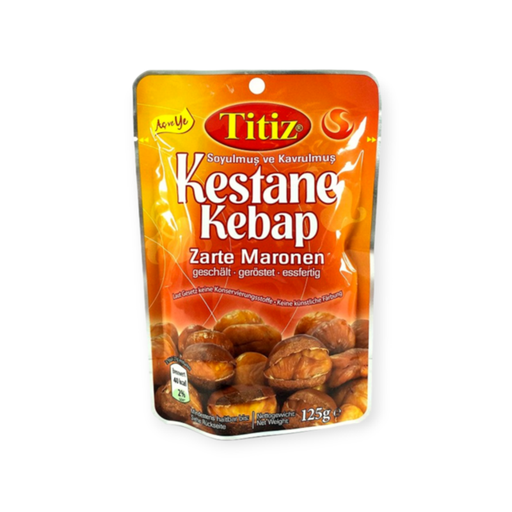
Titiz roasted chestnuts 125 g
A ready-to-eat chestnut snack for a small addition: the product description says the chestnuts are roasted.
125 g pack; the product description states 100% chestnuts.
View at Joybuy
 No image available
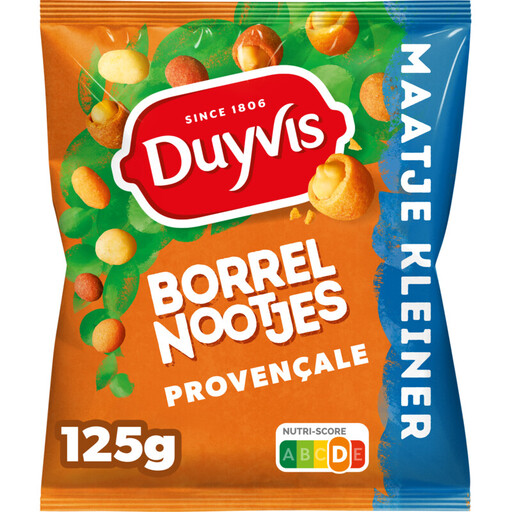
Duyvis Bran Nuts Provencale 125 g
For a measured snack break: the product description lists 30 g portions.
The Joybuy product listing gives 33 g of fat per 100 g. Contains peanuts and wheat; not suitable if you’re allergic to these ingredients.
View at Joybuy
 No image available
Duyvis Dry Roasted Cashews 125 g
If you’re looking for dry-roasted cashews with no added fat or oil, the product description specifies this preparation method.
The Joybuy product listing gives 43 g of fat per 100 g and states that a 125 g pack contains 4–5 portions. No added fat doesn’t automatically mean a low total fat content. The allergen information lists cashews, gluten, wheat and peanuts.
View at Joybuy
Frequently asked questions
Are unsalted nuts automatically low in fat?
No. According to the Netherlands Nutrition Centre, the general reference portion of 25 grams of unsalted nuts contains 14,9 grams of fat. Unsalted nuts are included in the Wheel of Five; that’s a different consideration from their total fat content.
Does ‘no added fat’ mean the same as ‘less fat’?
No. ‘No added fat’ describes how the nuts are prepared, while nuts naturally contain fat. To compare total fat content, check the nutrition table. If there’s a claim, look at what it’s being compared with.
Do nutrition claims on packaging have to meet certain rules?
Yes. The European Commission states that only nutrition claims listed in the annex to Regulation (EC) No 1924/2006 are permitted. In the Netherlands, the Netherlands Food and Consumer Product Safety Authority (NVWA) monitors incorrect and prohibited claims. A nutrition claim isn’t personal dietary advice.
Can I use the same storage advice for cashews and coated cocktail nuts?
Not necessarily. The Netherlands Nutrition Centre’s general advice for opened unsalted cashews is 6 months in a kitchen cupboard and 1 year in the freezer; for opened coated cocktail nuts, it recommends 2–5 days in a kitchen cupboard. Also follow the advice on the packaging of your product.
What should I look out for if I have a nut or peanut allergy?
Check the allergen information on the packaging for the exact variant. The Netherlands Nutrition Centre emphasises that this information can be very important if you have a food allergy, and lists nuts and peanuts separately as allergens.


